When you need a ready-to-go survival bag, these kits offer practical, ready-made solutions for common emergencies. This guide highlights five products suited for individuals or small groups who want reliable, compact go-bags that cover basic food, water, shelter, and first-aid needs. Top picks are chosen for portability, shelf life, and clear organization so you can grab and go with confidence.
| Product | Best For |
|---|---|
| Ready America 70280 72 Hour Kit (2-Person) | Car trips, camping, and two-person preparedness |
| EVERLIT 72 Hours 3 Day Kit | Family readiness for earthquakes, floods, and storms |
| Taiker 151 Pcs First Aid Survival Kit | Comprehensive BOB with tactical gear for serious outdoors use |
| RIKOJUXI 262Pcs Survival Kit | Family or small group with extended gear and food options |
| Emergency Zone Essentials 72-Hour Kit | Disaster response with long-shelf-life rations |
Ready America 70280 72 Hour Emergency Kit (2-Person)

This 72-hour kit is built for two people and includes a Red Cross–aligned selection of essentials: a 33-piece first aid kit, survival blankets, water pouches, food bars with a five-year shelf life, and basic protective items like masks and ponchos. It’s best for couples or small households needing a compact, ready-made kit that fits in a car, boat, or home storage. The kit emphasizes metric quantities and compact packaging, making it easy to stash and grab. A limitation is that it targets two people; for larger families you may want additional units or expanded supplies.
EVERLIT 72 Hours 3 Day Earthquake Go Bag

This kit is designed for two people and emphasizes comprehensive contents in a heavy-duty tactical backpack. It includes water and food provisions with a five-year shelf life, water purification tablets, and a broad medical supply including a CAT tourniquet for trauma care. It’s best for families seeking a robust setup with strong medical and hydration provisions. A potential limitation is the density of items; the bag can be heavier and bulkier to transport in tight spaces.
RIKOJUXI 262Pcs Survival Gear Pack

This 262-piece kit targets family use with a bright red first aid pouch, a collapsible water container, and a broad set of survival tools, including a fire starter, shelter gear, a flashlight, and signaling devices. It’s best for families that want a broad mix of survival gear and medical supplies in a single kit. It may be heavier and require more organization, but the included tools help cover shelter, signaling, and food preparation in one package.
Ready America 72 Hour Deluxe Emergency Kit

This deluxe one-person kit focuses on individual readiness with a 2,400 calorie emergency food bar, six pouches of water, a hand-crank LED headlamp, a poncho, a survival blanket, and waterproof matches. It’s ideal for single-user situations like apartments, backpacks, or a personal car emergency kit. A limitation is the scale of supplies for more than one person; for families, consider adding extra units.
Redfora Complete Earthquake Bag

Redfora’s bag is built for one person and bundles color-coded organization with 3,600-calorie food bars, water pouches, purification tablets, hygiene items, and a NOAA hand crank light and radio. It’s best for someone who wants a well-organized, all-in-one solution with long shelf life in a compact package. The trade-off is that it is tailored to one person; larger households will need additional units.
Emergency Zone Essentials 72-Hour Kit
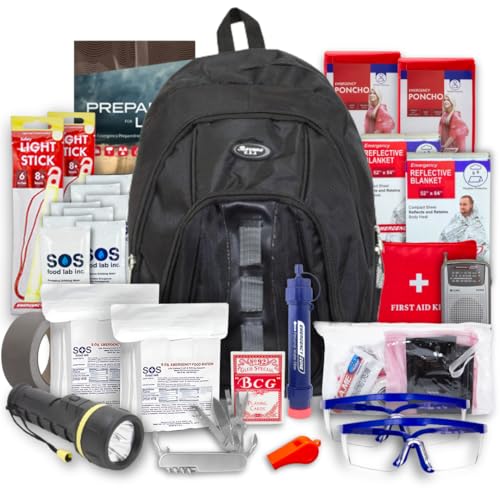
Emergency Zone’s kit is a two-person option with a focus on versatility for disasters like hurricanes or earthquakes. It includes a water filter straw and shelf-stable food with five-year rations, designed to be compact yet comprehensive. It’s best for households wanting a discreet, efficient setup. A caution is that some users may prefer more explicit medical supplies beyond basic first aid.
Buying Guide
- How many people need to be covered?
- What environments are you preparing for (car, home, backpack, boat)?
- What shelf life and water/food ratios are important to you?
- Do you need advanced medical supplies or basic first aid only?
- Is portability a priority over total gear volume?
Key purchase considerations
- Staffing for the group: Choose a kit that covers the number of people in your household or vehicle. If you have children or elderly family members, look for kid-friendly items and medications in the first aid kit.
- Durability and weather resistance: Tactical backpacks or waterproof pouches improve resilience in rain, snow, or rough terrain.
- Food and water: Prioritize calories per person and shelf life. Some kits use 5-year shelf-stable water and meals; others offer longer-lasting options with fewer bottles.
- Medical readiness: If you require more than basic first aid, select a kit with trauma gear, tourniquets, and readily accessible medical tools.
- Organization: Clear compartments and color-coding help quick access during an emergency.
How to maximize readiness
- Store in a cool, dry place away from direct sunlight to maintain shelf life.
- Perform routine checks every six to twelve months to replace expired items.
- Label bags with household members and contact information for faster response.
FAQ
- What is a grab-and-go survival bag?
– A prepackaged kit containing essential foods, water, shelter, medical supplies, and tools designed for rapid deployment during emergencies. - How many days should a basic kit cover?
– Most kits aim for at least 72 hours (three days) per person, with some options offering 2-person or multi-person configurations. - What items are typically included?
– Food bars, water pouches, a shelter or warmth item, a light source, basic first aid, tools, signaling gear, and a multitool or knife. - Should I buy separate kits for home, car, and workplace?
– Yes, if you spend significant time in each location. Separate kits ensure you have immediate access where you need it most. - How often should I replace items in my bag?
– Check and replace food and water every 6–12 months and test lights and batteries annually. - Can these kits be expanded later?
– Most kits are modular; you can add items to suit family size, climate, and personal needs.