Discover the best heated water hoses for travel trailers to prevent freezing and keep water flowing in cold weather. These selections are ideal for full-time campers, seasonal travelers, and occasional RV owners who need reliable winter water supply. The top picks below balance freeze protection, safety, and ease of use, so you can choose confidently based on climate and hose length needs.
| Product | Brand | Length | Freeze Protection |
|---|---|---|---|
| 30FT Heated Water Hose | REHOSEUP Store | 30 ft | -45°F |
| RVGUARD Heated Water Hose | RVGUARD Store | 25 ft | -20°F |
| Camco 25-Ft Heated Water Hose | Camco Store | 25 ft | -20°F |
| OEBLD Heated Water Hose | OEBLD Store | 30 ft | -45°F |
| Camco Heated Drinking Water Hose | Camco Store | 50 ft | -20°F |
30FT Heated Water Hose for RV, -45°F Anti-Freeze
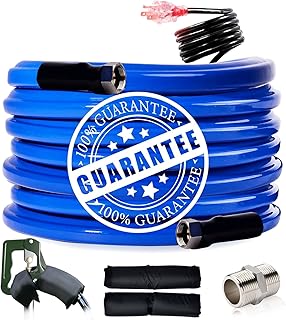
The REHOSEUP heated hose uses a smart self-regulating thermostat to prevent water from freezing down to -45°F. It is described as suitable for RVs, camping, and other outdoor use. Best for travelers in severely cold environments who need reliable freeze protection with a straightforward installation. A potential limitation is the reliance on ambient temperature to trigger heating, which may impact performance in extremely windy conditions.
RVGUARD Heated Water Hose 25FT, -20 ℉
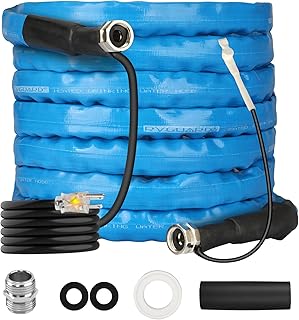
The RVGUARD hose features a smart thermostat with a turn-on at about 47°F and turn-off at about 60°F, plus a 7 W/ft heating cable for better efficiency. It uses a five-layer construction with stainless connectors, designed to be leak-resistant. Best for campers seeking energy efficiency and durable winter protection, though higher wire heat may slightly increase power usage compared to simpler designs.
Camco 25-Ft Heated Water Hose

Camco’s hose uses NSF/ANSI 61 certified materials for drinking water and provides freeze protection down to -20°F. It emphasizes health and safety with lead-, BPA-, and phthalate-free construction, and it includes an energy-saving thermostat-driven heater. Best for health-conscious users who need a longer, reliable line; can be less flexible in very tight RV compartments due to its 25 ft length.
OEBLD Heated Water Hose for RV 30FT

The OEBLD hose provides reliable freeze protection to -45°F with a self-regulating thermostat. It features a heavy-duty 3/4-inch GHT connection, triple-seal leakage prevention, and a visible LED status indicator. Best for campers needing visible status updates and robust outdoor durability. A limitation is the potential bulk in tight storage spaces due to its sturdy build.
Camco Heated Drinking Water Hose, 50 Ft

Camco’s longer 50 ft heated hose extends the water supply further from the RV and uses NSF/ANSI 61 certified materials for safe drinking water. It provides freeze protection down to -20°F and includes an energy-saving thermostat to heat only as needed. Best for longer installations or locations where the water source is distant; the length may be harder to manage in compact storage spaces.
Buying Guide
What climate and winter needs should guide your choice?
Assess the coldest temperatures you encounter and the distance from water source to RV. For ultra-cold climates, choose a hose with -40°F to -45°F protection. If you camp in milder winter areas, a -20°F option may suffice and save energy.
What length works best for travel trailers?
Consider your site setup and storage space. Shorter hoses (25 ft) are easier to store and maneuver, while longer hoses (30–50 ft) reduce the need to reposition the RV. Opt for a length that balances storage convenience with site accessibility.
What about safety and materials?
Look for lead- and BPA-free materials for drinking-water compatibility. Ensure a robust, leak-resistant connection with durable fittings and a reliable thermostat. A visible LED status indicator helps monitor operation in cold conditions.
Energy use and operating costs
Thermostat-controlled heat only activates as needed. Higher wattage per foot improves freeze protection but increases energy use. Choose a model with efficient temperature control for your typical winter use patterns.
Installation and maintenance considerations
Ensure fittings match your water system (Hose thread size and connection type). Review warranty terms and whether you can easily replace the heating element or connectors. Regular checks for leaks at both ends help prevent water damage in cold weather.
Use-case variations
For camping in areas with frequent water line exposure to cold wind, select hoses with reinforced outer shells and better abrasion resistance. If you transport the hose often, prioritize flexibility and a lighter build for easier coil and storage.
FAQ
What temperature does a heated RV water hose protect against?
Most models provide protection down to -20°F to -45°F, depending on the product. Verify the specific temperature rating in the product specs.
Are these hoses safe for drinking water?
Many options use materials certified for drinking water (NSF/ANSI 61 or equivalent). Always check the product details before use with drinking water.
Do heated hoses increase my power usage significantly?
Yes, but many models use smart thermostats that heat only as needed, reducing energy consumption compared to continuous heating.
How do I install a heated water hose?
Attach to the water source, connect to your RV’s water inlet, and ensure the heater housing and thermostat are positioned away from direct sun and moisture. Follow the included instructions or videos for proper setup.