Choosing a hiking backpack carrier for a toddler requires balancing comfort, safety, and storage. The right model distributes weight, keeps your child secure, and provides easy access to essentials on the trail. The top picks below are best for active families who want reliable support, adjustable fits, and practical features such as sunshades, rain covers, and ample pockets. The table summarizes five strong options to help you compare at a glance.
| Product | Main Benefit | Best For |
|---|---|---|
| Besrey Black | 5-point safety seat, foldable frame, generous storage | Parents who want a secure, roomy carrier for longer hikes |
| WIPHA | Ultra-light design, up to 40 lbs, adjustable fit | Travel-friendly outings with a lightweight option |
| ClevrPlus Grey | One-piece frame, large storage, washable drool pad | Hikes requiring quick setup and ample gear space |
| Osprey Poco SLT | Slim, foldable frame, multiple torso adjustments | Travel and registry shoppers needing a compact carrier |
| Osprey Poco LT | Travel-ready, folding frame, easy transport | Families on the go who need a lightweight option |
Besrey Black Baby Backpack Carrier

The Besrey Black model focuses on safety and practical comfort for toddlers on hikes. It features a 5-point seat belt system with soft straps and stirrups to keep the child secure and supported during movement. The design includes a detachable sunshade to shield from sun, wind, or light rain and a washable drool pad for easy surface cleaning. It also emphasizes storage with under-seat space and side pockets, plus a dedicated storage bag for extra gear. Best for parents who want a sturdy carrier with dependable safety features and moderate storage for day hikes.
Best for: Parents seeking a secured, comfortable ride with reliable rain and sun protection and ample pockets for essentials.
Caution: Check the fit and adjustability for your torso length to ensure the straps and stirrups align with your child’s seating position.
Besrey Army Green Baby Backpack Carrier

This Army Green Besrey variant shares the same core safety features and spacious storage as the black version. The detachable sunshade, soft 5-point harness, and foldable frame provide a practical balance of safety and convenience for outdoor excursions. It suits families who want a consistent design in multiple color options and value the same protective features and organization layout as the black model.
Best for: Families who prefer color variety while needing the same comfort and safety framework.
Caution: Ensure color choice does not alter any component fit or strap length; verify model-specific instructions before use.
ClevrPlus Cross Country Grey Carrier
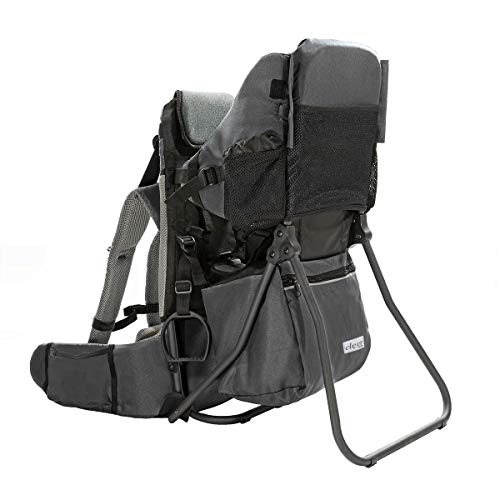
The ClevrPlus carrier features an enhanced one-piece frame design that minimizes assembly time on the trail. It includes 5-point seat belts with flexible straps and stirrups for secure seating, plus ample storage compartments for essentials such as a changing pad and bottles. The frame is relatively lightweight, contributing to easier handling during longer hikes. Best for: Hikers who want straightforward setup with robust safety features and generous storage.
Best for: Carriers prioritizing a simple build and dependable safety hardware for extended use.
Caution: Weighs more than ultra-light options; consider total load when planning long days on rough terrain.
Osprey Poco SLT Lightweight Child Carrier

The Poco SLT emphasizes a slim profile with a foldable stainless steel frame for travel ease. It is designed to be lightweight while still providing a secure harness with a ventilated backpanel, reducing heat buildup on warm days. The carrier offers adjustability to fit multiple wearers, which is helpful for families sharing gear. Best for: Parents who travel frequently and need a compact, easy-to-store option that still protects their toddler on trails.
Caution: The minimalist frame may feel less cushioned for very long hikes in rough terrain; plan for shorter sessions if comfort is a priority for both adult and child.
Osprey Poco LT Lightweight Child Carrier

The Poco LT is marketed as a compact, travel-ready option with a patented folding frame that locks for security. It offers six inches of torso adjustment for easier sharing among caregivers and a low-profile design that facilitates maneuvering in tight spaces like airports and city streets. Best for: Families who value portability and quick setup, especially when traveling with a toddler in urban environments.
Caution: While portable, verify fit for growing children; ensure the torso adjustment range accommodates all caregivers planning to use it.
Gentle Monster Foldable Frame Carrier

The Gentle Monster carrier focuses on a foldable frame for easier storage and transport. It includes a sun and rain canopy and an ergonomic strap system to reduce fatigue during long days on the trail. The design supports a comfortable seated position with a padded, breathable back panel. Best for: Hikers who need a compact carrier that folds down flat for travel and storage while still delivering reliable protection for a child on the move.
Caution: Folding mechanisms should be checked for smooth operation and secure locking on arrival at the trailhead.
Buying Guide: Key Considerations For Selecting A Toddler Hiking Backpack Carrier
- Safety features: Look for 5-point harness systems, padded seating, sturdy stirrups, and adjustable waist belts to distribute weight evenly.
- Fit and comfort: Torso length adjustments, padded straps, and lumbar support impact both adult and child comfort on long hikes.
- Weight and portability: If you travel often or hike in urban settings, consider a carrier with a foldable frame and light overall weight.
- Canopy and weather protection: Detachable sunshades or rain canopies help shield a toddler from sun, wind, and light rain on variable trails.
- Storage capacity: Decide how much gear you need to carry—diaper changing pads, bottles, wipes, snacks, and extra clothing—and choose a model with appropriate pockets and space under the seat.
- Durability and materials: Look for reinforced stitching, high-quality fabric, and a frame that can withstand frequent use in diverse environments.
- Ease of use: Consider how quickly the carrier can be set up, adjusted, and folded for transport or storage.
- Care and maintenance: Removable drool pads, washable fabrics, and easy-to-clean surfaces extend the carrier’s lifespan.
Frequently Asked Questions
- What age is best for using a toddler hiking carrier? Answer: Most carriers support children from around 6 months up to about 3 years, depending on weight limits and seating design. Always follow manufacturer guidelines for weight and age.
- Do these carriers require a lot of setup time? Answer: Setup time varies by model. Some feature one-piece frames and simple harness systems, while others may require more adjustment for a perfect fit.
- Is a sunshade essential? Answer: A sunshade helps protect a child from UV exposure and wind, but it is optional on milder days unless it’s windy or rainy.
- Can these carriers be shared among caregivers? Answer: Many models offer torso and height adjustments to fit different caregivers, but always verify fit and safety for each user before sharing.
- What should I pack in the carrier’s storage pockets? Answer: Essentials include diapers, wipes, a small changing pad, bottle or hydration gear, snacks, a rain layer, and a lightweight jacket for your child.
- Are these carriers comfortable for long hikes? Answer: Comfort depends on fit and weight distribution. Look for padded straps, a supportive waist belt, breathable back panels, and an appropriate overall weight for extended use.