Answering the question “which handheld GPS is best for hunting and fishing,” this guide highlights five rugged options that balance readability, battery life, and preloaded maps. These devices suit backcountry hunters, anglers on remote lakes, hikers seeking dependable navigation, and outdoor enthusiasts who want reliable waypoint tracking. Below is a quick summary table of the five selected models to help you compare at a glance.
| Product | Best For | Key Strength |
|---|---|---|
| Garmin 010-02256-00 eTrex 22x | Backcountry hunters | Sunlight-readable display with topo maps |
| Garmin eTrex SE | Long expeditions | Long battery life, smart device pairing |
| Garmin 010-00970-00 eTrex 10 | Rugged, budget-minded | Worldwide basemap, IPX7 waterproof |
| Garmin eTrex 32x | Trail runners and hikers | Color display, topo maps |
| Handheld GPS for Hiking (NiesahYan Store) | All-weather use | Multi-GNSS and bright 3.2″ screen |
Garmin eTrex 22x Rugged Handheld GPS Navigator

The eTrex 22x is a compact, rugged handheld navigator designed for outdoor reliability. Its 2.2-inch sunlight-readable color display with 240 x 320 pixels enhances readability in bright conditions. Preloaded Topo Active maps offer routable roads and trails for cycling and hiking, which also benefits hunters and anglers planning off-road routes. Best for: serious hikers and hunters who need clear maps in daylight and dependable waypoints. Caution: smaller screen may be challenging for map-heavy tasks in poor lighting; consider a larger model if you rely on detailed mapping at a glance.
Garmin eTrex SE Handheld Navigator
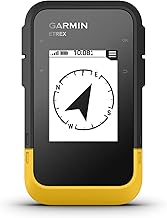
The eTrex SE emphasizes long expedition-ready battery life, offering up to 168 hours in standard mode and up to 1,800 hours in expedition mode with AA batteries. It supports wireless updates through the Garmin Explore app and can pair with a smartphone for trip planning and smart features. Best for: long-distance trips or remote outings where battery life and data planning are priorities. Caution: AA batteries are required; rechargeable options may vary in runtime and availability in the field.
Garmin 010-00970-00 eTrex 10 Worldwide

The eTrex 10 provides a reliable, worldwide basemap with a 2.2-inch monochrome display and WAAS-enabled GPS with HotFix and GLONASS support for faster positioning. IPX7 waterproof protection helps guard against splashes and rain. Best for: entry-level navigators or those needing a basic, durable device for diverse terrains. Caution: monochrome display reduces map detail; consider higher-contrast color devices for complex terrain.
Garmin eTrex 32x Rugged Navigator

The eTrex 32x blends a 2.2-inch sunlight-readable color display with preloaded Topo Active maps that include routable roads and trails for cycling and hiking. Its rugged build suits hunters and anglers who frequently navigate varied terrain. Best for: outdoor enthusiasts needing reliable mapping and trail data in challenging environments. Caution: ensure you’re comfortable with smaller displays when reading dense topographic data while on the move.
Handheld GPS for Hiking (NiesahYan Store)

This compact, rugged device emphasizes a bright 3.2-inch, sunlight-readable screen and anti-slip design. It supports multi-GNSS (GPS, Galileo, Beidou, and QZSS) for improved positional accuracy, with location precision within about 6 feet. Best for: general hunting, fishing, and hiking use where visibility and solid satellite reception matter most. Caution: third-party brand listing on the product title may require extra verification of specifications in some markets.
Buying Guide
What to consider when choosing a hunting and fishing GPS
- Display readability: In bright sun, a color display with good brightness helps you read maps quickly. Consider screen size that suits your field of view and use with gloves.
- Mapping and basemaps: Look for preloaded Topo Active maps or the option to add custom maps. Routable roads and trails benefit route planning for hunting access or shore fishing routes.
- Battery life: For long expeditions, devices with extended battery life or expedition modes are advantageous. Battery type (AA or rechargeable) affects field practicality.
- Durability: A rugged, waterproof (IPX-rated) body reduces risk in rain, splashes, or rough terrain common on boats and damp woods.
- Multi-GNSS support: Access to GPS, GLONASS, Galileo, and other systems improves accuracy in challenging environments or deep canyons.
- Smart features: Some models offer wireless updates, trip planning, and app integration for maps and weather data. Weigh whether these conveniences match your style.
- Screen versus data: Higher-detail screens provide better map readability, but compact models tend to be lighter and simpler to operate in the field.
- Price versus need: Entry-level models cover essential navigation, while feature-rich devices add map layers and longer battery life for remote trips.
Frequently Asked Questions
- What’s the main advantage of a rugged handheld GPS for hunting?
- Do these devices work in remote fishing locations?
- Which is best for long trips with limited recharging?
- Is a color display essential for hunting and fishing?
- Can I update maps and software over the air?
- What should I avoid when buying a handheld GPS?
Rugged handhelds withstand harsh outdoor conditions, offer reliable satellite reception, and provide preloaded topo maps for terrain awareness, which helps plan hunts and navigate back to a starting point.
Yes. Most models include worldwide basemaps or preloaded topo maps and multi-GNSS support, improving signal lock and waypoint accuracy far from grid access.
Models with expedition battery modes or long-life AA battery support are ideal for extended trips where power access is scarce.
Color displays improve map readability and waypoint differentiation, especially in mixed terrain, but monochrome displays can still be functional for basic navigation.
Many models support wireless updates via a companion app, ensuring maps and software stay current with new trails and features.
Avoid devices with minimal maps for your area, poor waterproofing, or limited battery life if you frequently navigate in backcountry or on open water.