Looking for a reliable hunting pack with an external frame? These five options cover a range of capacities, frame materials, and comfort features to fit different hunting styles. The best choice depends on capacity needs, weight distribution, and terrain. This guide highlights who each product is best for, with practical notes to avoid common pitfalls. Below is a quick summary of the featured packs to help you compare at a glance.
| Product | Best For | Key Benefit |
|---|---|---|
| TIDEWE Hunting Backpack for Men, 90L External Frame | Big trips, multi-day hunts | Very large capacity with 90L external frame |
| TR Aluminum External Frame Backpack | Heavy gear and meat hauling | Lightweight aluminum frame with ergonomic fit |
| TIMBER RIDGE Aluminum External Frame | Budget-friendly durability | Durable aluminum frame with breathable back |
| Mardingtop 60L Military Internal Frame | Compact yet modular packs | 60L with MOLLE and rain cover |
| TIDEWE Hunting Backpack 40L | Smaller hunts, lighter loads | 40L camo pack with practical compartments |
TIDEWE Hunting Backpack for Men, 90L External Frame Pack

The large 90L capacity makes this pack ideal for multi-day hunts or elk and deer trips where gear volume matters. The two-in-one carrier can hold a bow or rifle, and the main compartment expands with an extension bag. Best for serious hunters who need a high-capacity pack without sacrificing frame support.
- Best for: Extended trips, knife-edge setups, and carrying bulky gear.
- Why selected: Combines quiet fabric with a configurable frame and ample storage options.
- Caution: Bulky size can be less maneuverable in tight terrain.
TR Aluminum External Frame Backpack, Adjustable Hiking Hunting Pack
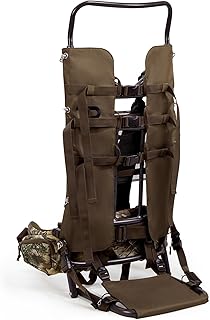
An aluminum external frame offers strong load support while remaining relatively light. Adjustable torso length and shoulder straps help tailor the fit for different body shapes. This model is well suited for hunters who haul gear or game and value a balanced, stable carry over long distances.
- Best for: Meat hauling and bulky gear on rugged terrain.
- Why selected: Durable, adjustable, and designed to distribute weight effectively.
- Caution: Frame and components may require periodic checks for wear during heavy use.
TIMBER RIDGE Aluminum External Frame Hiking Backpack

This frame emphasizes breathability with a mesh back panel and cushions for long-day wear. The dimensions indicate substantial storage without becoming overly bulky, making it a versatile choice for campers and hikers who occasionally hunt on extended excursions.
- Best for: Comfort-focused hunters hiking long distances.
- Why selected: Breathable design and supportive padding reduce fatigue.
- Caution: Not the lightest option; weight may be a consideration for fast-paced hunts.
Mardingtop 60L Military Internal Frame Backpack

Though internally framed, it offers modular MOLLE attachments and a rain cover, making it adaptable for overnight hunts where gear organization matters. It’s a solid option for hunters who value modular pouching and a lower-profile frame on the back.
- Best for: Modular gear setups and day-to-mid-range hunts.
- Why selected: MOLLE compatibility expands attachment possibilities; rain cover adds weather resilience.
- Caution: Internal frame can feel stiffer when fully loaded in narrow spaces.
TIDEWE Hunting Backpack for Men, 40L
Designed for lighter loads and shorter hunts, this 40L camo pack balances manageability with essential storage. It provides practical compartments and a sound-mitigated profile, making it a solid pick for day trips or scouting missions.
- Best for: Day hunts, quick access, and stealth-focused scenarios.
- Why selected: Lighter and easier to carry while still offering organized storage.
- Caution: Smaller capacity may require more frequent resupply on extended trips.
Buying Guide: Key Considerations For Choosing A Hunting Pack And Frame
- Capacity vs. trip duration: For multi-day hunts, choose higher capacity (around 60–90L). For day trips, 30–40L packs may suffice.
- Frame type: External frames excel at load distribution and bulky gear; internal frames offer a more compact silhouette. Aluminum frames tend to be durable and lighter.
- Fit and adjustability: Look for adjustable torso length, shoulder straps, and waist belts. A good fit reduces fatigue on long hikes.
- Noise and camouflage: Noise-reducing fabrics and camo patterns help you stay concealed in the field.
- Organizational features: Consider built-in compartments, pockets, hydration compatibility, and external attachments for quick access.
- Durability and weather resistance: Water resistance or a rain cover protects gear in sudden showers; durable zippers and fabric extend life in rugged terrain.
- Maintenance: Check for modular components that can be replaced if damaged and verify frame integrity after heavy use.
Frequently Asked Questions
- What is the advantage of an external frame backpack for hunting? It generally provides better weight distribution for heavy loads and easier access to gear when navigating rugged terrain.
- Is a larger pack always better for hunting? Not always. A larger pack is beneficial for multi-day hunts, but may add unnecessary bulk for short day trips.
- How do I know if a pack fits me well? Check torso length adjustability, hip belt coverage, and shoulder strap comfort. A proper fit transfers weight to the hips rather than the shoulders.
- Should I prioritize noise reduction in materials? Yes, especially in timber and brushy environments where sound can reveal your location.
- What maintenance is recommended for hunting packs? Regularly inspect zippers, seams, straps, and the frame. Clean fabric to preserve camouflage and water resistance.
- Can these packs carry a rifle or bow securely? Some models feature two-in-one carriers or dedicated gear straps; verify attachment points for your weapon type.