When you’re hiking, safe drinking water is essential. This guide highlights five reliable inline or portable water filtration options that fit in a pack and work well for hikers, campers, and emergency prep. These selections favor compact, lightweight designs, simple setup, and dependable filtration performance. Each product is best for different needs—from solo treks to group trips—and includes practical cautions to help you choose wisely. A quick comparison table follows to help you decide at a glance.
| Product | Best For | Why It Stands Out |
|---|---|---|
| Sawyer SP128 Mini Water Filtration System | Ultralight solo adventures | Extremely small, weighs ~2 oz, 0.1 micron filter |
| Sawyer SP120 Mini Filtration System (Filter & Cleaning Plunger) | Compact redundancy | Same filtration spec, includes plunger for maintenance |
| Sawyer SP129 Squeeze with Pouches | Group trips and versatility | Includes pouches and hydration pack adapter |
| Practical Survival Reusable Emergency Water Filter Straws (5-Pack) | Emergency and travel kits | 5-pack, microplastics removal, ultra-portable |
| Sawyer Squeeze Water Filtration System with CNOC 2L Bladder | Bulkier water capacity | Higher volume with durable bladder and backwash |
Sawyer SP128 Mini Water Filtration System

The SP128 is an ultralight inline filtration option designed for hikers who want minimal bulk. It features a high-performance 0.1 micron absolute filter that weighs about 2 ounces and fits in the palm of your hand. It attaches to a drinking pouch, standard 28 mm disposable bottles, hydration packs, or can be used directly from a water source via a straw. Best for solo hikers who prioritize compact gear and quick, on-the-go filtration. Limitations include the need to carry compatible containers or a straw setup for direct source use.
Sawyer SP120 Mini Filtration System (Filter & Cleaning Plunger)

This SP120 variant mirrors the SP128’s core filtration capability but comes with a cleaning plunger for maintenance. It remains an ultra-light option at around 2 ounces and supports attachment to drinking pouches, 28 mm bottles, or hydration packs. Best for hikers who want a compact backup filter that’s easy to maintain. Choose this if you want a similar 0.1 micron performance with a maintenance accessory; avoid if you require a built-in hydration pack adaptor that isn’t included here.
Sawyer SP129 Squeeze Water Filtration System

The SP129 Squeeze includes two 32-ounce squeeze pouches, a straw, and a hydration pack adapter, providing a ready-to-use kit for outdoor adventures. It uses the same 0.1 micron filter, with a lightweight design that’s easy to carry. Best for travelers who want immediate filtering capabilities and portable water storage, making it well-suited for short to medium hikes. A limitation is that the bag system adds bulk relative to ultra-compact mini units.
Practical Survival Reusable Emergency Water Filter Straws (5-Pack)

These reusable filter straws provide a highly portable option for emergency hydration. Each straw filters out over 99.99% of bacteria, parasites, and microplastics down to 0.1 micron. The set weighs about 2 ounces and measures roughly 8 inches, making them ideal for preparedness kits, backpacking backups, or rapid response scenarios. Best for quick, on-the-go safety when other filtration means aren’t available. A caveat is that straw filters require direct access to water sources and may not be as fast as larger filtration systems.
Sawyer Squeeze Water Filtration System with CNOC 2L Bladder
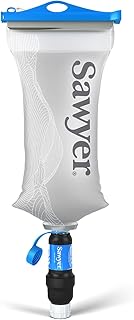
The Squeeze system combines a reusable filter with a durable CNOC 2-liter bladder for higher volume needs. The filter supports backwashing and claims substantial filter longevity, up to 100,000 gallons in ideal conditions. Best for hikers who need to process larger amounts of water from a single tote or source, and who value a more substantial bladder solution. A potential limitation is heavier and bulkier than ultra-compact mini options, which may be less ideal for minimalist backpackers.
Buying Guide: Key Considerations for Inline and Squeeze Filters
- Filter micron size: Most of these units use 0.1 micron filters, effective against bacteria and protozoa. Consider a smaller micron size if you expect higher-risk water sources.
- Weight and packability: For solo hikers, ultralight options (2 oz) may be preferable. If you’re hiking with others, a squeezable pouch system or a larger bladder may save time.
- Water source compatibility: Some systems attach to hydation packs or standard bottles; others require a straw setup. Ensure compatibility with your current gear.
- Maintenance: Some variants include cleaning components or backwash capabilities. Regular maintenance extends filter life and performance.
- Fill speed and flow rate: Squeeze systems and (bladder-based) setups typically offer faster filtration for larger water volumes than tiny inline units.
- Emergency readiness: Multi-pack options provide redundancy for critical trips or disaster scenarios, improving reliability when away from stores.
Frequently Asked Questions
- What does 0.1 micron filtration filter out? – It removes bacteria, protozoa, cysts, and some microplastics, depending on the material and design.
- Are inline filters compatible with hydration packs? – Many are designed to attach to hydration packs or standard bottles, but verify threading (such as 28 mm) and compatibility with your gear.
- Can I drink directly from a water source with these filters? – Some systems offer direct-from-source straws or drinking adapters; others require a bottle or pouch.
- Which option is best for emergencies? – The 5-pack filter straws provide multiple compact backups, useful in diverse emergency scenarios.
- Do these filters remove microplastics? – Several models claim removal of microplastics as part of their filtration range, but verify the product’s filtration claims in the listing.
- What maintenance is required? – Some units include cleaning plungers or backwash features; proper maintenance helps maintain flow and filter life.