When shopping for an insulated sleeping pad, focus on warmth, weight, and packing size. The top options below are designed to keep you warmer on cold ground, while still packing compactly for backpacking or car camping. Each product is suitable for specific buyers: ultralight hikers, family campers, or weekend backpackers seeking a reliable, budget-friendly mat. The table below compares key features to help you choose quickly.
| Product | Best For | Key Feature | Approx. Weight |
|---|---|---|---|
| Gear Doctors Oxylus 4.3 R-Value Insulated Foam Self Inflating Sleeping Pad | Backcountry hikers and families seeking a versatile, durable self-inflating pad | 4.3 R-value core with self-inflating foam | ~35.2 oz (997 g) |
| FUN PAC Camping Sleeping Pad with Built-in Pillow | Lightweight backpackers who want built-in pillow and quick inflate | Built-in pillow, 30-60s inflate, ultralight | Lightweight (size comparable to a water bottle when packed) |
| CYMULA CertiPUR-US Memory Foam Camping Mattress Pad | Car travelers and campers seeking memory foam comfort | CertiPUR-US memory foam, waterproof bottom | Varies by size |
| OGERY Self-Inflating Sleeping Pad With Built-in Foot Pump | Car camping and mixed-terrain use requiring high R-value | 3″ memory foam core with self-inflating design | Varies by size |
| Gear Doctors Ether 17.5oz Ultralight Camping Sleeping Pad | Ultra-light backpackers who want compact portability | Lightweight, compact, high portability | ~17.5 oz |
Gear Doctors Oxylus 4.3 R-Value Insulated Pad
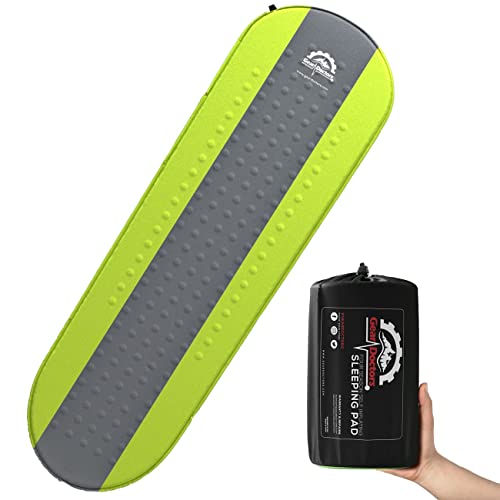
The Oxylus pad combines foam self-inflation with insulation rated at 4.3 R-value, designed to keep you warmer on cold ground. It unrolls to 72 inches by 20 inches and is 1.5 inches thick, giving a stable sleep platform on uneven soil. The pack-to-sleep setup is marketed for quick, beginner-friendly use, with easy pressure adjustment by breathing after unrolling. This pad is best for hikers and families who want a durable, all-season option without relying on a separate pump.
Best for: hikers and families who value warmth and a straightforward setup. Limitations: heavier than some ultralight options and may be bulkier to pack in very tight backpacking systems.
FUN PAC Camping Sleeping Pad With Built-In Pillow

This pad emphasizes convenience and comfort with a built-in pillow, large sleeping area (up to 78 by 27 inches when inflated), and a quick inflate/deflate cycle. It uses egg-shaped air cells to support the back and neck, helping maintain natural alignment. It’s notably suited for hikers who want a self-contained solution that reduces packing complexity. The built-in pump minimizes breath-as-you-set-up activity, though weight is typically higher than minimalist foam pads.
Best for: backpackers who want a roomy, pillow-equipped pad with fast inflation. Caution: the dual-layer valve is essential for preventing leaks, so ensure it’s sealed properly after inflation.
CYMULA CertiPUR-US Memory Foam Mattress Pad

CYMULA uses high-density memory foam for a soft yet supportive sleeping surface. The CertiPUR-US certification provides safety assurance for foam materials and reduces environmental impact compared with some traditional foams. The pad is designed to be rolled and carried with a waterproof, non-slip bottom to resist moisture and keep you stable on varied terrains. It’s a good pick for car camping and home guests who want a more traditional bed-like feel outdoors.
Best for: campers seeking memory foam comfort with a safety-backed certification. Limitation: memory foam can be heavier and slower to dry if exposed to rain or damp ground.
OGERY Self-Inflating Pad With Built-In Foot Pump

OGERY’s pad features a 3-inch-thick high-density foam core with a built-in foot pump. The combination provides a more stable, cushioned sleep surface and quick setup, making it suitable for car campers and weekend trips. The outer shell uses abrasion-resistant nylon with a textured bottom to reduce movement inside a tent. This pad is a strong pick for campers who want a good balance of warmth, support, and ease of inflation with a mechanical pump assist.
Best for: car campers who prioritize stability and quick setup. Caution: weight is higher than ultralight options, and storage size can be larger when fully inflated.
OGERY 6″ Ultralight Inflating Sleeping Pad

This pad emphasizes extra thickness (6 inches when inflated) for superior comfort and built-in pillow function. It uses a foot pump for inflation and a dual-layer valve design to prevent leaks. The pad’s lightweight design and compact folding make it ideal for hikers who want a thicker sleeping surface without heavy gear. It’s well-suited for shoulder-season trips where extra loft matters for warmth and pressure relief.
Best for: hikers seeking premium comfort with a compact, foot-pump inflating mechanism. Limitation: the heavier 6″ thickness can affect packing size compared to thinner mats.
Gear Doctors Ether 17.5oz Ultralight Pad

Ether is designed for backpackers who want a compact, bottle-sized form when packed but a comfortable bed when deployed. It inflates to a substantial 76 by 25 inches and uses a lightweight nylon shell with a robust coating. The unit claims a strong weight rating and a durable, life-tested construction. It’s recommended for travelers who value portability as much as warmth and cushioning. A detachable foot pump is included for quicker setup.
Best for: ultralight backpackers who prioritize packability and a strong warmth-to-weight ratio. Caution: ensure a snug seal and check for fabric integrity after long trips to prevent leaks.
Buying Guide: Key Considerations For Insul Mat Sleeping Pads
Warmth vs. weight: Higher R-values deliver more insulation but may add weight. Balance your climate needs with how far you’ll hike each day.
Inflation system: Self-inflating cores reduce setup time; built-in pumps save breath and space but may add weight. Consider how quick you need to inflate in cold air.
Shell durability: Look for abrasion resistance and waterproof or water-repellent coatings if you expect damp ground or frequent rain.
Comfort profile: Thickness and foam density impact pressure relief for side, back, and stomach sleepers. Memory foam options offer comfort but can be heavier.
Portability and packability: Pack size when rolled or folded matters for light travelers. Ultralight pads excel here but may sacrifice warmth or durability.
Durability and warranty: Some brands offer lifetime replacements or robust repair options. For frequent travelers, this can offset higher upfront costs.
FAQ
- Q: Which pad is warmest for winter camping?
A: Pads with higher R-values (like 4.3) tend to perform better in cold conditions, especially when paired with a proper sleeping bag. - Q: Are memory foam camping pads waterproof?
A: Memory foam is typically covered with a water-repellent shell, but it’s best to avoid soaking and to dry promptly if exposed to moisture. - Q: Do I need a built-in pump?
A: Built-in pumps save time and breath, but some hikers prefer no-pump options for lighter weight, depending on the terrain and climate. - Q: How thick should a camping pad be?
A: 3–6 inches provides good comfort for most users; thicker pads improve comfort but may reduce packability. - Q: Can these pads be used indoors as a guest bed?
A: Yes, several pads offer guest-friendly comfort and portability for indoor use, though long-term indoor use may require a firmer surface.