Looking for a kayak that can comfortably support up to 400 pounds? This guide highlights five practical options that meet or exceed that capacity, plus reliable storage solutions that help you manage gear and boats of similar weight. The selections are ideal for families, casual paddlers, and small crews who need stability, space, and value. Each entry explains who it’s best for and why it was chosen, with clear notes on limitations where relevant.
Buying at a glance: the following products are selected for 400-lb capacity or higher, covering inflatable tandem kayaks and sturdy storage racks that can safely bear heavy loads. This quick table helps compare key choices for storage and on-water needs.
| Product | Type | Best For | Capacity |
|---|---|---|---|
| Intex Explorer K2 | Inflatable Kayak | Casual couples or first-timers | Up to 400 lbs |
| VEVOR Kayak Storage Rack | Freestanding Rack | Garages, sheds, and docks with multiple boats | Up to 400 lbs total |
| StoreYourBoard G-Kayak Wall Rack (Outdoor) | Wall-Mounted Rack | Outdoor, weatherproof storage | Up to 400 lbs total |
| Yes4All Kayak Wall Rack | Wall-Mounted Rack | Garage and outdoor storage | Up to 400 lbs total |
| BKC UH-RA220 Angler Kayak | Rigid Sit-On-Top Kayak | Angling and stability | Up to 550 lbs |
Intex Explorer K2 Inflatable Kayak
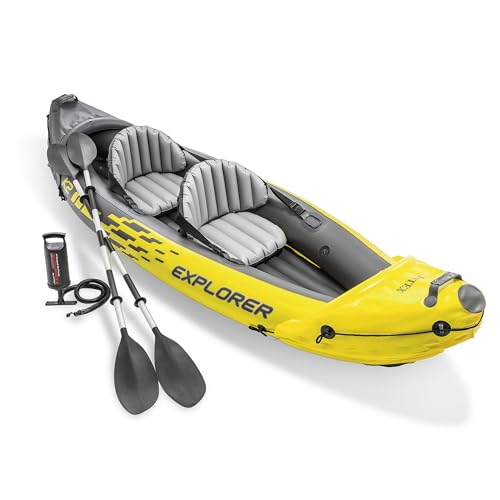
The Intex Explorer K2 is a lightweight, affordable tandem inflatable designed for lakes and mild rivers. Its 400-lb capacity makes it suitable for two average adults plus gear. The kayak features an I-beam floor, a low-profile deck, and high-buoyancy side chambers for stability. It inflates and deflates quickly with a Boston valve and stores compactly in the included bag. Best for travelers and weekend paddlers who want portability and easy setup.
Who it’s best for: couples or trained friends who want a straightforward, family-friendly intro to kayaking without the commitment of a rigid boat. It’s also suitable for light recreational use and casual exploration. When choosing this, plan for limited gear and avoid overpacking beyond the 400-lb limit.
Why selected: strong value for the capacity, easy setup, and reliable stability thanks to the inflatable design and internal floor support. A potential limitation is wear over time with frequent use or exposure to sharp rocks; handle with care and dry thoroughly after use.
Caution: inflatable boats can be less rigid than rigid kayaks on rough water; consider paddling in calm or semi-rough conditions to maximize balance and safety.
VEVOR Kayak Storage Rack for 6 Kayaks
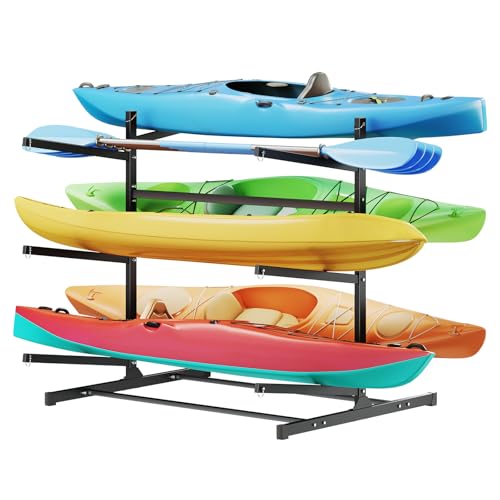
This freestanding storage rack by VEVOR is built to hold up to six kayaks or related watercraft, with a total capacity up to 400 pounds. Its carbon-steel frame, anti-tip base, and upward-angled arms ensure stable storage in garages, docks, sheds, or outdoor spaces. It’s designed to fit a variety of kayak shapes and sizes, offering flexible organization for multi-boat setups.
Who it’s best for: households with several kayaks or a mix of boats, needing a robust, multi-boat solution that minimizes hull contact and distributes weight effectively. It’s particularly suitable for larger storage areas where freestanding racks can be placed away from walls.
Why selected: the 400-lb total capacity and sturdy construction make it a practical, long-term storage choice. A limitation is that assembly can be more involved due to the metal frame and multiple supporting components; ensure secure anchoring if used outdoors.
Caution: rust resistance is present, but periodic maintenance and protection against harsh weather extend longevity.
StoreYourBoard G-Kayak Wall Rack Outdoor

This heavy-duty outdoor wall storage solution is designed to hold up to four boats and supports up to 400 pounds total. It features adjustable arms and a weatherproof, powder-coated steel construction. The design keeps kayaks off the ground, protecting hulls from moisture and physical damage while freeing up floor space.
Who it’s best for: outdoor storage sites where wall-mounted solutions are preferred to optimize space, particularly on decks, sheds, or boathouses. It’s a strong option for families that rotate boats seasonally or store multiple kayaks.
Why selected: reliability in outdoor conditions, adjustable arms for different boat sizes, and a steel build that stands up to weather. A limitation is that it requires wall space and proper mounting hardware; verify wall stud locations and anchors before installation.
Caution: ensure mounting surfaces are structurally sound to prevent sag or failure under load.
StoreYourBoard G-Kayak Wall Rack Indoor
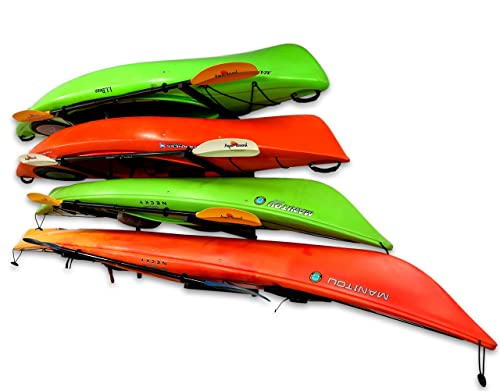
This indoor version of the G-Kayak Wall Rack keeps up to four kayaks securely stored on an interior wall, with a total capacity of 400 pounds. The height and width are designed to fit common garages and storage spaces, and the units offer adjustable arms for accommodating different kayak models and sizes.
Who it’s best for: paddlers with limited floor space or those who prefer indoor storage for better control of climate and humidity. It’s ideal for single-family garages with vertical storage needs and a need to keep boats organized and ready for quick access.
Why selected: compact footprint combined with strong load handling makes it a versatile indoor option. A limitation is that installation requires wall-strength assessment and likely more precise mounting than freestanding racks.
Caution: indoors, ensure adequate ventilation to reduce any moisture buildup that could affect hull materials over time.
Buying Guide: How to Choose a 400-Lb Kayak or Storage Solution
Can the kayak truly hold 400 pounds?
Check the manufacturer’s stated weight capacity for the total load, including paddlers, gear, and any passengers. For inflatable kayaks, consider the recommended number of occupants and test inflation to ensure a stable platform before venturing into deeper water.
What type of kayak fits my needs?
Rigid sit-on-top kayaks offer durability and stiffness, better for standing and rougher water. Inflatable tandem kayaks provide portability and are great for casual use or travelers. If you need to store multiple boats, a storage rack with a 400-lb capacity per level or total capacity is essential for long-term safety and organization.
Indoor vs outdoor storage considerations
Outdoor storage racks should be rust-resistant and weatherproof, with secure anchoring to prevent tipping. Indoor racks should avoid moisture buildup and fit within garage or shed layouts. Consider wall-mounted options to maximize floor space in small areas.
Accessibility and space planning
Choose freestanding racks if you cannot mount on walls or prefer flexible placement. Wall racks save space but require proper mounting and enough wall area. For families with several watercraft, multi-boat storage that maintains each boat’s integrity is valuable.
Durability and maintenance
Sturdy steel or heavy-duty polymer frames resist warping and corrosion. Regular checks for screws, mounts, and rustproof coatings help prolong life. For inflatable kayaks, follow care instructions to avoid punctures and seam wear.
Safety considerations
Always adhere to weight limits, distribute weight evenly, and avoid sharp contact with hulls. When storing kayaks, ensure racks are stable and secure to prevent accidents in windy conditions or during vibrations from nearby activities.
Practical quick-reference tips
- Label each boat with its owner and intended storage location to streamline setup and retrieval.
- Keep a small maintenance kit on hand for quick checks of valves, seams, and mounting hardware.
- Use protective pads on contact points to extend hull life in both storage and transport.
FAQ
Q: Do inflatable kayaks with a 400-lb capacity support two adults and gear?
A: Yes, many inflatable tandem kayaks are designed to accommodate two adults plus gear up to 400 pounds, depending on the specific model and paddler weights.
Q: Can I use a 400-lb storage rack for multiple kayaks of different lengths?
A: Yes, provided the arms are adjustable and the overall dimensions accommodate each boat’s length and hull shape.
Q: Are all 400-lb racks suitable for outdoor use?
A: Not automatically. Outdoor racks require weatherproof coatings and corrosion resistance; indoors may be preferable for some setups depending on climate.
Q: Is a heavier-duty rack always better for kayaks?
A: Not necessarily. A rack should match your storage needs, the number of boats, and the specific boat types you own. Oversized racks can be costly and take up unnecessary space.
Q: How should I prepare my kayak for storage at the end of the season?
A: Clean thoroughly, dry completely, inspect seams and valves, and store in a cool, dry place away from direct sunlight if possible. Use protective padding where hardware contacts hulls.