Answering the needs of campers who require reliable, high-heat cooking in variable conditions, these liquid-fuel stoves excel for backcountry meals, group cooking, and emergency preparedness. Each option below targets a different type of user—from solo hikers to mountaineers—so you can choose based on portability, boil time, and fuel versatility. The following selections emphasize practical performance, clear trade-offs, and real-world suitability without marketing fluff.
| Product | Best For | Key Strength |
|---|---|---|
| Coleman Dual Fuel Stove, Liquefied Petroleum Gas | All-around backpackers and family trips | Reliable dual-fuel capability |
| Mini Camping Stove, Lumirio | Ultralight hikers and fast-and-light trips | High-intensity flame, compact design |
| MSR Dragonfly Compact | Group cooking and expeditions | Exceptional flame control and stability |
| Optimus Polaris Optifuel | Expedition travelers and adaptable fuel users | Multifuel capability with 4-season mode |
| Taruor Portable Outdoor Mini Stove | Budget-friendly, reliable solo trips | Wind baffles and sturdy setup |
Coleman Dual Fuel Stove, Liquefied Petroleum Gas

This stove uses a dual-fuel approach, typically allowing operation on white gas or Coleman fuel, expanding fuel availability in remote areas. Best for campers who want a dependable stove that performs well with common backcountry fuels and can support family-style meal prep.
Best for: Campers who need flexibility with fuel options and steady boil times. The design supports pots of various sizes, making it suitable for group meals or longer trips where fuel variety matters.
Why selected: Its dual-fuel capability reduces the risk of fuel shortages in the wilderness, and construction emphasizes stability for larger pots. The setup is straightforward, which helps when cooking for several people.
Caution: Availability of specific fuel types can vary by region, so plan ahead to ensure you have the right cans or bottles before departure. Cleaning and maintenance are important to sustain performance over time.
Mini Camping Stove, Lumirio

This compact stove emphasizes portability without sacrificing a robust flame output, making it a solid pick for ultralight hikers who still want dependable cooking power. Its auto-pressure-relief and sealed fuel inlet are designed to enhance safety and reliability in the backcountry.
Best for: Solo hikers or climbers who prioritize light weight and quick cooking. Its design supports fast meals during long approaches or before early-sunset camps.
Why selected: The high-intensity flame and short pre-heat time help you get meals ready quickly after a long day. The wind-resistant features improve performance in exposed campsites.
Caution: Fuel not included in some listings, so ensure you have suitable fuel on hand for your destination and climate. A smaller stove may require careful pot selection to optimize heat transfer.
MSR Dragonfly Compact Liquid Fuel Stove

The Dragonfly is known for precise flame control and stability with a wide pot support, making it ideal for group cooking and pots up to 10 inches in diameter. Its efficient burner design minimizes heat loss to the ground while delivering strong, controllable heat.
Best for: Groups and cooks who need reliable simmer-to-boil precision in varied environments. Its generous pot support supports diverse cookware setups.
Why selected: The dual-valve design enables fine flame control, which is critical for delicate sauces or rice that requires steady simmering in the backcountry.
Caution: The stove is somewhat larger and heavier than ultra-portable options, which is a trade-off for performance and stability at camp.
HUIOP Gasoline Stove, Portable Outdoor Stove

This stove highlights quick boil times, with a claimed two-minute boil for 1 liter of water in optimal conditions. It features foldable support arms and wind baffles to improve stability in windy weather, making it a solid choice for shelters or exposed campsites.
Best for: Campers who need fast meals and reliable wind protection. It suits short, day-long trips where speed matters more than multi-fuel flexibility.
Why selected: Short pre-heat and rapid boil times shorten meal prep between hikes, and the wind protection assists in maintaining performance on open sites.
Caution: Fuel type and availability may vary by region; verify local regulations and fuel compatibility before packing.
DUZHONG Outdoor Mini Gasoline Stove
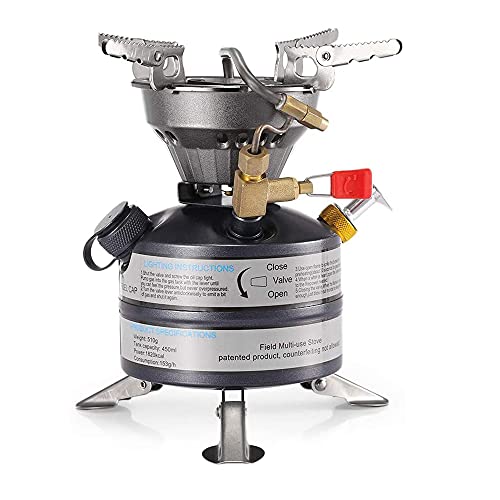
This one-piece, outdoor gasoline stove provides strong fire power with a sturdy, foldable platform. Its compact profile and broad support arms make it suitable for camping, hiking, and fishing trips where space is at a premium but reliable heat is required.
Best for: Budget-conscious hikers who want a straightforward, dependable stove that works with common gasoline fuels. It’s a practical option for short to mid-length trips.
Why selected: The one-piece design reduces setup complexity, and the foldable arms improve stability on uneven ground.
Caution: As with many gasoline stoves, performance depends on fuel quality and altitude; consider carrying fuel that matches climate and elevation for best results.
Optimus Polaris Optifuel Multifuel

The Polaris Optifuel is designed to run on any fuel found anywhere on Earth, including butane, isobutane, propane, white gas, kerosene, diesel, and jet fuel, via a single jet with no nozzle swaps. It includes a four-season mode for higher output in cold weather and a self-cleaning jet with an integrated needle.
Best for: Expedition travelers and climbers who may encounter varied fuel sources or need a single stove that adapts to diverse environments. It’s also a strong pick for emergency kits due to fuel flexibility.
Why selected: The one-jet design simplifies fuel compatibility, while the 4-season mode helps maintain performance in cold conditions. The self-cleaning feature reduces jet clogging risks during long trips.
Caution: The multifunction fuel capability is powerful, but you still must manage fuel procurement and storage carefully, especially in sensitive environments or regulated areas.
Buying Guide: Liquid Fuel Camp Stoves
What matters most for backcountry cooking?
Key factors include fuel versatility, boil time, stability, and weight. If you frequently hike solo, prioritize compactness and fast lighting. For groups or remote expeditions, stability and a wider pot support can be more important than absolute lightness.
Which stove suits your climate and altitude?
Wind protection and heat efficiency matter more at high elevations or in windy camps. Stoves with wind baffles or sturdy pot supports help maintain performance in exposed sites.
How important is fuel flexibility?
Multifuel capabilities reduce the risk of being unable to cook due to unavailable fuel. When possible, choose a stove that handles several common fuel types with minimal adjustment.
Portability vs. performance: where is your line?
Ultralight options sacrifice some stability and pot size for weight. Heavier designs often deliver greater heat stability and can support larger pots for group meals.
Maintenance and reliability
Stoves with straightforward maintenance, accessible replacement parts, and proven track records are preferable for long trips. Consider carrying a maintenance kit for in-field servicing.
Safety notes
Always use stoves on level, stable ground away from flammable materials. Keep fuel containers sealed when not in use and follow manufacturer guidance for lighting and shutdown procedures.
Bottom-line recommendations
- Best for reliability and fuel flexibility: Coleman Dual Fuel Stove or Optimus Polaris Optifuel
- Best for ultralight travel: Lumirio Mini Camping Stove
- Best for group cooking: MSR Dragonfly
- Best for budget-friendly solo trips: Taruor Portable Outdoor Mini Stove
FAQ
- Q: Do liquid-fuel stoves work well at high altitudes? A: Yes, but performance can vary; models with wind protection and efficient jets perform more consistently.
- Q: Is a multifuel stove worth it for casual camping? A: It is useful for unpredictable fuel availability, but add weight and complexity.
- Q: How important is simmer control? A: Important for delicate dishes; stoves with adjustable valves and stable flame are preferable.
- Q: What maintenance should I perform regularly? A: Clean jets, check seals, replace O-rings as needed, and test pump operation before trips.
- Q: Can I use a liquid-fuel stove indoors? A: Never use outdoor stoves indoors or in enclosed spaces due to carbon monoxide risk and fire hazards.
- Q: Which stove is best for beginners? A: A reliable, widely available model with straightforward setup and strong safety features, such as a dual-fuel design, is ideal for beginners.