Answering the buyer’s question directly: these low-profile, roof-mounted A/C units are best for small to mid-sized campers, vans, and lightly larger trucks where height, weight, and off-grid capability matter. The top picks prioritize compact profiles, quiet operation, and battery-powered flexibility for off-road or boondocking scenarios. Each product is suited to different off-grid needs—some maximize battery life, others prioritize rapid cooling in hot climates. The list below highlights five models that balance space efficiency with practical performance for everyday use.
Summary comparison of selected products:
- ICECOSMOS 6.5″ Ultra-Slim: Ultra-slim footprint, strong 10,000 BTU cooling, battery-friendly 12V DC operation.
- Xenjum 12V 11,000 BTU: Very quiet, fast cooling, off-grid capability with high-energy efficiency.
- OutEquip 13,500 BTU DC: Higher cooling capacity in a low-profile form, cooling-only for simplicity.
- OutEquip 12V 10,000 BTU with Heater: Dual function (cooling with optional heater), versatile for mild climates.
- HIBERRY 12,000 BTU: Balanced power and efficiency with a compact exterior; suitable for year-round comfort.
ICECOSMOS 6.5″ Ultra-Slim Rooftop AC

Best for: RVs, vans, light trucks that need maximum space efficiency without sacrificing cooling power. Why selected: 10,000 BTU capacity with a slim 6.5″ profile and optimized airflow ensures even cooling in tight roof spaces. The unit claims 15% more power than standard models and a quiet 39dB ECO mode, aiding off-grid peace of mind.
Notes: The model emphasizes energy efficiency and robust airflow, which can help extend battery life when used with a compatible 12V system. Avoid this if you require built-in heating; the model emphasizes cooling performance with a separate heating option missing from this variant.
Xenjum 12V RV Air Conditioner 11,000 BTU

Best for: Off-grid campers who need quick cooling with low noise demands. Why selected: 11,000 BTU capacity with a low 35 dB noise level makes it suitable for quiet sleep spaces. The unit is 12V DC battery powered and supports off-grid use with solar compatibility, offering practical runtime when paired with a sizable battery bank.
Notes: When choosing off-grid efficiency, consider battery capacity and solar input; this model focuses on cooling efficiency and reduced startup power. Consider a larger battery if you plan long boondocking sessions.
OutEquipPro 12V DC 10,000 BTU AC (No Heater)

Best for: Trucks or vans needing a robust cooling unit with a straightforward cooling-only operation. Why selected: A 10,000 BTU capacity in a low-profile package offers strong cooling with a simple electrical path, reducing potential failure points associated with combined heating/cooling systems.
Notes: This model is cooling-only; if you need heating in cold seasons, choose a model with integrated heating or plan a separate heating solution for off-grid use.
OutEquip 12V 10,000 BTU (Heater Included)
Best for: Off-grid setups in cooler climates where occasional heating is beneficial. Why selected: This unit provides 10,000 BTU cooling and a 4,500 BTU heater, offering year-round comfort in compact spaces. It’s best for buyers who want a dual-function system without a separate heater unit.
Notes: The heater is supplementary and not intended as a primary heat source in extreme cold or large spaces. Ensure heater usage aligns with device specifications and climate expectations.
RecPro RV Steps 24″ Single Step (Not an A/C)
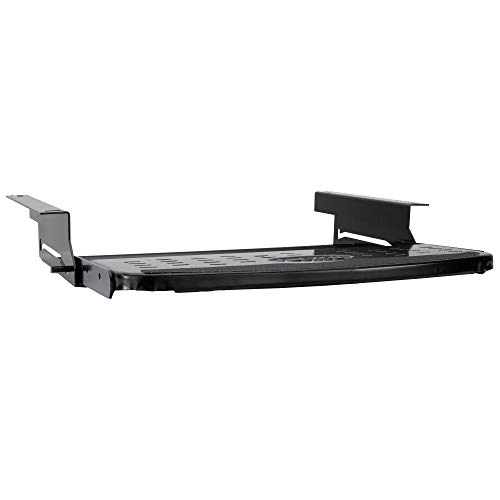
Best for: RV owners upgrading entry access alongside a new A/C system. Why selected: While not an air conditioner, a low-profile step can complement a compact RV interior by preserving clearance and ease of use for smaller rigs where roof space is prioritized. This product provides a practical pairing for tight-space campers.
Notes: This is not a cooling unit and should be evaluated separately from cooling needs. It’s listed here to reflect adjacent equipment considerations for compact RV setups.
Buying Guide: Practical Considerations For Low-Profile Truck Campers
- Ventilation and profile: Measure roof height clearance and ensure the unit’s height stays within your camper’s available space. Low-profile models are designed to maximize interior headroom while preserving exterior clearance.
- Voltage and power: Most units operate on 12V DC for off-grid use. Check battery capacity and solar capabilities to support running time, especially in boondocking scenarios.
- Cooling capacity vs. space: BTU ratings indicate potential cooling speed and effectiveness. For smaller spaces, 10,000 BTU is often enough; for larger small campers, consider 12,000–11,000 BTU models if the roof space allows.
- Heater integration: If you need warm air in shoulder seasons, choose models with built-in heating. Note that some units include a heater as a secondary feature and may not be suitable as a primary heat source in extreme cold.
- Durability: Look for UV-stabilized housings, corrosion-resistant condensers, and weather-sealed gaskets to withstand outdoor exposure.
- Noise levels: Quieter units (e.g., under 40 dB in eco mode) improve sleep quality. Consider the unit’s decibel rating when choosing for a bedroom or sleeping area.
- Compatibility: Ensure your vehicle’s electrical system, battery bank, and inverter (if used) can support startup surges and continuous operation without battery drain.
- Installation considerations: Check roof thickness, mounting brackets, and sealant requirements. Some units require professional installation for optimal sealing and performance.
Frequently Asked Questions
- What does “low profile” mean in RV air conditioners?
– It refers to a shorter exterior height designed to fit in tighter roof spaces while maintaining cooling performance. - Can I run a 12V RV air conditioner off a standard car battery?
– It’s possible with a sufficiently large 12V battery bank and appropriate power management, but typical car batteries may not sustain prolonged operation. - Do these units require a generator?
– Not necessarily. Many are designed for off-grid use with battery power and solar, though a generator can help in prolonged off-grid periods. - Is heating included in all low-profile RV AC units?
– No. Some models include heating as an auxiliary feature; others are cooling-only and require a separate heater if needed. - How important is insulation for performance?
– Proper insulation reduces heat gain, improves cooling efficiency, and extends off-grid runtime by reducing load on the AC system. - What maintenance is recommended?
– Regularly check seals, clean air filters, and inspect condensers for debris. Address any unusual noises promptly to prevent wear.