Answering the search for durable, comfortable memory foam sleeping pads, this guide highlights five top options that balance support, portability, and practicality for campers, car travelers, and guests. These pads are suited for backpackers seeking comfort on hard ground, families needing a quick guest bed, and solo travelers who want a reliable night’s rest outdoors. The table below summarizes key details to help you compare at a glance.
| Product | Best For | Key Benefit | Notable Limitation |
|---|---|---|---|
| CYMULA CertiPUR-US Memory Foam Camping Mattress Pad | Car camping and tents | High-density memory foam for body-conforming comfort | Bulkier than ultralight pads |
| CYMULA 3 Inch Memory Foam Camping Pad | Guests and car camping | Non-slip, removable washable cover with thicker profile | Heavier than thinner mats |
| HiiPeak Memory Sleeping Pad | Backpackers and multi-season camping | Ultra-thick, 2.6″ cushion with 9.5 R-value insulation | Self-inflation plus pump adds setup steps |
| Zzuvjoy Memory Sleeping Pad | Family trips and car camping | 9.5 R-value, self-inflating with foot pump | Higher price point for foam-plus-foam design |
| OGERY Self-Inflating Sleeping Pad | Car tents and outdoor bases | 3″ foam with built-in foot pump for easy firmness control | Heavier than standard air pads |
CYMULA CertiPUR-US Memory Foam Camping Mattress Pad

This memory foam camping pad is designed for comfort-first campers. It uses high-density memory foam to contour to body shape and weight, providing full support and shock absorption for a restful night outdoors. It is labeled CertiPUR-US certified, a safety promise that helps reduce exposure to harmful chemicals compared with traditional foams.
Best for: Campers who want a stable, supportive surface on uneven ground and those who value certified materials for indoors-to-outdoors use. The pad rolls up with a travel bag, and the non-slip waterproof bottom helps it stay in place on rocks, dirt, or tent floors. It’s ideal for adults who prioritize cushioning and long sleep horizons.
Limitations: The pad is less compact than ultralight options, so it takes more space in a pack or trunk. It weighs more than thinner alternatives, which matters for long backpacking trips.
CYMULA 3 Inch Memory Foam Camping Pad

This extra-thick camping pad uses carbon-fiber high-elasticity memory foam atop a high-density base foam to deliver a plush, cushioned feel on hard floors, cots, and tents. The roll-up design and included straps simplify transport, and a removable washable cover makes upkeep easy after outdoor use or guest stays.
Best for: Guests or car campers who want a thick, stable surface with straightforward maintenance. The removable cover is a practical feature for cleanliness after heavy outdoor use.
Limitations: Heavier and bulkier than thinner pads, which can impact packing efficiency for ultralight trips.
HiiPeak Memory Sleeping Pad
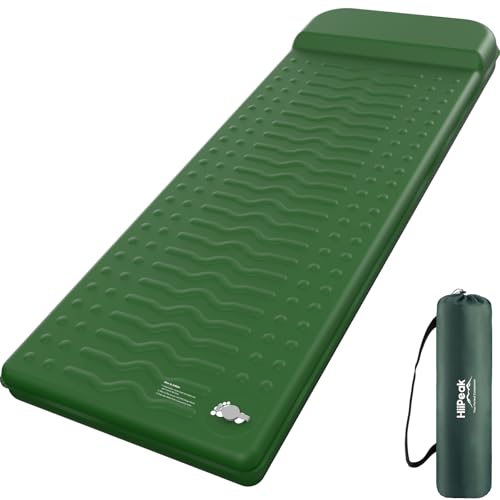
HiiPeak combines a memory foam core with a surface designed to reduce pressure points in key zones such as the hips and shoulders. The pad is notably thick and insulated, delivering warmth and comfort that helps minimize tossing and turning in outdoor sleep environments.
Best for: Backpackers and travelers who need a robust, supportive pad that stays warm in cool nights. It suits users who value a large sleeping surface without sacrificing insulation. The setup is quick, with a smart valve system aiding inflation and deflation.
Limitations: The additional thickness and dual-layer valves add setup steps compared with simpler foam pads, and heavy use can reduce portability for long treks.
Zzuvjoy Memory Sleeping Pad

This memory foam pad features a foam-and-air hybrid design with self-inflating capability via a foot pump. High-density 19D foam provides contouring support, distributing weight to relieve pressure on shoulders, hips, and back. The air component helps customize firmness for individual nights.
Best for: Families or groups who want a flexible sleep surface that can adapt firmness and accommodate various body types. The foot pump method simplifies setup, which is helpful for campers with limited breath control or those who share packing duties.
Limitations: The combined foam and air system may be heavier than pure foam mats, affecting overall portability for long-distance trips.
OGERY Self-Inflating Sleeping Pad

OGERY’s pad blends high-density foam with a self-inflating design and a built-in foot pump. The open structure allows for rapid setup and adjustable firmness, making it suitable for car camping, tents, and other outdoor bases. A durable fabric and non-slip base help prevent shifting during the night.
Best for: Campers who value a fast, controllable setup without external pumps. The foam core provides comfortable cushioning, while the integrated foot pump enables on-the-spot firmness tweaks.
Limitations: It is heavier than many ultra-portable sleeping pads, which may impact backpacking practicality for long hikes.
Buying Guide: Key Considerations For Memory Foam Sleeping Pads
- Sleeping surface and insulation: Look for pads with high-density memory foam and adequate insulation (R-value) for your typical camping climate. Higher R-values help reduce heat loss in cool environments.
- Thickness and support: Thicker pads (2.5″–3.5″) generally offer greater cushioning, but weigh more and take up more space. Choose based on whether you prioritize comfort or portability.
- Portability and setup: Roll-up designs and integrated pumps simplify transport and inflation. Self-inflating options are convenient but may be heavier; consider your packing method and trip type.
- Durability and materials: CertiPUR-US certification signals safer foam. Durable fabrics with non-slip bottoms help keep the pad in place on rough or slick surfaces.
- Maintenance: Removable, washable covers extend the pad’s life. Check care instructions to avoid material damage during cleaning.
- Use-case flexibility: Some pads work better for guests at home, while others are tuned for extended outdoor use. Consider who will use the pad most and where it will be deployed.
Frequently Asked Questions
- What is memory foam padding best used for outdoors?
It provides contouring support and pressure relief on ground surfaces, improving sleep quality for campers and car travelers. - Are memory foam pads waterproof or water-resistant?
Many have a water-resistant bottom, but protection varies by model. Always use a protective ground cover or bivy to guard against moisture. - How thick should a camping memory foam pad be?
Thicker pads (2.5″–3.5″) generally offer more cushioning; thinner pads are lighter and pack smaller, suitable for minimalists. - Is CertiPUR-US certification important for camping foam?
Certification indicates safer foam materials, reducing potential exposure to harmful substances in indoor and outdoor use. - Can I wash memory foam pads?
Removable covers are washable in most cases. Foam cores should not be machine-washed; spot clean and air dry as directed by the manufacturer. - How do I store a memory foam camping pad when not in use?
Roll or fold it according to the product instructions, and keep it in a dry bag or protective case to prevent compression over long periods.