Answering the search for a flexible, modular sleeping bag system, this guide compares five top options designed for extreme weather, field use, and easy transport. Best for outdoor professionals, survival enthusiasts, and mission-ready campers who need versatile configurations—from mild nights to sub-freezing conditions. The table below highlights each option’s core strengths to help you decide quickly.
| Product | Best For | Key Benefit |
|---|---|---|
| USGI Gear Military Sleeping Bag System | All-Weather Readiness | Comprehensive 4-piece modular system from 50°F to -50°F |
| MT Army Modular System (All Season) | All-Season Versatility | Nylon ripstop with polyfill and bivy for extreme temps |
| MT Modular Sleep System (Front-Zip) | Easy Entry/Exit | Front-zip design with vacuum compression sack |
| MT Center-Zip Military Modular System | Fast Access | Center zipper with three-layer modular design |
| MT Army OCP Modular System | ODP Comfort | All-season setup with durable bivy and flexible layers |
USGI Gear Military Sleeping Bag System
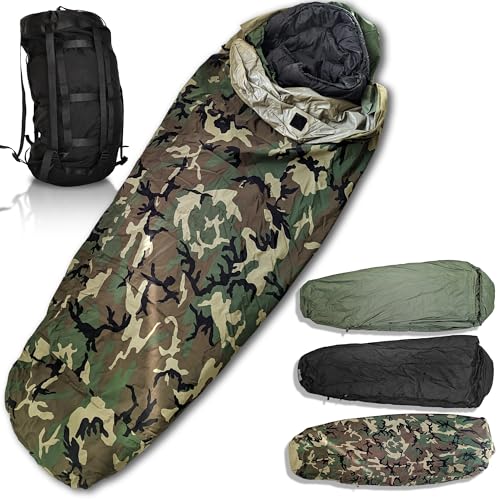
This complete 4-piece modular system includes a Patrol Sleeping Bag, Intermediate Cold Weather Bag, Waterproof Bivy Cover, and Compression Stuff Sack. It covers temperatures from 50°F down to -50°F, making it suitable for rapid weather changes and high-altitude environments. Best for: field teams, search-and-rescue units, and outdoor professionals who need reliable coverage across seasons. The dual-layer insulation and triple-laminated waterproof bivy provide wind and moisture defense, while heavy-duty zippers and secure closures improve field reliability. Caution: bulk may be heavier than minimal setups when packing for light backpacking.
Why this was selected: It offers the widest temperature range in a single 4-piece system, reducing the need for multiple bags. The durable 210T nylon ripstop with DWR coating contributes to tear resistance and water repellency in harsh environments. The system’s design emphasizes reliability under field conditions, including secure closures and a robust bivy cover.
Best for: responders, expedition teams, and users who expect access to extreme conditions without swapping components.
Limitation: The kit’s size and weight can be less ideal for ultralight backpackers or solo hikers prioritizing minimal gear.
MT Army Modular System, All Season

MT’s all-season modular setup features a bivy cover, patrol/recon sleeping bag with nylon ripstop shell, and high-grade filling for warmth and compression resistance. It is designed for extreme temperatures, with a comfortable range around -15 to 0 degrees Fahrenheit when used with all components, potentially reaching -40°F in combined configurations. Best for: cold-weather hikers, military preppers, and survivalists who need reliable warmth in damp environments. The head Velcro and heat-treated seams support quick access and moisture resistance. Caution: some users may find sizing variants in long or wide configurations depending on lineup.
Why this was selected: The combination of a durable bivy, high-grade filling, and YKK zippers provides a dependable cold-weather experience with flexible layering. The system emphasizes thermal performance and moisture management, which is critical in extended cold snaps.
Best for: those who require dependable insulation even when wet, plus easy layering for varying outdoor conditions.
Limitation: Temperature performance can vary with packing density and user insulation layering; check fit before buying for your body size and climate.
MT Modular Sleep System – Front-Zip
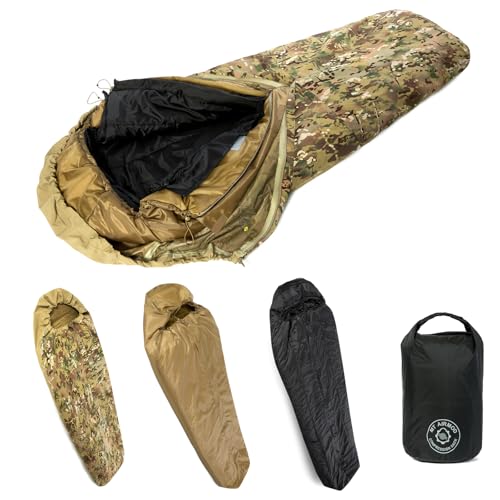
The MT Modular Sleep System features a 4-piece build with a centerline front zipper for faster entry and improved ventilation control. It includes a vacuum compression sack that reduces space while keeping components dry and compact. Best for: tactical users and outdoor professionals who value quick access during emergencies or rapid egress. The vacuum sack reduces volume by up to about two-thirds, enabling easier transport. Caution: front-zip design requires careful alignment for proper closure to maintain insulation.
Why this was selected: The upgraded front-zip design enhances entry/exit time, which can be crucial in tactical or fast-moving field scenarios. The vacuum compression system is a standout for space-conscious packs and transport efficiency. The combination of a waterproof shell and high-grade filling supports cold-weather use.
Best for: users prioritizing quick access and compact storage over maximum flexibility in single-night setups.
Limitation: Front-zip arrangement may not perfectly suit all body types; verify compatibility with your shoulder width and torso length.
MT Military Modular System with Center Zipper

This 3-layer modular design includes a patrol bag, intermediate bag, and a waterproof bivy cover. Center zipper construction allows faster entry and better compatibility with modular tactical gear. It uses water-resistant ripstop nylon and a soft interior lining for long-lasting outdoor use. Best for: marines, field scouts, and tactical teams who value rapid access and reliable weather protection. Caution: ensure proper seam sealing to preserve moisture resistance when used in heavy rain or snow.
Why this was selected: The center zipper improves egress and ventilation control in critical moments, while the three-layer system offers flexible weather protection that scales with conditions. The durable materials support long-term field deployments.
Best for: users who want a quick-access setup without sacrificing insulation or waterproofing in mixed environments.
Limitation: Slightly more complex than a single-bag setup; some users may require a fitting adjustment to their pack configuration.
MT Army OCP Modular System

The MT OCP version presents a durable bivy, patroller/Recon sleeping bag with high-fill insulation, and a robust double-sided YKK zipper. The system supports temperatures approximately from 5-15 degrees Celsius with comfortable ranges down to -40°C when combined with intermediate and patrol bags. Best for: military-style field ops, survival training, and expeditions in variable climates. Caution: color options may influence heat absorption; consider internal layering for sun exposure or warmer days.
Why this was selected: The OCP color scheme and rugged build align with mission-ready setups, and the multi-layer approach offers reliable warmth and moisture control in tough environments. The high-quality zippers and heat-treated seams contribute to durability in harsh conditions.
Best for: users who need a rugged, all-terrain system with proven layer redundancy for extreme conditions.
Limitation: The combination of multiple pieces can require careful packing to avoid redundancy; plan your bag configuration before travel.
Buying Guide: Key Considerations For A Modular Sleep System
- Temperature range: Determine your typical environments. Look for a system that covers the coldest conditions you expect, plus comfortable options for milder nights.
- Weight and packability: Consider the trade-off between warmth and carried weight. Vacuum compression sacks can save space but add complexity.
- Entry design: Front-zip or center-zip configurations can impact ease of use, emergency egress, and ventilation control.
- Durability and weatherproofing: Check fabric ripstop, DWR coatings, and waterproof bivy features for reliability in wet climates.
- Modularity: Ensure the system can be used as standalone bags or combined for extreme conditions. Compatibility with your existing gear matters.
- Size and fit: Verify bag widths and lengths fit your frame. Some configurations emphasize flexibility, others prioritize compactness.
FAQ
- What is a modular sleeping bag system?
It is a set of separate bags and a bivy cover designed to be combined or used individually for varying weather and mission needs.
- Which configuration is best for extreme cold?
Typically a Patrol Bag plus Intermediate Cold Weather Bag with the waterproof bivy provides the widest protection.
- Do center-zip or front-zip designs affect warmth?
Both designs can be warm when properly layered; the choice mainly affects entry speed and ventilation control.
- Is a vacuum compression sack necessary?
Not strictly, but it can significantly reduce packing volume for multi-piece systems and improve transport efficiency.
- How do I choose a size?
Match bag dimensions to your torso and shoulder width; ensure there is enough room to move without creating cold spots.