Answering the demand for reliable warmth and hot water in off-grid setups, these propane-powered options cover portable showers, outdoor heating, and compact home-use scenarios. The top picks are suited for campers, tiny homes, cabins, and emergency preparedness. Each product section explains who benefits most, why it’s a fit, and a practical caveat to consider.
Buyers looking for off-grid propane solutions can compare compact tankless heaters, outdoor patio units, and complete shower kits. The table below highlights five strong options and what they’re best for:
| Product | Best For | Key Benefit |
|---|---|---|
| CAMPLUX BW264B | Hot water on the go | High 68,000 BTU/hr; 2.64 GPM |
| GASLAND BE158 | Off-grid showers | 1.58 GPM; CSA certified |
| Jocoevol Portable Heater | Power-outage resilience | Three modes; no electricity needed |
| CAMPLUX AY132P43 Kit | All-in-one shower setup | 12V pump; long reach cables |
| Gsmhoat Patio Heater | Outdoor spaces | 3 heat settings; safety features |
CAMPLUX BW264B Tankless Water Heater

The CAMPLUX BW264B is designed for off-grid showers and outdoor use with a potent 68,000 BTU/hour output and a 2.64 GPM flow. It features an LED display for easy temperature monitoring and a simple ECO/FULL knob to conserve propane when high flow isn’t necessary. Best for campers, RVers, or anyone needing instant hot water away from hookups. A potential limitation is that high heat output requires a steady propane supply and appropriate venting in enclosed spaces.
GASLAND BE158 Tankless Water Heater

The GASLAND BE158 offers 41,000 BTU with 1.58 GPM capability and CSA certification for safety. It’s well-suited for off-grid showers, camping, and tiny homes that rely on a standard 20 lb propane tank and an electronic ignition. Best for users who want a compact, certified unit with reliable cold-water start. Caution: ensure adequate water pressure to start and maintain flow; very low pressure (below about 3–4 PSI) may hinder performance.
Jocoevol Propane Heater Outdoor Portable
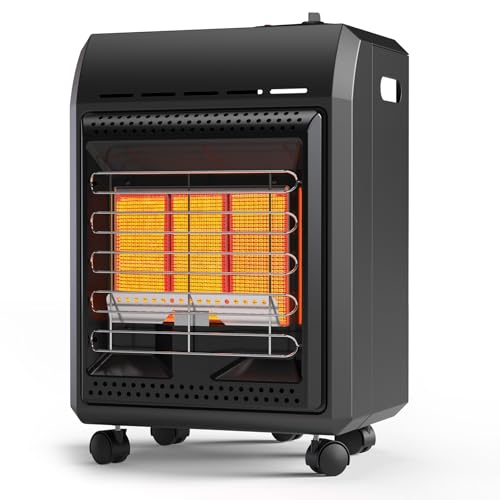
Jocoevol’s heater provides 6,000/12,000/18,000 BTU options and warms up to 450 sq ft. It operates without electricity, relying on a standard 20 lb propane cylinder. It’s ideal for outdoor spaces, power outages, and remote patios. Best for those who need flexibility and silent operation. Limitation: no built-in oxygen depletion sensor, so use with caution in poorly ventilated areas and outdoors only.
GASLAND BE158S Tankless Water Heater

The BE158S is a CSA-certified, 41,000 BTU tankless water heater offering 1.58 GPM; it includes a digital display and multiple protection features. It’s suitable for camping, RV life, and off-grid cabins that require hot water on demand. Best for users who value robust safety protections and a compact footprint. Caution: as with other gas heaters, ensure proper venting and follow all safety guidelines in enclosed spaces.
CAMPLUX AY132P43 Portable Shower Kit

The AY132P43 kit combines a 1.32 GPM tankless water heater with a 12V pump and long extension cables to pull water from distant sources. It’s designed for off-grid camping or RV setups that lack tap water. Best for those who want an all-in-one portable shower system and extended power reach, though the kit requires a 12V power source for the pump.
Propane Patio Heater 18,000 BTU

This foldable outdoor heater delivers 6,000/12,000/18,000 BTU and includes a CSA-approved regulator for safe use with a 20 lb propane tank. It covers up to about 450 sq ft and is suitable for garages, porches, or backyards. Best for versatile, temporary warmth outdoors. Caution: ensure adequate ventilation and never use indoors unless the unit is specifically rated for indoor operation.
Mr. Heater Buddy Radiant Portable Heater
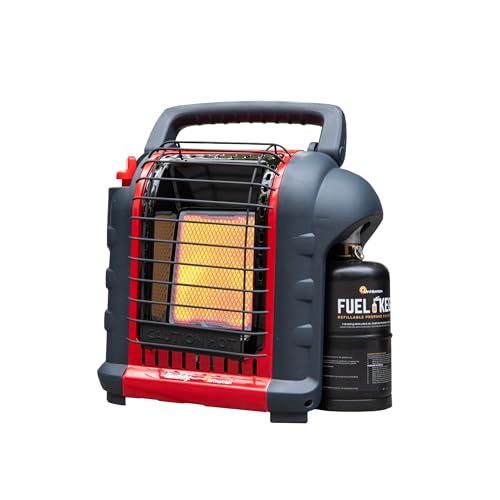
The Mr. Heater Buddy delivers 4,000–9,000 BTU of radiant heat and is designed for indoor and outdoor use, heating up to roughly 225 square feet. It’s a compact choice for small spaces, tents, or sheltered outdoor areas. Best for personal warmth in tight spaces. Caution: ensure adequate ventilation and avoid using near flammable materials or in closed rooms without proper airflow.
Buying Guide: Key Purchase Considerations
- What is your primary use? Off-grid showers, outdoor heating, or portable heating for tents and cabins each benefit from different features such as continuous hot water flow, higher BTU output, or built-in safety protections.
- How much space do you need to heat? For larger outdoor areas, look for heaters with higher BTU ranges and coverage in square feet; for compact spaces, prioritize smaller, safer units with good venting.
- Do you need electrical independence? Propane-only units work without electricity; select models with 12V pumps or battery operation if you plan to avoid power hookups.
- Safety features matter. CSA or other certifications, oxygen depletion sensors, flame-out protection, and tip-over switches increase safety in off-grid environments.
- Water flow and pressure considerations. When selecting tankless water heaters, check GPM ratings and minimum water pressure to ensure reliable performance in camping or tiny-home setups.
FAQ
- Q: Can these propane heaters be safely used indoors? A: Only if specifically rated for indoor use and vented as required. Many off-grid heaters are intended for outdoor or well-ventilated spaces.
- Q: Do these units require electricity? A: Some operate without electricity (manual ignitions, gas-only models), but others include electronic ignition or pumps that need power.
- Q: What is the typical hot water flow for tankless models? A: Most off-grid tankless options provide between 1.58 and 2.64 GPM, depending on water temperature rise and gas output.
- Q: Is CSA certification necessary? A: CSA or similar certifications indicate adherence to safety standards; they are highly recommended for propane appliances used off-grid.
- Q: How should I size BTU for my space? A: Larger outdoor areas benefit from higher BTU (6000–18000 BTU ranges) while smaller spaces can be adequately heated with lower BTU settings.
- Q: Are these units easy to install? A: Most install with standard propane connections and basic venting; however, follow installation manuals and local codes, or consult a professional for complex setups.