When choosing an off-grid RV air conditioner, the goal is clear: reliable cooling or heating without draining your battery or generator. This guide highlights five 12V–powered or solar-friendly options suited for boondocking, van life, and trailers. Each pick targets a different use case, from ultra-quiet nights to heating on cold mornings. The top products are best for off-grid travelers, quiet campers, and those seeking efficient power use.
| Product | Best For | Key Benefit |
|---|---|---|
| iRooVee 12V Air Conditioner With Heat | Full-season off-grid campers | Fast cooling and heating with battery-powered operation |
| Somokg 12V 11k BTU Cooling With Heater | Extended boondocking trips | Soft-start, long runtime on battery |
| Xenjum 12V With Heater | Cold nights on off-grid trips | Fast cooling, heater support, low energy |
| Xenjum 12V No Heater | Compact off-grid setups | Low energy use, quiet operation |
| Furrion Chill Cube 18k BTU Rooftop | Higher cooling capacity for larger rigs | Variable speed, efficient rooftop cooling |
iRooVee 12V Air Conditioner With Heat

Best for: Weekend warriors and cross-country travelers who face varied climates. This unit delivers 11,000 BTU cooling and 3,500 BTU heating, powered by a vehicle battery for off-grid use. It cools quickly, reaching comfort in about 10 minutes, and pairs with a typical 12V battery setup for prolonged camping sessions.
Why selected: High cooling power with heating makes it versatile for all-season use in RVs, vans, and boats. The rapid climate response is ideal for sudden heat waves or chilly mornings, supporting comfort without external fuel or noise penalties.
Limitations: Battery size and solar capability strongly influence runtime; ensure a robust battery bank (e.g., 300–480 Ah) for longer days off grid. Noise levels are kept low, but some vibration can occur on rough terrain.
Somokg 12V 11k BTU Cooling With Heater

Best for: Off-grid travelers who want a compact, dual-temperature option for fluctuating climates. This unit provides 11,000 BTU cooling plus 4,500 BTU heating, with a soft-start feature that reduces startup surge and extends battery life.
Why selected: Soft start helps preserve battery health during startup, an important consideration when relying on solar or limited generator time. The 360° venting ensures even airflow, making it suitable for smaller cabins or vans.
Limitations: Cooling and heating performance depend on battery capacity. In very cold or extremely hot environments, you may need supplemental insulation or a secondary heating source.
Xenjum 12V With Heater
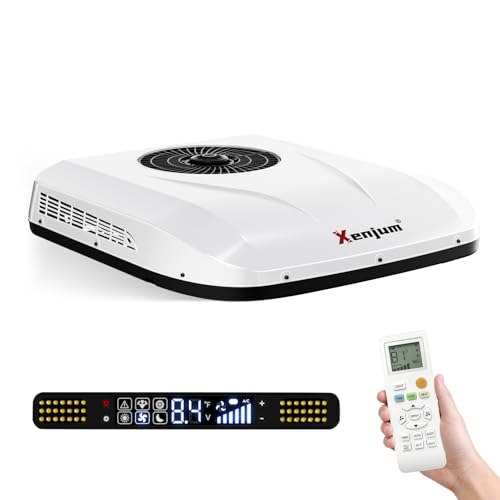
Best for: Off-grid setups seeking robust cooling plus heater support for shoulder seasons. It offers 11,000 BTU cooling and 4,500 BTU heating, with a soft-start design to minimize power spikes.
Why selected: The heater option expands usability beyond summer, creating a comfortable space during cool nights. It’s designed for battery-powered operation, aligning with off-grid solar and battery plans.
Limitations: The unit’s efficiency depends on battery capacity; a larger bank or solar array improves performance in extreme weather. Quiet operation helps night-time use, though installation space matters on smaller rigs.
Xenjum 12V Without Heater

Best for: Smaller rigs or budgets where heat is not needed but off-grid cooling is essential. This unit focuses on energy efficiency and quiet performance with 11,000 BTU cooling capacity.
Why selected: Ultra-low energy use and quiet operation make it ideal for light sleepers and small campers relying on limited battery capacity. A good option when heating is not a priority.
Limitations: No built-in heating means you’ll need a separate heater if you experience cold nights. Ensure compatibility with your RV’s electrical system and battery size before installation.
Furrion Chill Cube 18k BTU Rooftop

Best for: Larger RVs or camper vans where rooftop mounting and higher cooling capacity are advantageous. This unit uses variable speed compression for efficient cooling and extended battery runtime in off-grid settings.
Why selected: Higher cooling capacity helps when several occupants or larger living spaces are involved. The rooftop format saves interior space and benefits from a robust variable-speed system for efficiency.
Limitations: This is an “AC unit only” model; installation components or ducting may be sold separately. Ensure your roof can accommodate a larger unit and that wiring is compatible with your system.
Buying Guide
What should I consider for off-grid RV cooling?
Power source compatibility is critical. Look for 12V DC operation or models designed to run with solar and battery banks. A soft-start feature reduces startup surge, saving battery life over multiple cycles.
Heating or cooling needs
If you need year-round comfort, prioritize units with heating capabilities. Heaters add complexity and energy use, so ensure your battery capacity and solar input can sustain both cooling and heating needs.
Noise and comfort
Quiet operation improves night-time comfort and reduces generator reliance. Consider dB levels and fan design when choosing a model for shared campsites or quiet zones.
Installation and space requirements
Rooftop units free interior space but require roof mounting and structural compatibility. Portable or under-cabinet options suit smaller rigs or flexible layouts but may have limited cooling capacity.
Battery and solar planning
Match the unit’s runtime with your battery bank. If you plan long boondocking sessions, a larger battery or additional solar panels will provide more reliable cooling without generator use.
Compatibility and future needs
Consider whether you prefer a heater-equipped system for shoulder seasons, or a higher-capacity unit to cover more space. Ensure your RV’s electrical system and circuits can safely handle the chosen AC unit.
Quick comparison
- Best for all-season off-grid comfort: iRooVee 12V with Heat (11k cooling, 3.5k heating).
- Best for long boondocking runs: Somokg 11k with Soft Start (long runtime on battery).
- Best for cold nights: Xenjum 11k with Heater (heater support, quiet).
- Best compact option without heater: Xenjum 11k No Heater (low energy use, small footprint).
- Best high-capacity rooftop option: Furrion Chill Cube 18k BTU (roof-mounted, variable speed).
FAQ
- Q: Do these units run on standard RV batteries? A: Most are designed for 12V battery systems common in RVs and vans, but check each model’s required Ah battery size for expected runtimes.
- Q: Can I run these off solar power? A: Yes, many models support solar or battery-powered operation, but performance depends on solar input and battery capacity.
- Q: Is heating necessary in an RV air conditioner? A: If you experience cold mornings or shoulder seasons, heating is beneficial; otherwise, cooling-focused models may suffice.
- Q: Is installation difficult? A: Rooftop units require mounting and roof wiring; portable units are easier but may have different power needs and space requirements.
- Q: Which model is best for a large RV? A: The Furrion Chill Cube 18k BTU is designed for higher cooling capacity and larger spaces, though installation considerations apply.
- Q: Do these units exhaust hot air outside? A: Yes, most rooftop and portable units vent heat outdoors; ensure proper venting and clearance around the unit.