If you’re shopping for a one person instant tent, you want fast setup, dependable weather protection, and a compact pack size. This guide highlights select options that are ideal for solo campers, hikers, or backpackers who value an effortless pitch and reliable shelter. The top picks are designed for different priorities, from ultralight carry to extra interior space. Use the buying table below to compare key features at a glance, then read each product’s specifics to decide who each tent is best for.
Summary table of chosen products
- Night Cat Pop-up Camping Tent: 1 Person – Quick setup, compact pack, roomy interior for one.
- Night Cat Upgraded Backpacking Tent – 1 Person – Clip-style setup, lightweight, compact vestibule.
- camppal 1 Person Tent – Windproof and waterproof with extended length for taller users.
- Golabs CT3 2 Person Tent – 2-person capacity, 60-second setup, good for sharing gear.
- Mimajor 2-3 Person Tent – 40-second automatic setup with detachable rainfly for versatility.
Night Cat Pop-up Tent: 1 Person

Best for solo hikers who want ultra-fast setup. This Night Cat 1-person tent uses an upgraded folding method that deploys in about 3 seconds. The design aims to be easier to fold back than traditional pop-ups, reducing packing volume by about 40%. Inner space measures 7.7 x 3.3 x 2.95 feet, enough for a twin air mattress or a single sleeping pad plus gear. A compact 1.5 kg weight and a small pack size make it a strong choice for short weekend trips or ultralight endeavors. Caution: practice folding to ensure a smooth return to package form.
Best for: solo campers who prioritize speed, minimal bulk, and simple packing.
Why selected: It emphasizes quick deployment and compact packing while offering a roomy interior for one person. The tent’s fold method is optimized for smaller packages, helping with backcountry logistics.
Limitations: The setup and break-down may require a quick instructional pass to master the folding pattern, especially if you’re learning the process.
CampExo Camping Tent, 2-3 Person

This tent uses a quick setup system designed for two to three people, but it’s included here for context on comparable instant tents. It features a simple pole system that sets up in seconds and a spacious interior measuring 112 inches by 78 inches by 47 inches, suitable for two adults and gear. The fabric is 190T polyester with a PU 3000mm rainproof coating, and it includes a rainfly and taped seams for light to moderate rain protection. Best for: solo travelers who sometimes bring gear for a companion or those who want extra space on longer trips. Caution: larger footprint means more pack volume than a strict 1P model.
Night Cat Backpacking Tent, 1 Person

Best for backpackers who want a clip-based setup and a compact footprint. This Night Cat 1-person tent uses upgraded clips to attach the tent to poles, enabling faster assembly, typically around a minute. The interior is sized for one adult, with a small vestibule suitable for storing shoes or compact gear. It’s designed to be rainproof and wind-resistant, supported by fiberglass poles and a stable frame. Caution: vestibule space is modest, so plan for essential gear storage inside the main shelter if you carry bulk items.
Best for: solo travelers who prize quick setup, light weight, and a simple single-person shelter.
Why selected: Clip-based assembly reduces setup time and simplifies packing, which is ideal for fast-change conditions or unpredictable weather.
camppal 1 Person Tent

Best for taller solo campers who need extended interior length. This 1-person tent offers inner dimensions around 8.2 feet long with a total outer tent length that accommodates longer sleepers. Features include windproof and waterproof construction, with 3500–4000mm water resistance and CPAI-84 fire retardant standards. The single ridge pole setup is straightforward, and the tent is lightweight for backpacking. Caution: the extra length adds weight and bulk compared to ultra-minimalist 1P designs.
Best for: taller individuals who want more legroom and a sturdy single-occupant shelter in high-wind or wet weather.
Why selected: Provides extra length without sacrificing waterproofing or overall stability, making it a practical choice for longer trips or taller users.
Mimajor 2-3 Person Tent
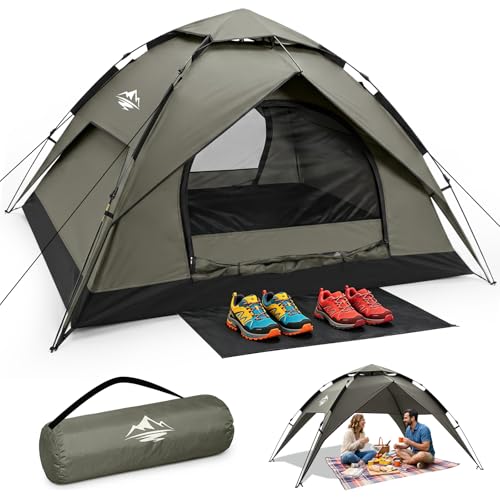
Best for flexible group outings where a tent is shared or used as a larger shelter. This tent features an automatic hydraulic setup claimed to deploy in about 40 seconds, with a detachable rainfly for versatile use as a sunshade or shelter when rain is not a concern. It includes a double-layer design, 210D polyester with a 3000mm waterproof rating, and a thick groundsheet to help keep the interior dry. Caution: this is a larger tent, so it may be less ideal for ultralight solo travelers who strictly need the smallest pack size.
Best for: solo campers who occasionally share gear with a partner or those planning 2-3 person trips who still want quick setup.
Why selected: Combines a fast setup with the option to function as a larger shelter, offering adaptability for changing group needs and weather conditions.
Buying Guide
What to consider when choosing an instant tent for one person
- Setup speed: If you hike solo and arrive after dark or in unstable weather, prioritize tents with drag-free pop-ups or clip-based assemblies for faster pitching.
- Pack size and weight: Ultralight models favor solo hikers with tight packing constraints. Check both packed dimensions and weight to ensure it fits your kit.
- Interior space: Look for interior dimensions that comfortably fit your sleep system (pad, sleeping bag, and headroom) without feeling cramped.
- Weather protection: A 1500–3000mm or higher rain resistance, seam-taped construction, and wind-stable poles improve reliability in varying conditions.
- Durability vs. portability: Heavier fabrics often provide better durability in rugged environments; lighter fabrics save weight but may sacrifice longevity.
- Ventilation: Adequate mesh panels and vents help reduce condensation and keep the interior comfortable in warmer weather.
- Versatility: Some tents offer detachable rainflies or two-layer designs for different weather scenarios, extending use beyond rain days.
- Terrain fit: Consider ground stakes and footprints designed to handle rocky, sandy, or grassy terrains depending on your typical campsites.
Frequently Asked Questions
- Do one person instant tents provide adequate weather protection?
– Yes, most are designed with taped seams, rainfly options, and wind-stable poles, though performance varies with wind and heavy rain. Check the rainfall rating and venting features. - Are clip-based tents easier to set up than pole-sleeve designs?
– Often yes. Clip systems attach quickly to poles, reducing setup time compared to traditional sleeve-based poles, especially for solo campers. - Is a larger interior always better for a single camper?
– It depends. A longer or wider interior improves comfort but adds weight and bulk. Choose based on your sleeping system and gear needs. - Can I use a one-person tent for two people?
– Some 1P tents can accommodate a small share, but comfort and stability may be reduced. For frequent shared use, consider a two-person design. - What is the best practice for packing a pop-up tent?
– Practice folding the tent with the instruction guide or video. Ensure it folds into the compact form without forcing the fabric or poles. - What should I look for in a solo tent if I hike in wet climates?
– Prioritize waterproofing, seam sealing, floor protection, and a vestibule or inner storage area to keep gear dry.