Answer: Plastic portable water tanks are ideal for outdoor storage, camping, and emergency water needs. This guide highlights five top options, showing who each is best for and why. Use this to compare capacity, durability, and portability at a glance. The listed products cover a range from compact 4-gallon containers to large 65-gallon totes, helping families, hikers, and preppers choose confidently.
Summary table of selected products:
| Product | Brand | Capacity | Best For | Key Benefit |
|---|---|---|---|---|
| WaterPrepared Portable Water Tank | WaterPrepared | 35 gallons | Outdoor trips, camping groups | UV-proof plastic, garden-hose compatible spigot |
| WaterPrepared Stackable 55 Gallon Tank | WaterPrepared | 55 gallons | Home storage, disaster prep | Stackable design, BPA-free UV-protected HDPE |
| LIMUXCG Large Capacity Water Tank | LIMUXCG | 4 gallons | Small spaces, quick refills | Portable with faucet, wide caliber |
| LATHEVEE Water Storage Bladder | LATHEVEE | 50 gallons | Emergency kits, off-grid | Collapsible, transparent, multiple adapters |
| LOFTANK 65 Gallon Portable Tank | LOFTANK | 65 gallons | Camping, gardening, droughts | Thick PVC, easy foldable design |
WaterPrepared Portable Water Tank, 35 Gallons
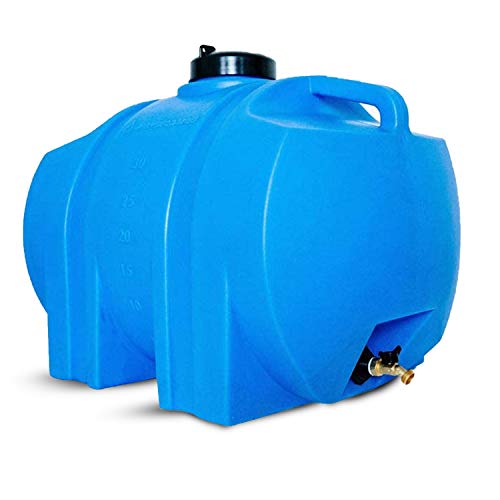
Capacity and use: 35 gallons. Best for mid-size outdoor trips or family outings where a compact water source is needed. The design includes a spigot compatible with standard garden hoses, making refills simple without pumps. UV-proof plastic helps prevent water degradation during extended storage.
Who it’s best for: Outdoor enthusiasts and campers who need a durable, portable tank that fits in standard vehicle cargo spaces. It’s also suitable for temporary backyard dispensing during events.
Caution: Heavy when full; plan for a stable, level setup to prevent tipping. The spigot connection should be checked for leaks after setup.
LIMUXCG Large Capacity Water Tank with Faucet (4 gallons)

Capacity and use: 4 gallons. Best for tight spaces, RVs, and quick refills around campsites or kitchens. Material is high-density polyethylene, offering odor resistance and robust durability. A portable handle and faucet enable easy access and reduced spillage.
Who it’s best for: Individuals needing a small, portable water container for car trips, small apartments, or cabin kitchens where space is limited.
Caution: Smaller capacity requires more frequent fills; ensure you have a nearby water source when planning longer outings.
WaterPrepared Stackable 55 Gallon Tank

Capacity and use: 55 gallons. Best for homes, cabins, or survival kits needing a long-term water reserve. Built with BPA-free, UV-proof HDPE and a stackable design to maximize storage in limited spaces such as garages or basements.
Who it’s best for: Homeowners and preparedness-minded buyers seeking a high-volume, durable storage solution that can be layered for efficient storage.
Caution: Heavy when full; ensure a stable shelving system or floor support to handle stacked configurations.
LATHEVEE Water Storage Bladder, 50 Gallon

Capacity and use: 50 gallons. Best for emergency kits, off-grid living, and garden irrigation where a flexible, collapsible option is advantageous. It features a transparent design with graduation marks for real-time volume tracking and a variety of adapters for different outlets.
Who it’s best for: Preppers and outdoor households that value visibility, adaptability, and compact storage when not in use.
Caution: A bladder can be puncture-prone if exposed to sharp objects; use in a protective area and inspect regularly for wear.
LOFTANK 65 Gallon Portable Water Tank

Capacity and use: 65 gallons. Best for extended outdoor stays, camping bases, and emergency water storage. The bladder is made from thick, reinforced PVC with welded seams to endure outdoor conditions and heavy usage. It folds for compact storage when empty.
Who it’s best for: Families or groups planning longer trips or remote living where a large, reliable water supply is essential.
Caution: The material is thick and sturdy but not immune to puncture; avoid placing near sharp edges or rough terrain during transport.
Buying Guide: Key Considerations For Plastic Portable Water Tanks
What capacity is right for you?
Choose capacity based on the number of people, planned duration, and space available. Small 4-gallon options suit tight spaces and quick refills, while 35-65 gallon tanks fit family outings or home storage needs.
Material and safety
Look for food-grade, BPA-free HDPE or PVC materials that resist UV exposure and weathering. UV-proof plastics help maintain water quality during outdoor storage.
Portability vs. durability
Collapsible bladders save space but may require careful handling. Rigid tanks offer durability and easier stacking, yet take more space when empty.
Spigots, connections, and accessibility
Ensure the spigot or faucet works with standard hoses or fittings. Consider wide openings or easy-clean interiors for maintenance and rapid refilling.
Storage and space planning
Stackable designs and flat surfaces maximize garage or basement storage. For campsites, consider weight distribution and vehicle-cargo compatibility.
Care and maintenance guidance
Regularly inspect seals, fittings, and seams. Clean interiors with water and a mild brush to prevent algae or dirt buildup. Replace worn components promptly.
Versatility and usage scenarios
Different tanks suit different needs: emergency kits, camping trips, garden irrigation, or kitchen uses at cabins. Match your choice to intended use and environment.
FAQ: Quick Answers For Buyers
- What size should I buy for a family camping trip? A 35 to 55 gallon tank usually covers a family camping trip for several days, depending on usage and access to water sources.
- Are these tanks safe for drinking water? Choose BPA-free, food-grade materials and follow manufacturers’ cleaning guidelines to maintain water quality.
- Can I stack multiple tanks? Some designs are stackable to save space; ensure you follow the product’s stacking instructions to avoid instability.
- Which is best for emergency preparedness? Larger capacities (50–65 gallons) with durable materials and UV protection are recommended for long-term storage.
- Do these tanks require pumps? Most models use gravity-fed spigots; pumps are only needed if the outlet height or pressure requires it.
- How do I prevent leaks? Check seals and fittings during setup, tighten connections, and avoid over-tightening plastic threads which can crack seals.