Looking for a reliable propane heater to keep a pop-up camper warm without drawing down your battery bank? This guide highlights five compact, safe options ideal for tents, trailers, and small campers. Each pick prioritizes portability, heat output, and safety features, helping you select the right heater for winter camping or chilly nights. Best for weekend campers, seasonal campers, and anyone who values quick warmth on the go.
Summary table
| Product | Best For | Heat Output | Notes |
|---|---|---|---|
| Mr. Heater 9,000 BTU Portable Buddy | Small spaces, indoor/outdoor use | 4,000–9,000 BTU/hr | Approved for indoor use; fairly compact |
| Mr. Heater MH9BX | Outdoor-ready spaces, higher altitude use | 4,000–9,000 BTU | Massachusetts/Canada approved |
| Gasfargo Portable Outdoor Heater | Ventured tents, campsites | 9,000 BTU | Self-ignition, safety shutoff |
| SANAUGAS 6200 BTU Camping Heater | Compact tents and small spaces | 6,200 BTU | Stable base, 1 lb tank compatible |
| BLAZEAL Portable Propane Heater | Outdoor patio and camping spaces | 6,200 BTU | Catalytic infrared burner |
Mr. Heater 9,000 BTU Portable Buddy Radiant Propane Heater
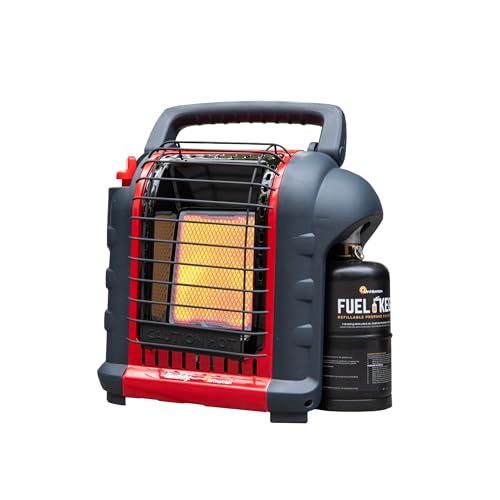
Best for compact spaces where quick warmth is needed. This radiant heater offers 4,000 or 9,000 BTU/hr output and is designed for both indoor and outdoor use. It can heat approximately 225 square feet, making it suitable for small pop-up campers or tent setups. It includes an oxygen depletion safety feature and a self-contained design for easy transport.
Who this is for: campers who want a versatile unit that can be used inside awnings or compact cabins and need reliable cold-weather warmth without heavy equipment.
Why chosen: The dual BTU option provides flexibility for different nights and insulation levels. The indoor/outdoor approval reduces the need for multiple devices in a tight packing scenario.
Caution: Ensure adequate ventilation when used indoors and never leave unattended in enclosed spaces.
Gasfargo Portable Outdoor Heater, 9000 BTU

Best for flexible outdoor warmth with self-ignition and safety shutoff. This unit delivers 9,000 BTU to heat tents, campsites, or RVs quickly. It’s designed to work with various refillable fuel sources (fuel sold separately), offering versatility for travelers who re-fill gear on longer trips.
Who this is for: campers who value quick heat and the option to switch fuel sources for extended trips.
Why chosen: Self-ignition saves fiddling with lighters or matches, and the low-oxygen safety shutoff adds a layer of safety for tent use.
Caution: Fuel type compatibility varies; confirm available fuel options before purchasing for your setup.
LOFUKI Portable Propane Heater for Camping

Best for a lightweight, cord-free warmth solution. This portable heater targets winter outdoor activities like camping, hiking, fishing, and patio use. It emphasizes safety with protective guards, a secure cylinder stand, and an aluminum reflector designed to withstand wind and cold. The kit notes a prevention approach to leaks via a connecting pipe.
Who this is for: campers who need a compact heater that travels easily in a backpack or small RV storage.
Why chosen: Its robust build and comprehensive safety features suit users who camp in exposed or windy environments.
Caution: Ensure proper use with a suitable 1 lb propane cylinder and stable surface to prevent tipping on uneven terrain.
BLAZEAL Portable Propane Heater with Catalytic Infrared Burner

Best for fast warmth in small spaces with enhanced wind resistance. This unit uses an upgraded catalytic infrared burner, delivering up to 6,200 BTU and heating up to about 200 square feet. It’s portable and designed for camping, tents, patios, or garages. Includes a 1 lb propane tank holder and a flexible hose option for versatile placement.
Who this is for: users seeking rapid, efficient heat with good wind performance in outdoor environments.
Why chosen: The catalytic infrared design improves combustion efficiency and warmth in windy or open-air settings.
Caution: Not ideal for very large rooms or spaces beyond 200 square feet without supplemental heat sources.
Buying Guide: Pop Up Camper Propane Heaters
What size heater do I need?
Consider the space you plan to heat. A small pop-up or tent may only need 4,000–6,000 BTU, while a larger camper may benefit from up to 9,000 BTU. Choose units with adjustable BTU output for better efficiency and comfort control.
Indoor vs. outdoor use
Some models are approved for indoor use with proper ventilation; others are intended exclusively for outdoor shelter. Always follow the manufacturer’s guidance and ensure adequate airflow to reduce risks of carbon monoxide buildup.
Fuel compatibility and availability
Most options run on standard propane cylinders. Check how easy it is to acquire fuel at your destination and whether the unit supports alternative fuels or refillable sources.
Safety features to prioritize
- Tip-over safety shutoff
- Low-oxygen shutoff and oxygen sensors
- Auto shut-off if flame goes out
- Ventilation requirements for indoor use
Portability and setup
Look for models with compact footprints, integrated carrying handles, and lightweight materials. Self-ignition and minimal assembly reduce setup time at a campsite.
Maintenance considerations
Regular inspection of hoses, regulators, and connection points helps prevent gas leaks. Ensure any safety guards or reflectors remain intact and unobstructed for efficient operation.
Usage scenarios to compare
- Tent camping in cold weather
- Pop-up camper or small RV trips
- Backyard camping and patio warmth
Frequently Asked Questions
- Can propane heaters be used inside a pop-up camper?
- What safety features are most important for camping heaters?
- What size heater is best for a 100–150 sq ft space?
- Are catalytic infrared heaters better for camping?
- Do these heaters require special maintenance?
- Can I use a single heater for both tent and RV space?
Yes, but only models specifically approved for indoor use with proper ventilation and carbon monoxide safety provisions. Always follow the owner’s manual and keep a CO detector installed.
Tip-over shutoff, auto shut-off on flame loss or low oxygen, and stable bases are critical. Wind resistance and guards improve safety in outdoor settings.
A heater in the 4,000–6,000 BTU range typically suffices for that space, with higher outputs reserved for poorly insulated or larger areas.
Catalytic infrared heaters can provide quick, efficient warmth with strong heat retention in outdoor environments, but ensure the unit is suitable for the space and that safety precautions are followed.
Regular inspection of hoses, regulators, and fittings is recommended. Check for gas leaks and clean guards to maintain efficient heat transfer.
Some models are versatile for both tents and small RVs, but confirm the product’s intended usage scope and ventilation requirements before switching environments.