Answering the need for reliable off-grid energy, these pop up camper solar panels are chosen to balance portability, reliability, and efficiency. They’re best for campers who want easy setup, durable outdoor performance, and scalable power. The top picks cover fixed rooftop kits, portable panels, and compact starter sets, helping you decide what fits your space and energy goals. The summary table below highlights the core strengths of each option.
| Product | Best For | Why Pick It |
|---|---|---|
| ECO-WORTHY 200W Kit | Full RV/ Camper Power | High efficiency panel, robust frame, high wind and snow load ratings |
| Renogy Adventurer 200W Kit | Mounted RV/Camper Install | Integrated LCD PWM controller, durable construction |
| Renogy 200W Portable Panel | Compact Spaces & Travel | High efficiency foldable design, lightweight, multiple outputs |
| Renogy 100W Starter Kit | Budget Starter or Secondary System | Solid efficiency, complete kit, strong service plan |
| DOKIO 300W Foldable Panel Kit | High Power On-The-Go | High-efficiency mono cells, foldable with included PWM controller |
ECO-WORTHY 200 Watts Kit With PWM Controller
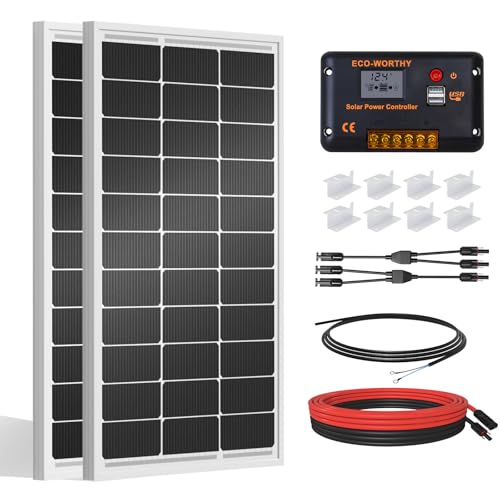
Best for: RVs and campers needing a high-output, all-in-one solar solution. This kit uses high-efficiency mono-crystalline cells, delivering strong daily output under good sun. The frame is corrosion-resistant for long outdoor use, and it withstands heavy wind and snow loads. The IP65 junction box protects against dust and moisture, making it suitable for year-round outdoor camping. Choose this if you want a robust, fixed-panel setup with a reliable charge controller.
Key considerations: The 35.2 x 23.1 x 37-inch size requires mounting space on or near your RV or camper. The kit promises up to 800Wh/day under four hours of peak sun, which is strong for mid-sized camp setups. Caution: the performance will vary with sun exposure and weather; ensure mounting location has minimal shading during peak hours.
Renogy Adventurer 200W Kit With 30A LCD PWM
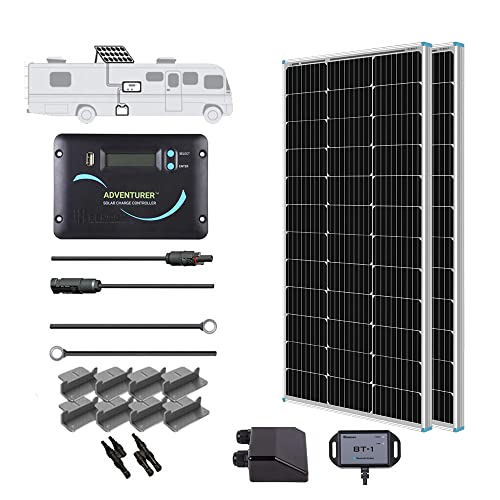
Best for: Campers who want a compact, integrated solar solution on RVs, boats, or trailers. The Adventurer series includes a 30A PWM controller with an LCD display for easy monitoring. The aluminum frame is corrosion-resistant and built to endure outdoor use, making it a dependable option for long trips. Choose this if you prefer a clean, wall-mountable kit with straightforward monitoring.
Key considerations: The panel efficiency is strong at 22%, and the system is designed for decades of outdoor use. Caution: integrated mounting hardware should be installed following manufacturer guidance to preserve weather sealing on your RV exterior.
Renogy 200W Portable Foldable Solar Panel

Best for: Campers with limited space or those who need a portable power option for on-the-go charging. This panel leverages industry-leading 25% efficiency thanks to advanced cell technology and a compact foldable form that travels easily in a camper or SUV. It includes multiple outputs for charging devices and power stations. Choose this if you need a portable solution that can be deployed away from the vehicle or stored compactly when not in use.
Key considerations: It’s among the lightest 200W foldables in its class. Caution: it requires a separate power management device to charge a battery bank or power station effectively, and you’ll need compatible connectors for certain power stations.
Renogy 100W Starter Kit for RVs and Campers

Best for: Budget-conscious buyers starting an off-grid solar upgrade or adding a secondary power source. The kit includes a 100W panel, a 30A LCD PWM charger, and mounting components. The 22.5% cell efficiency is solid for its class, and the service plan provides long-term support for solar material and performance. Choose this if you want a solid, reliable entry into camper solar without overcommitting financially.
Key considerations: The starter kit emphasizes safety with UL and IEC certifications and weather-rated connectors. Caution: real-world daily output depends on sunlight exposure and seasonal conditions; plan your energy needs accordingly.
DOKIO 300W Foldable Panel Kit

Best for: Campers who need higher power in a portable foldable format. The 300W foldable kit uses high-efficiency mono cells, offering substantial output when space is limited. It is suitable for powering power stations or large battery banks on longer trips. Choose this if you regularly run multiple devices or larger appliances while camping. Caution: setup requires careful wiring to a PWM controller or a dedicated charge controller for battery health.
Buying Guide: Key Considerations For Pop Up Camper Solar Panels
- Power needs and space: Calculate daily energy use and match with panel wattage and mounting space. Fixed rooftop kits suit larger rigs; foldables work well for limited spaces or occasional use.
- Panel efficiency and cells: Higher efficiency (e.g., mono-crystalline) yields more power per square foot, important for smaller campers.
- Durability and weather resistance: Look for corrosion-resistant frames, IP ratings, and load tolerances for wind and snow.
- Charge controller type: PWM controllers are common and affordable; MPPT controllers offer higher efficiency in variable sun but may add cost.
- Portability vs. permanence: Fixed kits require installation; portable panels offer flexibility for off-vehicle charging or storage.
- Setup and maintenance: Consider ease of setup, cable management, and weather-sealing of any mounted components.
FAQ: Quick Answers For Camper Solar Panels
- What size solar panel is best for a pop-up camper? The best size depends on energy needs; 100W–200W is common for modest setups, while 300W+ suits higher usage or larger power stations.
- Do I need an MPPT controller? MPPT controllers can improve charging efficiency, especially in limited sunlight or when panels are far from the battery bank.
- Can I install solar panels on a pop-up camper? Yes, fixed rooftop panels can be installed with proper mounting hardware and weather sealing. Portable panels are an alternative for flexibility.
- What maintenance is required? Regular cleaning and inspection of connectors, junction boxes, and mounting hardware; ensure no shading on panels during peak sun.
- Will a small panel power a fridge? A small 12V fridge may run on a 100W–200W setup with a battery; larger fridges or longer trips benefit from higher wattage or a storage battery plan.
- Do these panels work in cloudy conditions? They still generate power, but output drops with cloud cover. Higher-efficiency cells help maintain output in variable weather.