When cold weather demands reliable portable heat, catalytic propane heaters deliver steady warmth with cleaner combustion and lower emissions. This guide highlights five compact options that balance power, safety, and portability for campers, garage spaces, patios, and golf outings. Each pick is evaluated for who it’s best for, why it stands out, and a practical limitation to consider before purchase.
Buyer summary table (selected products)
| Product | Best For | Key Strength | Limit |
|---|---|---|---|
| BLAZEAL Portable Propane Heater | Outdoor enthusiasts and campers | Upgraded catalytic burner with 6200 BTU | Tank not included |
| Mr. Heater 9,000 BTU Portable Buddy | Versatile indoor/outdoor use | Flexible 4,000/9,000 BTU output | Requires proper ventilation |
| Hotdevil Portable Propane Heater (8520 BTU) | High-output outdoor use | Durable catalytic burner, wind resistance | Gas not included |
| Portable Propane Heater Outdoor Camping (8500 BTU) | Traveling campers | Piezo ignition, adjustable heat | Tank base not included |
| OkF Propane Heater (6000–18000 BTU) | Garage and workshop safety | Three heat modes, safety sensors |
BLAZEAL Portable Propane Heater

Best for: Outdoor camping and tent setups needing reliable radiant warmth. The upgraded catalytic burner claims quick heat and improved wind resistance, with a robust 6200 BTU output to cover up to 200 square feet. The compact design supports easy transport to patios, garages, or campsites.
Why selected: It emphasizes catalytic operation for cleaner burning and faster warmth, useful for spaces where you want steady heat without high electricity use. The included flexible hose accessory supports varied configurations.
Limit: Propane tank is not included, so you’ll need to purchase one separately. Use caution in enclosed spaces to ensure adequate ventilation.
Mr. Heater 9,000 BTU Portable Buddy
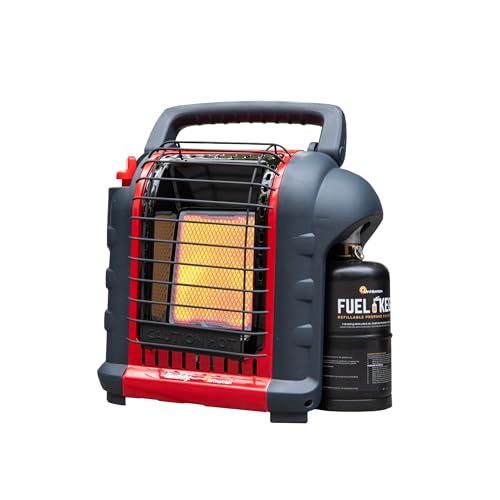
Best for: Flexible use in both indoor and outdoor spaces where moderate to high warmth is required. It supports either 4,000 or 9,000 BTU/h, covering roughly 225 square feet depending on conditions.
Why selected: A longstanding option in portable propane heat, offering a choice of two heat settings for situational control and simpler operation in varied environments.
Limit: Requires proper ventilation in indoor use and adherence to safe operation guidelines to avoid CO buildup.
Hotdevil Portable Propane Heater (8520 BTU)
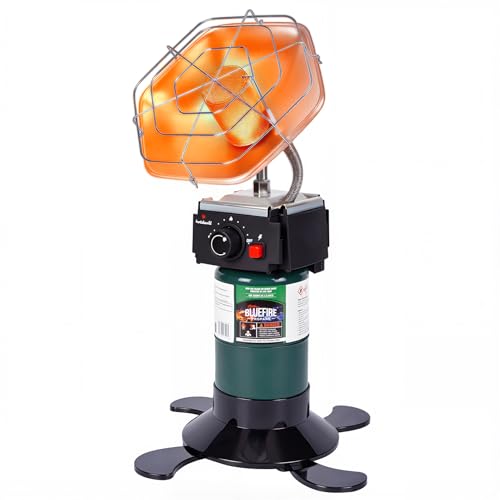
Best for: Outdoor activities with higher heat demands, such as golf outings or extended campsite stays. The heater provides strong warmth with a catalytic burner and rust-resistant construction.
Why selected: Notable for its high BTU output and wind resistance, with a pulse ignition feature that can enhance reliability when starting in cold conditions.
Limit: Gas cylinder is not included, and the device should be used in well-ventilated areas and outdoors or in properly ventilated spaces.
Portable Propane Heater Outdoor Camping (8500 BTU)
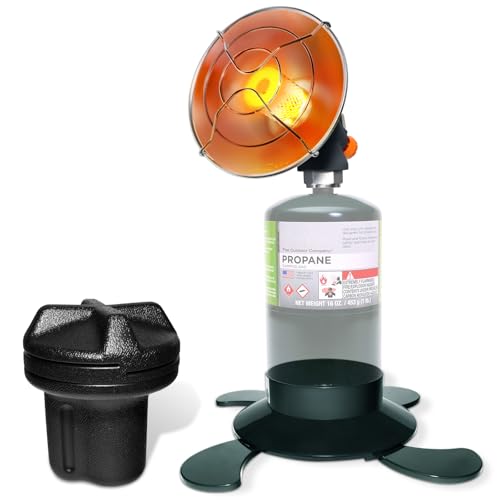
Best for: Campers who need a compact unit with reliable ignition and a sizable heat range. The heater supports up to 8500 BTU/h with coverage around 200 square feet.
Why selected: Piezo ignition simplifies startup, and the inclusion of a carry-friendly storage case aids portability. A versatile pick for tents and open-air setups.
Limit: Cylinder base and tank are not included; ensure you have the correct cylinder and regulator for safe operation.
OKF Propane Heater (6000–18000 BTU)

Best for: Garages, workshops, and larger outdoor spaces where adjustable heat is beneficial. Three heating modes cover a wide range of needs.
Why selected: The three heat levels (6000/12000/18000 BTU) offer flexible warmth for different spaces and weather conditions, with safety features including oxygen depletion and tip-over protection.
Limit: Requires a regulator and hose (included in some bundles) and should be used with understanding of safe ventilation and gas handling.
Buying Guide: Portable Catalytic Propane Heaters
- Heat output and coverage: Compare BTU ratings to determine how large an area you can warm effectively. Higher BTU often means faster heating but may consume propane faster.
- Catalytic vs. conventional burners: Catalytic heaters burn more cleanly with efficient fuel use but may require more careful ignition and airflow in enclosed spaces.
- Portability and setup: Look for compact designs, included carrying cases, and aftermarket accessories like hoses or bases that fit your space (tent, garage, golf cart).
- Ignition system: Piezo vs. pulse ignition affects ease of start and reliability in cold conditions. Consider battery availability for pulse ignition options.
- Ventilation and safety: Use heaters in well-ventilated areas. Many models include oxygen depletion sensors (ODS) and tip-over protection for safer operation.
- Fuel and accessories: Determine whether propane tanks are included or must be bought separately. Check regulator compatibility with your cylinder size.
- Durability and materials: Rust-resistant housings and protective guards are important for outdoor use and transport.
- Use-case fit: For indoor use in semi-enclosed spaces, prefer models with strong safety features and lower emissions. For open outdoor spaces, higher BTU units may be preferable.
FAQ
- Are catalytic propane heaters safe for use indoors? They can be safe in well-ventilated areas with proper safety features, but always follow manufacturer guidelines and local regulations.
- Do these heaters require electricity? Most are gas-powered and do not require electricity, though some ignition systems may use batteries.
- Will they heat a tent or garage effectively? Yes, many units can heat spaces from 200 to 450 square feet depending on BTU and airflow. Check the specific model’s coverage rating.
- Is a propane tank included? Tank inclusion varies by model. Most portable units require you to provide a compatible propane cylinder.
- What safety features matter most? Look for oxygen depletion sensors, tip-over protection, and durable guards to prevent accidental contact with hot components.
- How long does a 1-lb cylinder last? Runtime depends on BTU output; higher heat will consume fuel faster. Refer to the product’s stated burn time under typical conditions.