Direct answer: Portable gas stove heaters offer compact, reliable heat sources for camping, tailgating, patios, and emergency preparedness. The right choice depends on fuel type, portability, heat output, and safety features. The top five selections below balance power, versatility, and practical use for different buyers, from backpackers to homeowners preparing for outages.
Buyer profiles:
– Outdoor cooks who need rapid heating and high output.
– Emergency planners seeking dual-fuel options.
– Casual campers wanting simple ignition and compact design.
– Winter tent campers who require steady radiant heat.
– Home preppers looking for safe, CSA-approved units.
| Product | Fuel Type | Best For | Approx. BTU / Heat Notes |
|---|---|---|---|
| Gas One GS-3400P Propane or Butane Stove | Propane or Butane (dual fuel) | Emergency kits, versatile camping | High, adjustable via dial; dual-fuel flexibility |
| GasOne High Pressure Single Propane Burner | Propane | Outdoor cooking, boiling water fast | High-output with heat guard |
| Gas One Portable Butane Camping Stove with Case | Butane (8 oz canister) | Lightweight camping and tailgating | Efficient 7,650 BTU; automatic ignition |
| MOZODAWN 2 in 1 Propane Heater & Stove | Propane | Packed outdoor warmth and cooking | Up to 13,000 BTU radiant heat |
| Camp Chef Explorer Two-Burner Stove | Propane | Camp, tailgate, extended outdoor cooking | Two burners, 30,000 BTU total |
Gas One GS-3400P Propane or Butane Dual Fuel Stove
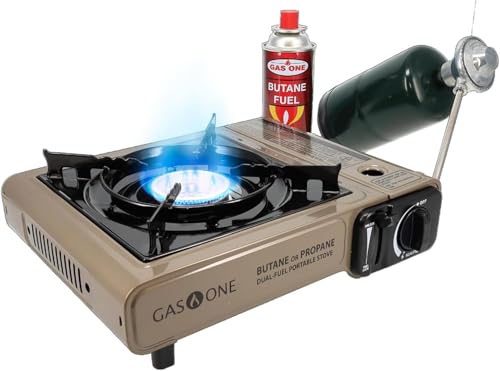
The Gas One GS-3400P is designed for flexibility with dual-fuel capability. It can operate on a single 8 oz butane cartridge or a 16.4 oz propane cylinder, giving buyers flexibility in fuel availability. It includes a propane converter regulator and an automatic piezo ignition, reducing the need for lighters or matches. This model is best for emergency kits and travelers who want a compact, reliable stove that can adapt to fuel stock.
Best for: Emergency prep enthusiasts and travelers who want dual-fuel capability. Caution: Fuel not included; you must source butane cartridges or propane cylinders separately.
GasOne High Pressure Single Propane Burner

This single propane burner is built for outdoor cooking with a high-output flame and a heat guard. The design prioritizes safety and performance, offering a steady flame for fast cooking and boiling. It’s a solid choice for campers and tailgaters who need robust heat to prepare meals quickly in outdoor settings. Best if you want a dedicated burner that integrates well with outdoor cooking rigs.
Best for: Outdoor cooks who need high-temperature control. Caution: Only for propane use; no dual-fuel capability described here.
Gas One Portable Butane Camping Stove with Case

This stove emphasizes portability and safety, featuring an automatic ignition and precise heat control. It is optimized for 8 oz butane canisters and is CSA-approved for safety. Its lightweight design and reliable ignition make it a strong pick for camping trips, emergency kits, and backyard cooking where quick heat is desired. Best for: Campers and preppers who value compact gear and safety features. Limitation: Requires butane canisters sold separately; not the best option for long-duration use without fuel stock.
MOZODAWN 2 in 1 Propane Heater & Stove

MOZODAWN blends heating and cooking in one unit, offering up to 13,000 BTU radiant heat. The heater-stove combination serves tents, patios, and outdoor spaces where warmth plus cooking is beneficial. It features a stainless steel threaded interface and adjustable heat control for safer operation. This option is best for buyers who want both heat and cooking capability in a single, portable device. Caution: Use in well-ventilated areas; radiant heat can be intense at close range.
Camp Chef Explorer Two-Burner Stove

The Camp Chef Explorer offers two 30,000 BTU cast-aluminum burners, delivering substantial heat for serious outdoor cooking. It includes a windscreen and a portable design with detachable legs and hoses for quick setup at camp or tailgates. This model is best for extended outdoor cooking sessions where multiple pots or dishes are prepared simultaneously. Caution: Heavier and bulkier than single-burner units; not ideal for ultralight packing.
Buying Guide
Key considerations when selecting a portable gas stove heater:
- Fuel type and availability: Dual-fuel models offer flexibility; plan for fuel stock at your destination.
- Heat output: BTU rating correlates with faster boiling and cooking, but requires fuel efficiency planning.
- Ignition system: Automatic piezo ignition reduces the need for matches; consider reliability in wind or rain.
- Portability and weight: Backcountry use favors lighter units; car camping can accommodate larger designs.
- Safety features: Heat shields, wind protection, and CSA or comparable approvals improve safety for everyday use.
- Build quality and materials: Stainless or coated metals resist corrosion and wear in outdoor environments.
- Included accessories: Carrying cases, regulators, or hoses influence setup ease and transportability.
Compare combinations to match your scenario:
– Emergency kits: Choose dual-fuel capability and compact size for versatility and space efficiency.
– Camping and tailgating: Look for higher BTU output and wind protection to maintain cooking performance.
– Patio or tent use: Heaters with radiant warmth and controlled heat settings become a practical option for cooler evenings.
Frequently Asked Questions
- What fuel types are most common for portable stoves?
– Propane and butane are the most common; some models support dual-fuel operation. - Is it safe to use propane and butane indoors?
– Outdoor use is recommended due to ventilation needs; never operate in enclosed spaces. - Do these stoves require an ignition source?
– Most modern units include automatic piezo ignition, eliminating matches or lighters. - How do I choose between single-burner and double-burner stoves?
– Double-burner stoves are better for cooking multiple dishes; single-burner units are lighter and more portable. - What maintenance helps extend stove life?
– Keep vents clear, inspect hoses for wear, store fuel canisters properly, and clean after use. - Are these stoves CSA-approved?
– Some models list CSA or other safety certifications, which can be an important safety consideration.