If you want a compact, easy-to-use telescope for camping, these portable options deliver clear views without heavy gear. They’re best for hikers, campers, and families seeking quick stargazing or distant scenery during outdoor trips. The following picks emphasize lightweight design, simple setup, and practical accessories like smartphone adapters and tripods.
| Product | Best For | Key Feature |
|---|---|---|
| OXK Optics 12×56 Monocular | Casual observers, solo campers | Bright 12×56 optics with large eyepiece |
| Mulamoy 80×100 Monocular | Long-range viewing, families | 80x magnification with 100mm lens |
| ToyerBee 70mm Refractor | Kids and beginners | 70mm aperture with wireless remote |
| CELTICBIRD 80mm Refractor | All-ages astronomy starters | 80mm aperture, portable with backpack |
| Koolpte 80mm Refractor | Education and family use | 60X–180X range with tripod and bag |
Below you’ll find detailed features, who each product is best for, and practical buying tips to help you compare at a glance. Each section includes a quick note on limitations to set correct expectations for camping use.
OXK Optics 12×56 Monocular

Best for lightweight, single-handed use on trails. The 12x magnification and 6.5° wide field of view provide a comfortable, larger view of distant scenery or wildlife. The 25mm eyepieces and 56mm objective lens improve light transmission, resulting in a brighter image in dim environments. This monocular is well-suited for quick spotting without heavy tripod setup.
hikers and solo campers who want a compact observer that fits in a pocket or small pack. It’s also a good gift for casual birdwatchers.
its balance of brightness, portability, and ease of use makes it a practical top pick for camping. It pairs well with a simple smartphone adapter for quick photos.
Caution: The field of view is relatively narrow for distant scanning, so you might miss fast-moving wildlife if you don’t sweep slowly.
Mulamoy 80×100 High Powered Monocular

Best for extended distance viewing without a heavy setup. The 80x magnification with a 100mm objective lens reduces shake and delivers sharper detail. Its BAK-4 prism and multi-coating maximize brightness and color accuracy, which helps in dusk or dawn camping sessions. The monocular is designed for easy portability and quick setup.
families or camping groups who want a strong telescopic option that travels well in backpacks and car trunks alike.
Why selected: high power in a compact form makes it a standout for campers who want long-range view without complex assembly.
Caution: Higher magnification can exaggerate hand shake; using the included strap or a lightweight tripod mitigates this issue.
ToyerBee Telescope for Adults & Kids

Best for astronomy beginners and family learning on camping trips. This refractor telescope features a 70mm aperture for brighter images and a 300mm focal length, offering 15X–150X magnification with included eyepieces and a Barlow lens. A phone adapter and wireless remote facilitate easy capture of celestial or terrestrial targets.
parents introducing kids to stargazing or anyone starting out in astronomy.
Why selected: the combination of educational value, kid-friendly setup, and wireless control makes it a practical first telescope for outdoor use.
Caution: assembly is straightforward but may require initial guidance; ensure stable tripod use in windy campsites.
CELTICBIRD 80mm Refractor

Better for a family starter kit with portable gear. The 80mm aperture and 600mm focal length provide brighter and clearer images, supported by multi-coated optics. It includes a backpack and an adjustable tripod, making it easy to carry and set up on camping trips. The phone adapter helps capture distant landscapes or moon shots.
beginners and all-ages astronomy enthusiasts who want a complete, portable kit.
Why selected: portability plus included accessories makes it a versatile option for campers who want a full-feature telescope with simple assembly.
Caution: heavier than monoculars, so it’s better for vehicle-based camping or shorter hikes with a dedicated carry setup.
Koolpte 80mm Refractor
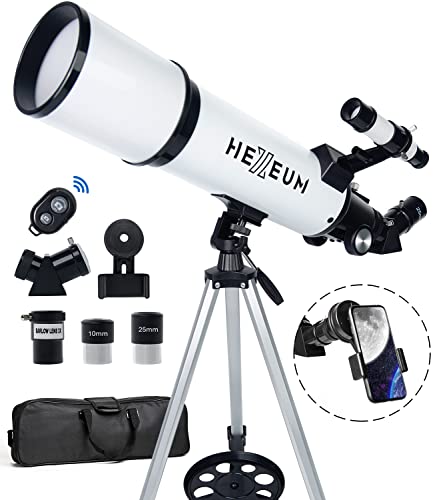
Best for family education and weekend stargazing. The 80mm aperture with 600mm focal length provides bright images and a wide viewing field. It includes two eyepieces (25mm and 10mm) for 24X and 60X magnification and a 3x Barlow lens to boost power. A tripod, phone adapter, and carrying bag support easy camping use.
families and students exploring astronomy in a portable, all-in-one package.
Why selected: practical entry-level kit with flexible magnification and the ability to photograph through the telescope via the phone adapter.
Caution: higher magnification can be unstable without a sturdy tripod; use the included stand for best results.
Buying Guide: Portable Camping Telescopes
- Your use case matters. If you want quick looks at distant scenery or wildlife, monoculars are lighter and easier. For star gazing or celestial targets, refractor kits with apertures around 70–80mm offer brighter views.
- Portability vs. power. Higher magnification often means more weight and more shake. Choose models with solid tripods or lightweight stabilization options for camping.
- Optical quality basics. Look for fully multi-coated optics and BAK-4 prisms for brightness and color accuracy, especially in low light.
- Accessories can boost usefulness. Phone adapters enable quick astrophotography or landscape snapshots. Tripods and carrying bags improve stability and transportability.
- Setup duration. Beginners benefit from models with simple assembly and clear manuals. For group camping, a multi-person kit or a family-friendly telescope is advantageous.
- Durability and weather resistance. Seek rugged casings or rubber armor and consider splash resistance for outdoor use.
FAQ
- What is the most portable option for camping?
Monoculars, especially those around 12×56, are typically the lightest and easiest to carry. - Should I choose a monocular or a refractor telescope for camping?
Monoculars are best for quick views; refractors are better for more detailed sky or landscape viewing, but weigh more. - Do these devices require a tripod?
Monoculars can be handheld but benefit from a small support; refractors generally perform best on a tripod for stability. - Can these telescopes be used for photography?
Most come with smartphone adapters to capture images, though image quality varies with magnification. - Are higher magnifications necessary for camping?
Not always; higher magnification helps at distance but increases shake and setup complexity. - What maintenance is needed in the field?
Keep lenses clean with a soft cloth, protect lenses from dust, and store in the provided bag after use.