Looking for a reliable portable water bottle purifier to stay hydrated anywhere? This guide highlights five top options, optimized for travelers, hikers, campers, and emergency prep. Each pick is explained with who it’s best for, why it stands out, and any notable limitations. A quick comparison table helps you scan key details at a glance.
| Product | Best For | Why It Stands Out |
|---|---|---|
| GrayL GeoPress 24 oz | Travelers and outdoor explorers | All-in-one purification and cleaning with virus removal and VOC/chemical adsorption. |
| LifeStraw Go Series (22 oz) | Everyday travelers | Carbon taste improvement plus high-level microbial and microplastic filtration. |
| SurviMate 5-Stage 0.01 μm | Backcountry and preparedness kits | Ultra-fine 0.01 μm membrane with 5-stage filtration plus NSF/ANSI 42/372 trust. |
| Bachgold Squeeze Foldable | Lightweight backpacking | Ultralight, collapsible, dual-stage filtration for fast filtering on the trail. |
| Brita 36386 Premium 26 oz | Everyday use and commuting | On-the-go taste improvement with a simple carbon filter, budget-friendly. |
GrayL GeoPress 24 oz Water Purifier Bottle
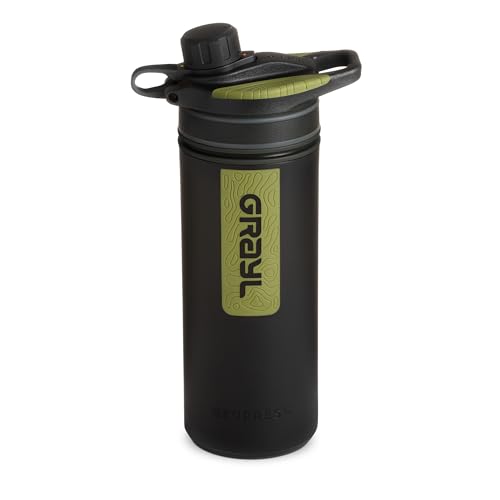
The GrayL GeoPress is designed to purify water on the go while offering a robust travel-ready form. It is best for hikers, campers, travelers, and anyone who may encounter uncertain water sources. The bottle purifies water to remove pathogens and also filters particulates and many chemicals, making water safer to drink in remote areas or during travel.
- Best for: outdoor adventures, travel, emergency preparedness
- Why chosen: removes pathogens and chemicals, versatile for many water sources
- Limitation: may require more effort and setup compared to squeeze-style designs
LifeStraw Go Series Water Filter Bottle — 22 oz

The LifeStraw Go Series combines portability with effective filtration. It’s a strong choice for travelers who want safe drinking water from airports, buses, or public taps. The carbon filter improves taste by reducing chlorine and odors, while the microfilter targets bacteria, parasites, and microplastics, offering a practical balance of filtration and convenience.
- Best for: travel and daily use when access to clean water is variable
- Why chosen: comprehensive filtration including bacteria, parasites, and microplastics; taste improvement
- Limitation: not a true purifier for every contamination type; replacement filters needed over time
SurviMate 5-Stage 0.01 μm Ultra-Filtration Bottle

The SurviMate bottle uses a 5-stage filtration chain and a 0.01 μm hollow fiber UF membrane for finer filtration than many single-stage bottles. It’s suited for serious outdoorists, camping, and emergency kits seeking higher filtration precision. The built-in filtration sequence targets chlorine, odors, heavy metals, particulates, and sediments.
- Best for: backcountry, camping, and preparedness kits
- Why chosen: highest filtration precision among the listed options
- Limitation: more complex maintenance and filter replacement considerations
Brita 36386 Premium 26 oz Water Filter Bottle
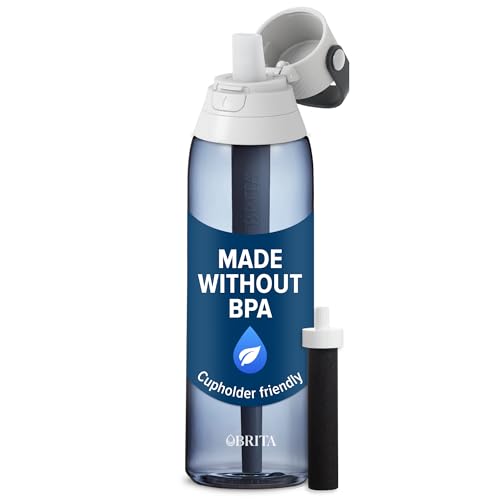
The Brita Premium 26 oz bottle focuses on convenience and taste improvement. It uses an activated carbon block filter to reduce taste and odor associated with chlorine and particulates in drinking water. It’s ideal for everyday use at home, work, or during travel where the primary goal is improved taste rather than comprehensive purification.
- Best for: daily hydration, commuting, and easy travel
- Why chosen: budget-friendly, simple to use, and reduces chlorine taste/odor
- Limitation: not a true purifier for all contaminants
Buying Guide
What should you look for in a portable water purifier bottle?
Filtration vs purification: Decide if you need purification (removing pathogens) or filtration (removing particulates and some chemicals). Some bottles, like GrayL GeoPress, offer purification, while others provide taste improvement with carbon filters.
Filter/pore size and certifications
Smaller pore sizes (for example, 0.01 μm) generally remove more contaminants. Certifications such as NSF/ANSI 42/372 can indicate performance claims are credible and standardized, though you should verify the scope of what is certified.
Capacity and weight
Backcountry use favors lighter, collapsible designs like the Bachgold Squeeze, especially when pack weight matters. For everyday use, a larger capacity (24–26 oz) can reduce refills.
Taste and odor improvements
Carbon-based blocks or cartridges primarily address chlorine taste and odors. If you frequently drink from questionable sources, prioritize models with microbiological filtration in addition to taste improvement.
Maintenance and filter life
Consider filter replacement costs and availability. Some bottles require more frequent replacements, which can affect long-term cost and convenience.
Portability and ease of use
Collapsible bottles save space, while a squeeze-activated flow (no pumps) can improve speed on the trail. Built-in features like compasses or filters that integrate with existing bottles add versatility for outdoor use.
FAQ
- Do portable water bottle purifiers remove viruses?
Some models, like the GrayL GeoPress, claim virus removal as part of their purification process. Check the product’s stated capabilities and certifications for accuracy. - Can these bottles replace a traditional water purifier?
In many cases, portable bottles provide effective filtration for common contaminants and pathogens, but not all filters are universal across all water sources. For high-risk or highly contaminated water, additional treatment may be needed. - How often do filters need replacement?
Replacement frequency depends on usage, water quality, and the bottle model. Refer to the manufacturer’s guidance for filter life expectations and replacement costs. - Are these bottles suitable for international travel?
Yes, many are designed for travel and can handle taps, streams, and other water sources. Verify local water quality considerations and filtration capabilities before travel. - Is a carbon-only filter enough for safe drinking water?
Carbon filters improve taste and odor but typically do not remove all pathogens. When safety from biological contaminants matters, choose bottles with microbiological filtration or purification stages. - Which bottle is best for ultralight backpacking?
For ultralight trips, a collapsible design like the Bachgold Squeeze offers minimal weight and compact storage, with reliable dual-stage filtration.