Looking for reliable portable water filters for hiking? This guide highlights five top options that are lightweight, effective, and easy to use in the backcountry. Each pick suits a different type of hiker, from ultralight backpackers to casual campers and emergency preppers. Below you’ll find clear comparisons, who each filter is best for, and practical buying tips to help you choose.
| Product | Best For | Why It Stands Out |
|---|---|---|
| LifeStraw Personal Water Filter | Minimalist hikers and emergency kits | High filtration, very light, trusted brand. |
| Sawyer Squeeze + 2L Cnoc | Active hikers needing fast flow | Reusable, high throughput, durable bladder. |
| Sawyer SP128 Mini | Compact travel and micro-adventures | Extremely small, 0.1 micron filter, palm-sized. |
| Survivor Filter PRO | Emergency preparedness and longer trips | Broad filtration with fast flow in a compact form. |
| Practical Survival Reusable Straws (5-Pack) | Group trips or backup kits | Multiple straws for redundancy and microplastics filtration. |
LifeStraw Personal Water Filter for Hiking

The LifeStraw Personal Water Filter uses a microfiltration membrane that removes 99.999999% of bacteria, including E. coli and Salmonella, and 99.999% of parasites like Giardia and Cryptosporidium. It also reduces turbidity to 0.2 microns and tackles microplastics down to 1 micron. This makes it ideal for hikers who want a simple, lightweight option for backcountry water sourcing and emergency kits. Best for solo hikers who value reliability and chemical-free filtration.
Best for ultralight travelers who need a no-fuss solution. The filter is easy to carry, requires no batteries or pumping, and is a clip-in option for daypacks. A potential limitation is its single-use water intake design, which may not suit multi-day group trips where higher throughput is needed.
Sawyer Squeeze Water Filtration System + Cnoc 2L Bladder
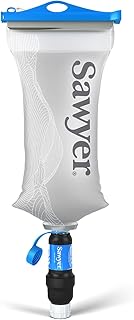
The Sawyer Squeeze uses a hollow fiber membrane to remove bacteria, protozoa, cysts, sediment, and 100% of microplastics. It’s reusable and can last up to 100,000 gallons with proper backwashing. Included with the system is a 2-liter Cnoc bladder, made from extra-durable TPU with a wide mouth for quick filling. This setup is best for hikers who want a durable, reusable filter with fast flow and a larger bladder capacity. Choose this if you hike in areas with varied water sources and value long-term use.
A caveat: backflushing and cleaning are essential to maintain flow, so expect some maintenance on longer trips. Heavy filtration efficiency comes with a bit more setup than the most minimalist options.
Sawyer SP128 Mini Water Filter

The SP128 Mini is a compact, 0.1 micron absolute inline filter that fits in the palm of your hand and weighs about 2 ounces. It can attach to the included drinking pouch, standard 28 mm bottles, hydration packs, or the straw for direct drinking. Best for ultralight hikers and travelers who want a highly portable solution without sacrificing filtration performance. It’s a strong choice for solo trips where space and weight are critical.
Limitations to note: the ultra-small size means higher attention to cleaning and maintenance to prevent clogging. It may require more frequent backflushing on silty or sediment-rich sources compared to larger systems.
Survivor Filter PRO Portable Water Filter

Survivor Filter PRO is a compact, lightweight filtration system designed for camping, survival, and emergency use. It weighs about 12.8 ounces and claims to remove 99.999% of tested viruses, staph, bacteria, and protozoa, while reducing heavy metals per NSF/ANSI standards. It offers a fast flow rate of about 500 ml (17 oz) per minute, suitable for on-the-go use directly from fresh water sources. Best for preparedness-minded hikers who need reliable, fast filtration in diverse environments.
One limitation is that ensuring consistent flow requires regular maintenance and attention to the filter’s condition, especially after filtering turbid water. It’s well-suited for scenarios where speed and size matter, but users should plan for occasional servicing to maintain optimal performance.
Practical Survival Reusable Emergency Water Filter Straws (5-Pack)

This 5-pack of reusable water filter straws focuses on portability and redundancy. Each straw removes over 99.99% of waterborne bacteria and parasites and reduces microplastics down to 0.1 micron. Weighing around 2 ounces per straw and measuring 8 inches, they are ideal for group trips, backup kits, or individuals who want a lightweight, flexible option for improvising filtration from various water sources. Best for travelers who prioritize multiple backup filtration options in a compact package.
Limitations include the need to carry multiple straws for group use and potential inefficiency for high-volume filtering compared with larger systems. They excel as secondary or emergency solutions rather than the primary filtration method on a long hike.
Buying Guide: What To Consider When Choosing a Portable Water Filter
- Filtration standard: Look for systems that target bacteria, protozoa, and parasites, and note microplastics filtration if important to you.
- Weight and size: Ultra-light options suit solo day hikes; larger but faster filters suit longer backpacking trips.
- Flow rate: Faster flow is beneficial for groups and longer ascents; slower flow is common in ultralight designs.
- Maintenance: Some filters require backflushing or simple cleaning routines. Consider your comfort level with maintenance on-trail.
- Durability and compatibility: Check if the filter works with standard hydration bladders, bottles, or pouch systems you already own.
- Reliability in varied water sources: If you expect silty or muddy water, prioritize filters with robust cleaning options and higher tolerance for sediment.
- Backup options: For longer trips, consider pairing a primary filter with a backup (like straws or mini filters) for reliability.
Frequently Asked Questions
- Do these filters remove all contaminants? Most portable filters remove bacteria, parasites, and microplastics, but may not remove dissolved chemicals or viruses in all cases. Check each product’s claims and NSF/ANSI certifications where available.
- Are these filters reusable? Many models are reusable with proper maintenance, such as backflushing or cleaning, to preserve flow and filtration efficiency.
- What water sources should I filter? Use filters on natural sources like rivers, streams, and lakes. Avoid filtering heavily polluted or stagnant water unless the filter is designed for it.
- Can I drink directly from the filter straw? Some models allow direct drinking, while others require a pouch, bottle, or bladder. Check compatibility with your gear.
- How do I choose between ultralight and higher-capacity options? Consider your trip length, group size, and water availability. Ultralight options save weight, while larger systems provide higher throughput and convenience for longer trips.
- Is a backup necessary? For serious trips or emergencies, having a backup filtration method can reduce risk if the primary system clogs or fails.