The best propane heaters for travel trailers deliver reliable warmth without needing electrical power. This guide highlights five top options that suit different trailer setups, from compact spaces to larger living areas. Best for occasional weekend trips, full-timers, or emergency heat during outages, these picks balance portability, safety, and efficiency. The following table compares each product, including heat output, suitable space, and notable pros and limitations to help you decide quickly.
| Product | Heat Output / Coverage | Best For | Notes |
|---|---|---|---|
| Ruasveltan Propane Heater Indoor and Outdoor | Up to 18,000 BTU; up to 450 sq ft | Medium-to-large trailers; outdoor spaces | No electricity required; portable; porch/garage use |
| Mr. Heater MH9BX | 4,000–9,000 BTU; up to ~225 sq ft | Compact trailers; quick spot heating | Outdoor approved; auto shut-off on tilt or low oxygen |
| Mr. Heater Portable Buddy Radiant | 4,000–9,000 BTU; up to ~225 sq ft | Small trailers or rooms; lightweight travel | Indoor/outdoor use; simple radiant heat |
| APUS RV Tankless Water Heater | 60,000 BTU on-demand; 3.9 GPM | Hot-water supply on the go; high-altitude use | Tankless; requires 12V power; CSA certified |
| Xenjum RV Tankless Water Heater | Up to 65,000 BTU; 3.9 GPM | On-demand hot water in full-time RVs | Dual outlets; smart remote; high-altitude ready |
Notes: This article focuses on propane-based heating options that suit travel trailers, including space heaters and on-demand water heaters. The listed features are from product listings and are intended to help buyers compare capabilities for trailer use.
Ruasveltan Propane Heater Indoor and Outdoor
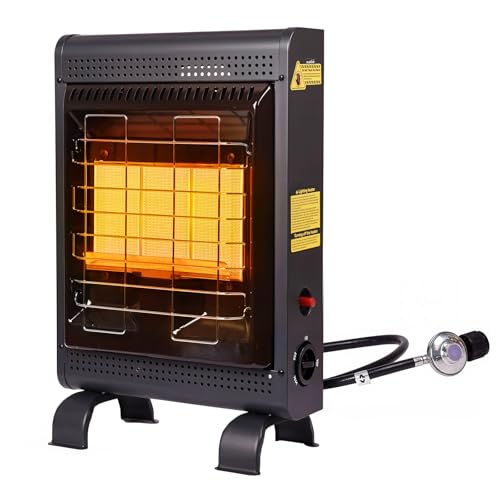
Heat output ranges from 6,000 to 18,000 BTU with a heat-providing range up to 450 square feet. It includes three adjustable heating modes and a piezoelectric ignition for simple operation. The unit is designed to function without electricity, reducing the need to run camp electrical circuits and saving energy. It includes a portable design with a stable stand for easy placement inside a travel trailer or outside on a sheltered patio. This choice is best for campers needing flexible warmth in larger trailer interiors or for outdoor warmth during chilly evenings.
Best for: Trailers with moderate-to-large living spaces where electricity may be limited or unavailable. Better for: outdoor patios, garages, or camp sites that require reliable heat without cords. Choose this if: you want higher BTU output and a more versatile indoor/outdoor setup.
Caution: Ensure adequate ventilation when using propane heaters indoors; follow all manufacturer safety guidelines to prevent CO buildup. The product data does not specify an oxygen depletion sensor (ODS) in this model, so use with caution in enclosed spaces.
Mr. Heater MH9BX

The MH9BX offers 4,000–9,000 BTU radiant heat suitable for spaces up to about 225 square feet. It is approved for outdoor use and emphasizes clean burning and high efficiency. A notable safety feature is auto shut-off if tipped over or if oxygen levels are too low. This model is well-suited for compact travel trailers or rooms where space constraints necessitate compact, efficient heating with strong safety considerations. It is particularly advantageous for buyers who want a simpler, lower-output heater for smaller areas and occasional use in mobile living spaces.
Best for: Small trailers or rooms requiring a reliable, compact heat source. Better for: campers needing a lighter, portable solution with automatic safety shut-off. Choose this if: you prioritize safety features and a compact footprint. Avoid this if: you regularly heat larger trailer interiors where higher BTU output is needed.
Caution: Some high-altitude operation notes indicate possible automatic shut-off above 7,000 feet; verify intended camping elevations before use.
Mr. Heater Portable Buddy Radiant
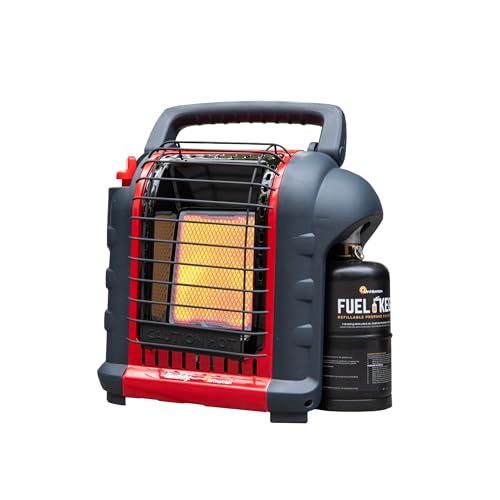
This compact radiant heater provides 4,000–9,000 BTU and heats roughly 225 square feet. It is designed for indoor and outdoor use and is known for its portability and quick warmth in small spaces. Its smaller size makes it ideal for travel trailers where space is at a premium and where you need a quick heat boost rather than continuous large-area heating. Best for: travelers with tight spaces who still want dependable radiant heat. Better for: temporary chilly evenings and limited-area comfort. Choose this if: you value a lightweight, easy-to-store heater.
Caution: As with all propane heaters, ensure proper ventilation when used indoors and monitor for safe CO levels. This model has no explicit mention of oxygen depletion sensors in the public product data.
APUS RV Tankless Water Heater

APUS delivers on-demand hot water with a 68,000 BTU propane heating system and 3.9 GPM flow. It features high-altitude readiness and a compact 12V DC setup for RVs, enabling hot water on demand for showers and dishes. The unit aims to conserve energy by heating water only when needed and uses a microprocessor-based control system for temperature regulation. This option is ideal for travelers who want continuous hot water without a storage tank and who operate at varying elevations. It is CSA certified for added safety.
Best for: RV travelers who need reliable on-demand hot water without a storage tank. Better for: trailers where space-saving water heating is a priority. Choose this if: you want a high output, high-altitude-capable tankless system. Caution: Requires 12V power; ensure onboard electrical capacity matches expectations.
Xenjum RV Tankless Water Heater

This 65,000 BTU tankless heater provides up to 3.9 GPM with dual outlets for interior and exterior hot water distribution. It includes a controller for temperature adjustment and a remote for convenience. Designed for high-altitude RV use, it employs staged combustion to maintain consistent temperatures and conserve propane. A smart remote and durable components are highlighted as practical for full-time RV living or frequent travel. It supports flexible installation with exterior access for outdoor tasks as well as indoor comfort.
Best for: full-time RVers who need consistent hot water in multiple zones. Better for: travelers who value remote control and dual-water-outlet capability. Choose this if: you want enhanced control and altitude-ready performance. Caution: Ensure compatibility with your RV’s plumbing and space for dual outlets.
Buying Guide: Key Considerations For Propane Heating In Travel Trailers
What size space needs heating? Choose BTU output based on your trailer’s square footage and layout. For larger trailers, higher BTU units or tankless water heaters with on-demand capacity can help maintain comfortable temperatures.
Do you need electric-free warmth? If you frequently experience power outages or prefer off-grid operation, prioritize models that run without electricity, like many portable propane heaters.
Is safety a priority? Look for auto shut-off, tilt sensors, oxygen depletion sensors, and carbon monoxide considerations. Ventilation is crucial when using propane heaters indoors.
Water heating needs matter too. For frequent showers and high hot-water demand in travel trailers, tankless systems offer on-demand heating, with high-altitude performance as a bonus in elevated campsites.
Installation and space constraints. Tankless water heaters require proper venting and installation space; space heaters must fit in your living area without obstructing movement or safety pathways.
Altitude readiness. Some RV heaters are designed to perform reliably at high elevations; confirm that the model supports the elevations you commonly encounter.
FAQ: Propane Heaters For Travel Trailers
- Can I use a propane heater indoors in a trailer? Yes, but ensure proper ventilation and follow the manufacturer’s safety instructions to prevent carbon monoxide buildup.
- What is a good BTU range for a medium-sized travel trailer? In a typical medium trailer, 8,000–18,000 BTU heaters are common for adequate warmth, with higher outputs for larger spaces.
- Are tankless water heaters better for RVs? Tankless water heaters provide on-demand hot water and can save space, but they require electrical and propane support plus proper installation.
- Do I need electricity to run these heaters? Some models operate without electricity; others, especially tankless water heaters, require 12V or higher power. Check your RV’s electrical capacity.
- What safety features should I look for? Look for auto shut-off, tip-over protection, low-oxygen sensors, proper venting, and compliance with CSA/UL standards.
- Which heater is best for high-altitude travel? Tankless models designed for high altitude and with oxygen-sensing controls generally perform better in elevated areas.