Answering the practical question: these compact, quiet generators deliver reliable power for camping without loud exhaust or heavy fuel consumption. They’re ideal for campers, RV owners, and outdoor adventurers who need clean power for lights, phones, laptops, and small appliances. The top picks below cover a range of wattages, fuel efficiency, and portability to suit different camping setups—from family car camping to solo treks. This guide highlights the best options and who benefits most from each.
| Product | Best For | Approx. Running Time |
|---|---|---|
| All Power America 2000W | Small campsites, sensitive electronics | Up to 6.5 hrs |
| Oxseryn 2800W | Backup power, group camping | Up to 9 hrs |
| AIVOLT 1600W | Ultra-portable setups | Up to 8 hrs |
| POXURIO 2450W | Quiet operation, light travel | |
| Jackery Explorer 1000 v2 | Off-grid camping, long trips |
All Power America 2000W Portable Inverter Generator

This 2000-watt inverter generator uses a 79.7cc gas engine to deliver clean power with less than 3% THD, suitable for sensitive electronics like TVs, laptops, and phones on camping trips. It’s designed to be ultralight for its class at about 39.6 pounds and includes a sturdy handle for easy transport. The unit operates quietly, making it a solid pick for quiet campsites and RV use.
Best for: campers who need reliable, clean power for essential electronics without carrying heavy equipment. Choose this if portability and quiet operation are a priority.
Caution: as with many small gas generators, fuel consumption varies with load; plan for 6+ hours of runtime at half load only when fuel level allows.
Oxseryn 2800-Watts Portable Inverter Generator

This model offers 2800 peak watts and 2000 running watts, powered by a 79.8cc 4-stroke OHV engine. It features a 1.1-gallon fuel tank with a fuel indicator and runs up to nine hours at 25% load. It supports parallel operation and has ECO mode for fuel efficiency, making it versatile for camping and power outages.
Best for: groups or campers who need more surge power and a longer runtime, with the option to parallel with another unit for higher output.
Caution: higher output means more noise potential; consider ear protection if near neighbors.
AIVOLT 1600W Ultra Quiet Inverter Generator
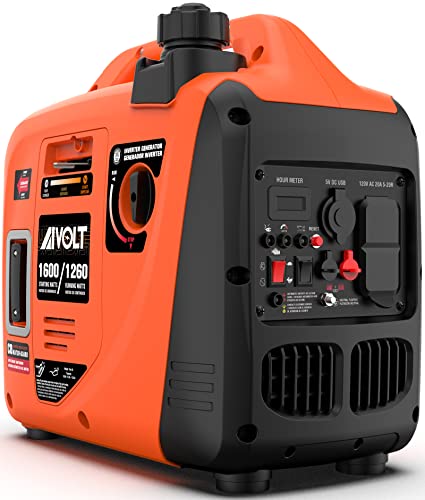
This 1600-watt generator runs with less than 3% THD, making it safe for charging laptops, phones, and small tools. It uses a 60cc engine and promises up to 8 hours at 25% load. Ultra-quiet operation (around 57 dBA at 23 feet) and a light 28-pound frame enhance portability for camping or job-site uses.
Best for: life on the go where weight and quiet operation matter most, such as solo trips or small setups with sensitive electronics.
Caution: not ideal for high-draw appliances; plan around lighter loads to maximize runtime.
POXURIO 2450-Watt Portable Inverter Generator

With 2450W peak power and 2000W running power, POXURIO uses advanced inverter technology to deliver clean, stable sine wave energy. It’s marketed as quiet (about 59 dB), single-fuel gas operation, and includes a 1.6-gallon tank for extended runtime under light loads. It is compact and suited for quick setups and easy mobility.
Best for: campers needing solid, quiet power for mid-sized loads without hauling a heavy generator. Avoid this if you need true RV-grade 30A outlets in a single unit.
Caution: ensure you have the correct outlets or adapters for certain appliances due to outlet configurations.
Jackery Explorer 1000 v2 Portable Power Station

The Explorer 1000 v2 is a lithium battery-based solar generator with 1,500W AC output (3,000W surge) and 1,070Wh capacity. It weighs about 23.8 pounds and includes multiple ports, including USB-C PD, USB-A, and a 12V car port. It charges quickly with an app-assisted feature and ships with durable LiFePO4 chemistry for a long cycle life.
Best for: off-grid travelers and campers who prefer a silent, battery-first power source with solar compatibility and easy portability.
Caution: solar panel options are optional; without panels, charging relies on grid or car charging, which may limit use in remote locations.
Buying Guide
- Power needs: Match wattage to the sum of devices you plan to run. For sensitive electronics, keep total running watts well below the unit’s maximum.
- Runtime vs. tank size: Larger tanks extend runtime but add weight. Consider your typical camping duration and fueling options.
- Noise level: Look for units labeled as “ultra quiet” or with decibel ratings around 50–60 dBA at a given distance for comfortable camping.
- Fuel type and efficiency: Gasoline is common, with some models offering ECO modes to save fuel. If you’re camping in remote areas, portable power stations can offer silent, fuel-free charging when solar is available.
- Portability: Weight and handle design affect carrying ease from car to campsite. Lighter models often trade higher noise or lower runtime.
- Outlets and compatibility: Check available outlets (AC, USB-C, USB-A, 12V) to ensure you can plug in your essential devices without extra adapters.
FAQ
- What is the quietest generator on this list?
A: The AIVOLT 1600W and similar compact inverters are among the quietest, with around 57 dBA at 23 feet. - Do I need a generator with parallel capability for camping?
A: Not always. Parallel capability is useful if you expect high power demand or want to scale output by pairing multiple units. - Is a larger tank always better for camping?
A: A larger tank increases runtime but adds weight; balance fuel capacity with how long you’ll be away from fuel sources. - Can I run sensitive electronics on an inverter generator?
A: Yes, if the unit’s THD is under 3% and the power is clean, it’s suitable for devices like TVs and laptops. - Should I choose a battery-based power station over a gas generator?
A: Battery stations are silent and ideal for small loads; gas generators offer longer run times and quick replenishment in remote areas. - What maintenance is required for portable generators?
A: Regular oil checks, air filter cleaning, and ensuring the fuel remains fresh are typical maintenance steps; consult the user manual for specifics.