Answering the need for portable cooling in outdoor settings, these rechargeable air conditioners are ideal for campers, RV travelers, tents, and outdoor enthusiasts seeking relief from heat without relying on mains power. The top picks below are best for different types of campers: solo hikers needing compact units, couples sharing a small tent, and families in larger tents or RVs. Each product highlights battery power, cooling or misting capability, and portability to help you choose confidently.
| Product | Best For | Power | Cooling / Mist |
|---|---|---|---|
| ZephyMyth Portable Air Conditioner | Small tent or bedroom setup | Rechargeable with large tank | Cooling and mist with 3 modes |
| DFLU Portable Mini Air Cooler | Lightweight personal cooling | Rechargeable 2000mAh | 3 speeds, 3 spray modes |
| TOOKEBEEGO 5200mAh Mini AC | Desk or nightstand use; car or campsite | Rechargeable 5200mAh | 3 speeds, 5–10 hours runtime |
| BougeRV PC35 Portable AC | Tent, RV, or small cabin | App-controlled; 3500 BTU | Fast cooling plus app control |
| FO-KOKO 5200 BTU Portable AC | Medium tents and small spaces | 5200 BTU, low power | Water cooling with dual-loop design |
Notes: Features and runtimes vary with airflow settings and environmental conditions. All products listed rely on rechargeable power sources and are designed for portable outdoor use.
ZephyMyth 4-in-1 Portable Air Conditioner

Best for: Solo campers or small tents needing a compact climate control solution. Why selected: It offers two cooling modes, water-free Natural Wind and water-assisted Cooling, plus a large 1100 ml tank for up to eight hours of mist. The 3-speed fan and 3 spray modes let you tailor airflow and humidity. The 120° adjustable louvers focus air where you need it. Ambiance lighting adds a calming environment without extra devices. Caution: Performance depends on ambient humidity and tank maintenance; expect slightly slower misting in very dry environments.
DFLU Rechargeable Mini Air Cooler

Best for: Budget-conscious campers who want portable, light cooling on the go. Why selected: This 2000 mAh unit balances weight and runtime with 4–8 hours of use based on wind speed. It combines a high-velocity fan, evaporative cooling, and a 7-color mood light. Ideal for bedrooms, dorms, RVs, tents, and travel. Caution: Battery life can vary with misting usage; performance may drop with continuous high mist.
TOOKEBEEGO 5200mAh Portable AC
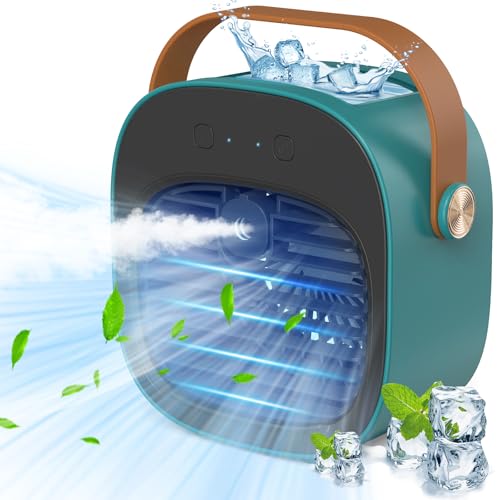
Best for: Campers needing longer runtime in a compact form. Why selected: Built-in 5200 mAh battery provides 5–10 hours of use depending on wind speed. Three speeds offer flexible cooling, and the unit supports convenient USB charging for outdoor use. It is energy-efficient and suitable for desks, bedrooms, or small tents. Caution: Lower airflow on the smallest setting may not feel as cooling in hot environments.
BougeRV PC35 Portable Air Conditioner
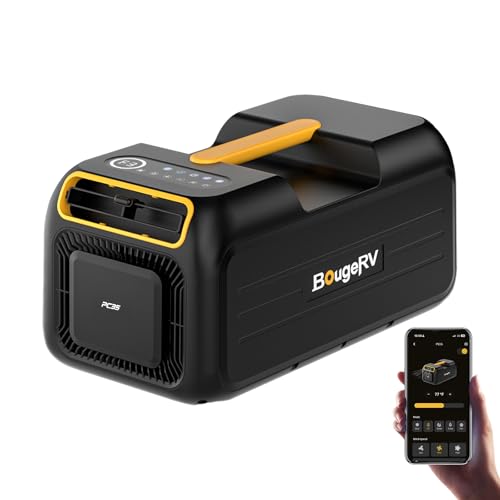
Best for: Campers who want app control and longer-range monitoring from a distance. Why selected: The BougeRV PC35 delivers 3500 BTU cooling for tents and RV spaces with a companion app that lets you adjust temperature, modes, and timers. It’s designed for portability with an ergonomic carry handle and can operate within a tent or small shelter. Caution: App features rely on stable connectivity; manual control remains essential in some conditions.
FO-KOKO 5200 BTU Portable Camping AC

Best for: Medium tents and small spaces needing efficient cooling with low power use. Why selected: This 5200 BTU unit uses dual-loop water cooling to deliver colder airflow, cooling up to about 130 sq.ft. It runs on a low 400W, making it suitable for camping setups that want effective cooling without heavy power draw. Caution: Portable dimensions may require planning for placement near tent openings or shelter entries.
Buying Guide
What matters most when choosing a rechargeable camping AC:
- Power options: Look for units with built-in batteries long enough for your typical outing or models that recharge via USB/C-port adapters. Consider backup power sources like solar panels for multi-day trips.
- Cooling vs. misting: Some devices rely on evaporative misting, which works best in dry climates. If you’re in humid environments, prioritize actual cooling capacity and fan performance.
- Run time: Check stated runtimes at each speed. Higher fan speeds shorten battery life; plan for the periods you’ll need maximum cooling.
- Portability and size: For tents, weight and footprint matter. If you’ll move the unit often, choose a compact design with a comfortable carry handle.
- Noise level: A quieter unit improves tent sleeping conditions. Look for models with noise-reduction features or low decibel ratings.
- Water use: Units with larger tanks extend misting time but add weight. Consider how easy it is to refill and clean the tank.
- Cooling area: BTU rating or room size guidance helps determine if the unit covers your tent or shelter space adequately.
- Extra features: App control, mood lighting, or timer settings add convenience but can increase price and complexity. Decide which extras are worth it for your trips.
Frequently Asked Questions
- Q: How long can a rechargeable camping AC run on a full charge? A: Run time depends on battery size and fan speed; some models offer several hours at low speed, while high cooling reduces runtime.
- Q: Are these units effective in high humidity? A: Evaporative misting is less effective in humidity-heavy climates; select units with true cooling capabilities for those conditions.
- Q: Do I need a power source besides the built-in battery? A: Some units support USB, Type-C, or car chargers; others run primarily on the built-in battery but can extend use with external power banks.
- Q: Can these units cool a large tent? A: Most are designed for small to medium spaces; verify the BTU or area rating to ensure adequate coverage for your tent size.
- Q: Is app control necessary? A: Not essential, but it can offer convenient remote adjustments; simple manual controls are typically sufficient for most setups.
- Q: Are these units safe for battery-powered use in tents? A: Use as directed by manufacturers, ensure proper ventilation and avoid overloading power sources to prevent overheating.