If you’re outfitting an RV for longer trips or upgrading an aging system, a reliable grey water holding tank is essential. This guide highlights five practical options that balance capacity, durability, and ease of use for different camping lifestyles. Best for full-timers needing large capacity, best for portable setups, best for small rigs, best for curb appeal with durable construction, and best for odor control combined with grey water management.
Summary of selected products
- Camco Rhino 15-Gal RV Portable Tote Tank — Portable, lightweight, Made in the USA
- WT-3418 34-Gallon Grey Water Tank — Large-capacity, compatible with Concession and Camper setups
- T-2500 25-Gallon Tank — Compact, dedicated RV grey water solution
- WT-3445 34-Gallon Grey Water Waste Tank — Large capacity with 1.5″ discharge hub
- Camco TST RV Grey Water Odor Control — Odor control add-on for grey water systems
Camco Rhino 15-Gal RV Portable Tote Tank

Best for portable setups and users who need a temporary solution while plumbing is being installed or repaired. The 15-gallon capacity is compact enough to carry and store when not in use. The tote design makes it easy to empty at dump stations without permanent hookups. This option suits weekend campers or RV owners who prioritize portability and quick deployment over large capacity. A potential limitation is that it requires manual emptying and does not integrate with fixed RV tanks.
WT-3418 34-Gallon Grey Water Tank
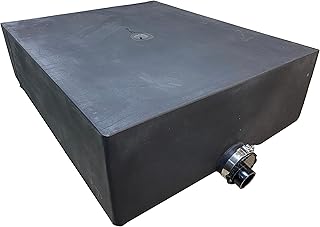
Best for higher-capacity needs in mid-to-large RVs or setups that require extended intervals between dumps. With 34 gallons, this tank supports longer trips or larger families. It is suitable for campers who want to minimize frequent emptying and enjoy a steadier wastewater management routine. A limitation to consider is the bulkier size, which may complicate installation in smaller vehicles.
T-2500 25-Gallon RV Fresh and Grey Water Tank

Best for space-constrained rigs that still require a dedicated grey water solution. The 25-gallon capacity provides a middle ground between portable totes and larger fixed tanks. This option suits smaller travel trailers or towables where a built-in tank is feasible without overloading the chassis. A caution is that capacity is lower than 34-gallon options, so planning for dump schedule is necessary.
WT-3445 RV Grey Waste Water Tank (34 Gal)

Best for full-sized RVs needing a robust, fixed or semi-permanent grey water solution. The 34-gallon capacity aligns well with longer trips and higher occupancy. It features a 1.5″ discharge hub for efficient drainage. Choose this if you prioritize large capacity and durable construction; avoid if you have very limited underfloor space or a small wastewater footprint.
Camco TST RV Grey Water Odor Control

Best for odor management in grey water systems. This lemon-scented treatment helps neutralize smells and keeps the RV living space more comfortable during camping. It complements both portable totes and fixed tanks by reducing odor at the source. A limitation is that odor control products require regular use to maintain effectiveness, especially in hot climates or high-use situations.
Buying Guide
What capacity is right for your RV?
Consider how often you visit dump stations and how many people regularly use the grey water system. Larger families or longer trips may justify 34-gallon tanks, while solo travelers can opt for 15–25 gallons or portable totes.
Portable vs. fixed tanks: which fits your setup?
Portable totes are ideal for temporary solutions, ease of storage, and non-industrial rigs. Fixed or semi-fixed tanks are better for frequent camping and larger rigs, offering durable construction and integrated drainage options.
Discharge connections and compatibility
Check discharge hub size (commonly 1.5″). Ensure the tank’s outlets align with your RV’s plumbing and dump station fittings to avoid adapters or leaks during drainage.
Odor control considerations
Odor-control products help minimize smells. They are especially helpful for all-day use inside the RV during travel and in tight spaces. Use as directed to maintain effectiveness and avoid buildup.
Installation and space constraints
Measure undercarriage clearance and available mounting space. Smaller rigs require compact designs, while larger campers can accommodate higher-capacity tanks with additional mounting hardware.
Maintenance and cleaning
Look for tanks with smooth interiors and accessible drain ports for easier cleaning. Regular maintenance reduces the risk of clogs and odors over time.
Summary of buying considerations
- Capacity needs: 15–34 gallons depending on usage and space.
- Portability vs. permanence: tote tanks for flexibility; fixed tanks for steady use.
- Discharge compatibility: ensure 1.5″ or matching connectors.
- Odor management: consider additives or controls for comfort.
FAQ
- What size grey water tank do I need for a weekend trip? A 15–25 gallon tank is often sufficient for 2–4 people on a weekend trip, depending on usage and hookups.
- Can I use a portable tote tank with a fixed RV system? Yes, portable totes can supplement fixed tanks, especially during travel or when upgrading plumbing.
- Is odor control necessary for grey water tanks? Odor control helps maintain a comfortable living environment, especially on longer trips or in enclosed spaces.
- How do I know if my tank is compatible with my discharge hookup? Check the hub size (commonly 1.5″) and ensure fittings match your RV’s plumbing and dump station connections.
- What maintenance steps are essential for grey water tanks? Regular cleaning, proper flushing, and using odor-control additives as recommended by the manufacturer help prevent clogs and odors.
- Are large tanks better for long trips? Larger tanks reduce dumping frequency but require more space and heavier installation; balance capacity with available space.