Looking for a self-inflating bed roll that combines comfort, portability, and fast setup? These five options deliver quick inflation, built‑in pillows or pumps, and thick padding for varied terrains. They’re best for hikers, car campers, and weekend travelers who want reliable support without complex gear. The list below highlights five strong choices with clear reasons to pick each one, plus practical cautions to consider before buying.
| Product | Best For | Why It Stands Out |
|---|---|---|
| FUN PAC Camping Sleeping Pad | Light backpackers and solo campers | Ultra-thin, 3″ thick, built-in pillow, 30–60s inflate time; lightweight and compact |
| OGERY Self-Inflating Sleeping Pad | Car tent camping and all-season use | 3″ memory foam hybrid design with built-in foot pump; stable, quiet, non-slip base |
| Pretyw Sleeping Pad | Backpackers seeking 4″ thickness | 4″ thick with built-in pillow, 30–60s inflation; ultra-light and highly portable |
| Gear Doctors Oxylus | Beginner-friendly, versatile packs | 4.3 R-value insulating core; lightweight with self‑inflating foam for easy setup |
| Elegear CumbreX | High comfort and fast setup | 3.15″ foam core, fast self-inflation; durable, supports up to substantial weight |
FUN PAC Camping Sleeping Pad

The FUN PAC pad is an ultralight, self‑inflating option designed for solo hikers. It measures up to 78×27×8 inches when inflated, keeping you off uneven ground and rocks. The egg‑shaped air cells with a built-in pillow target neck and back comfort, supporting multiple sleeping positions. Inflation takes about 30–60 seconds, and deflation is quick. Weighing roughly the size of a water bottle, this pad tucks easily into a backpack. Best for minimalist backpackers who value compact gear and straightforward setup.
Who it’s best for: solo hikers and travelers who prioritize weight and packability. Why chosen: fast setup, integrated pillow, and a thick, supportive surface in a compact footprint. Caution: taller users or those needing extra warmth might want a thicker option for extremely cold nights.
OGERY Self-Inflating Sleeping Pad

The OGERY pad blends foam and air for a comfortable 3″ sleeping surface. Its self-inflating design with a built-in foot pump allows quick customization of firmness, ideal after a long day outdoors. The fabric is durable, and the non-slip base helps keep the pad steady on tents, car floors, or cots. Best for car campers and families seeking a portable, durable solution with stable support across sleep positions. Caution: foam‑and‑air construction can feel firmer initially; give it a minute to settle for your preferred pressure.
Pretyw Sleeping Pad

The Pretyw pad offers a 4″ thick sleeping surface with a built-in pillow and a built-in foot pump. It inflates in about 30–60 seconds and deflates in one second. At roughly 1.8 pounds and a compact carry size, it’s highly portable for backpacking, hiking, and travel. Best for campers who want substantial cushioning without adding significant weight. Caution: first inflation may take longer if the deflation valve is not fully closed after packing away; ensure proper sealing for quick setup.
Gear Doctors Oxylus Self-Inflating Pad
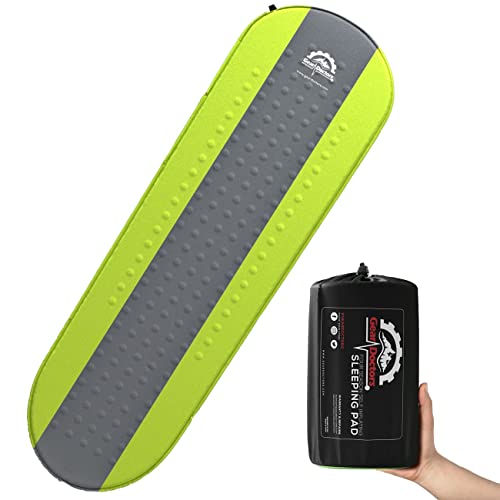
The Oxylus pad uses a hybrid foam and air core with a 4.3 R-value, designed to maintain warmth and cushioning on variable terrain. It folds compactly for packing, yet expands into a large 72″ by 20″ size, offering sturdy support for most sleep positions. It’s described as beginner‑friendly with a quick setup, though the initial unpacking and self‑inflation may require a moment to find the perfect firmness. Best for beginners and hikers who want a reliable, insulated mat for four‑season use. Caution: some users might prefer a more compact pack if weight is critically limited.
Elegear CumbreX Self Inflating Pad

The Elegear CumbreX uses Hi-Tech memory foam with a 26D density for high resilience and even weight distribution. This 3.15″ thick surface delivers hotel-like comfort outdoors and can support up to substantial weight. Inflation is fast, typically under 20 seconds, though first use may require longer as it expands from vacuum packing. Best for campers who want premium comfort and fast setup. Caution: memory foam pads can be heavier than standard foam-only designs, which may affect packing weight for ultralight trips.
Buying Guide: Key Considerations For Self-Inflating Sleeping Pads
- Insulation and warmth: Check R-value or foam density to determine suitability for cold nights. Higher values provide better warmth but may add weight.
- Thickness and comfort: Thicker mats offer more cushion but can be heavier and bulkier. Decide between 3–6 inches based on terrain and preferred sleep position.
- Inflation method: Built-in pumps save effort but may require a bit of time to reach optimal firmness. Consider quick-deflate mechanisms for fast packing.
- Weight and packability: Ultralight options are ideal for long backpacking trips, while heavier models may be better for car camping or families.
- Durability: Look for durable fabrics and reinforced seams. Non-slip bases help prevent movement on tent floors or vehicle interiors.
- Maintenance and repair: Some pads include repair kits. Consider models with simple self‑repair options for extended use.
FAQ
- Q: What is a self-inflating pad? A: It combines foam with air to automatically fill the mattress when the valve is opened, reducing the amount of manual inflation needed.
- Q: Are self-inflating pads good for winter camping? A: Yes, especially models with higher insulation values or foam cores, but verify compatibility with your sleeping setup and car or tent conditions.
- Q: How heavy are these pads? A: Weighs vary by model, typically ranging from under 2 pounds to around 5 pounds for thicker foam designs.
- Q: Do these pads require an external pump? A: Most have built‑in pumps; some rely on foot pumps or rapid self‑inflation, and all are designed to minimize manual blowing.
- Q: How long do they last? A: Durability depends on materials and usage; look for reinforced fabrics and warranty or replacement guarantees when available.
- Q: Can I use these pads on rocky ground? A: Yes, but a ground pad or tarp beneath can extend life and prevent punctures on uneven surfaces.