Looking for a reliable septic solution for a campsite? This guide highlights five sturdy, portable septic tanks suited for 3–5 campers. Each choice focuses on durability, ease of transport, and simple installation. Ideal buyers include RVers, campground hosts, cabin campers, and outdoor enthusiasts seeking a low-maintenance waste system. The table below compares the top picks to help you decide quickly.
| Product | Capacity (approx.) | Best For | |
|---|---|---|---|
| Natotela 264gal Underground Septic Tank Kit | 264 gallons | Small to mid-size campsites | Lightweight, easy transport |
| Mengstart 264gal Underground Septic Tank Kit | 264 gallons | Budget-friendly setups | Thick PE material, 14 vertical ribs |
| LEIZEHUAXU Large 274gal System | 274 gallons | Residential-style campsites | Riser and lid included, strong build |
| Natotela 396gal Underground Septic Tank Kit | 396 gallons | Medium groups, longer stays | Higher backfill tolerance |
| YACMCMK Large Underground Kit | 264 gallons | Compact setups with ample capacity | Durable, corrosion-resistant |
Natotela 264gal Underground Septic Tank Kit

Best for compact campsites with up to 5 campers, this 264-gallon NP plastic tank offers corrosion resistance and a rigid diamond-reinforced design. It supports up to 40 inches of backfill and includes a detachable stack for easier transport and installation. Choose this if you need a lightweight, field-friendly solution with solid impact resistance.
Best for: campers needing quick setup and a reasonably large capacity without heavy equipment. Caution: limited backfill tolerance beyond the stated range may affect long-term stability in very uneven terrains.
264gal Underground Septic Tank Kit by Mengstart

Best for cost-conscious campers who still want a robust system, this 264-gallon kit uses high-strength PE with 14 vertical reinforcing ribs for impact resistance. It arrives with risers and lids for easy access. Choose this if price matters and you want a complete kit that’s easy to deploy.
Best for: budget-focused campsites needing a reliable, all-in-one kit. Caution: ensure your site supports up to 59 inches of backfill as noted by design specs.
Large 274-Gallon System by LEIZEHUAXU
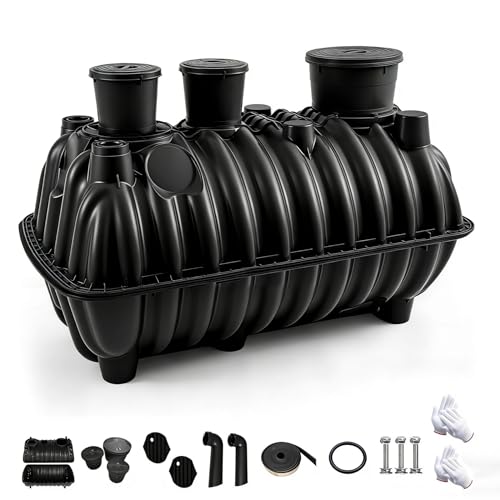
Best for households with more frequent visits, this 274-gallon tank balances capacity and durability. Its high-strength material resists acids and alkalis, and a riser plus manhole lid facilitate inspection and cleaning. The diamond-reinforced barrel improves impact resistance, making it suitable for uneven camping sites.
Best for: campers needing easier maintenance and a sturdy structure. Caution: larger footprint may require more space at the installation site.
Natotela 396gal Underground Septic Tank Kit

Best for mid-sized campsites or longer stays with larger waste volumes, this 396-gallon system uses corrosion-resistant polypropylene and includes a riser and manhole cover. It can handle up to 59 inches of backfill and features a diamond-shaped reinforcing rib design for stability.
Best for: groups needing extended capacity and robust resilience. Caution: heavier than smaller models, requiring stronger setup considerations at the campsite.
YACMCMK Large Underground Kit

Best for compact setups that still crave capacity, this 264-gallon system from YACMCMK combines a durable PP shell with corrosion resistance and a full riser and manhole cover. It’s a sensible pick for campers who need reliable service without over-committing space.
Best for: users who want a balanced mix of capacity and ease of installation. Caution: verify compatibility with local backfill requirements before purchase.
Buying Guide: Key Considerations For Campsite Septic Tanks
- Capacity needs: Estimate daily waste volume and choose a tank that accommodates 2–3 days between pump-outs for small campsites, or more for larger groups.
- Material and durability: Look for corrosion-resistant plastics (PP or PE) and reinforced ribs to withstand backfill and environmental conditions.
- Backfill tolerance: Check the maximum backfill depth (inches) supported by the tank to ensure stable installation on uneven terrain.
- Risers and access: Riser and manhole lid inclusion simplifies inspection and maintenance; verify if these are included or need to be purchased separately.
- Installation considerations: Determine whether the unit is lightweight for transport or requires additional equipment, such as pipes or backfill material.
- Maintenance options: Favor systems with clear access points and easy cleaning features to minimize on-site downtime.
- Environmental fit: Ensure the chosen tank resists acids, alkalis, and aging for field conditions typical of campsites.
Frequently Asked Questions
- What capacity is best for a small group campsite?
A 264-gallon system generally suits 3–5 people for typical weekend use, offering a balance of capacity and transportability. - Do these tanks include risers and lids?
Some kits include risers and lids; verify inclusion in the product listing to ensure you have ready access points. - Can I install a tank on uneven ground?
Most tanks are designed for backfill up to a specified depth; uneven ground may require site leveling or additional support measures. - How difficult is installation for non-professionals?
These kits are engineered for ease of transport and assembly, but follow local codes and seek professional advice if uncertain. - What maintenance should be performed regularly?
Schedule periodic inspections of risers, lids, and access points; clean as needed and monitor for leaks or cracking. - Is a larger tank always better for camping?
Larger tanks reduce pump-out frequency but require more space and heavier handling; assess site constraints first.