When severe weather hits, a reliable road kit can be the difference between a safe delay and a risky situation. This guide highlights five practical emergency kits that address common winter, rain, and storm scenarios. Each option is suited to different driver needs, from bare-bones portability to comprehensive toolsets. Use the quick product table below to compare at a glance, then read detailed picks to decide which kit fits your vehicle and travel style.
| Product | Best For | Key Benefit |
|---|---|---|
| CYECTTR Car Roadside Emergency Kit | Compact car owners seeking essential tools | Includes jumper cables, reflective gear, and multi-tools in a compact bag |
| Thrive Emergency Car Kits | All-around readiness with extra first aid | Large 107-piece set with 66-piece first aid kit |
| AUTODECO Roadside Car Emergency Kit | Budget-friendly with tire inflator | Includes 136 pieces and a 12V inflator |
| Vetoos Car Roadside Emergency Kit | Rugged, survive-anything kit | Foldable shovel and heavy-duty jumper cables |
| Leumoi Road Flares Emergency Kit | Visibility-focused for roadside safety | LED flares with magnetic bases |
CYECTTR Car Roadside Emergency Kit

The CYECTTR kit is designed for quick, on-the-go safety. Best for drivers who want essential tools in a compact bag, it bundles jumper cables, a tow rope, a safety hammer, a reflective warning triangle, a reflective safety vest, a tire pressure gauge, gloves, a flashlight, and additional basic tools. This setup prioritizes portability without skimping on core roadside tasks. A potential limitation is that the kit’s breadth is focused on commonly needed items; it may lack some higher-end gear found in larger sets.
Who it’s best for: urban or commuter drivers who want a practical, all-in-one pack that stows neatly under a seat or in a trunk compartment. Why selected: it covers the basics for a typical breakdown, including visibility gear and essential repair tools.
Caution: verify that the included flashlight and other light components are ready for use after long storage periods.
Thrive Emergency Car Kits for Vehicles

This Thrive kit emphasizes comprehensive coverage, combining roadside essentials with a substantial 66-piece first aid kit inside a durable 600D nylon bag. It includes jumper cables, an escape hammer, a tire pressure gauge, a flashlight, and assorted tools. Best for: drivers seeking a broad safety net, including basic medical preparedness. Better for: longer trips or families who want more than just repair items. Limitation: while sturdy, the bag’s interior organization may require setup time to locate specific items quickly.
AUTODECO Roadside Car Emergency Kit

AUTODECO offers a premium 136-piece set centered on a tire inflator. This kit is best for: drivers who expect to encounter flats or low tire pressure on longer trips. It pairs emergency staples with a reliable air compressor that plugs into a 12V outlet. Choose this if you want an integrated tire-care solution alongside traditional emergency gear. Caution: electrical accessories require vehicle power and may not work if the car’s cigarette lighter is fused or inactive.
Vetoos Car Roadside Emergency Kit
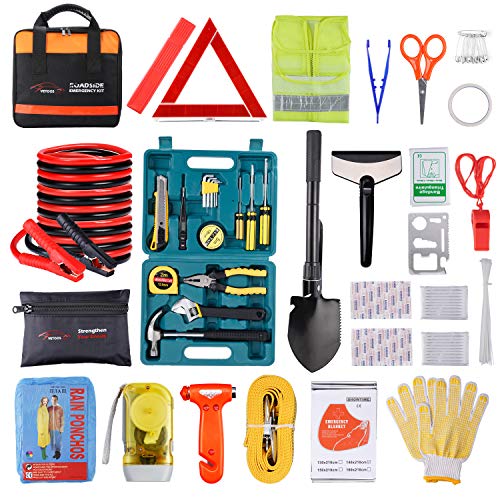
Vetoos presents a rugged option focused on reliability. It includes fully coated jumper cables, a tow rope, a foldable shovel (16.5 inches), a high-capacity carry bag, and essential tools. Best for: drivers who want a broader toolkit and sturdy cables with heat resistance and safer clamps. Choose this if you anticipate muddy or snowy conditions where shovel capability is advantageous. Limitation: the kit’s broader feature set can mean higher bulk than ultra-compact alternatives.
Vetoos Roadside Emergency Car Kit with Jumper Cables (Premium Carry Bag)
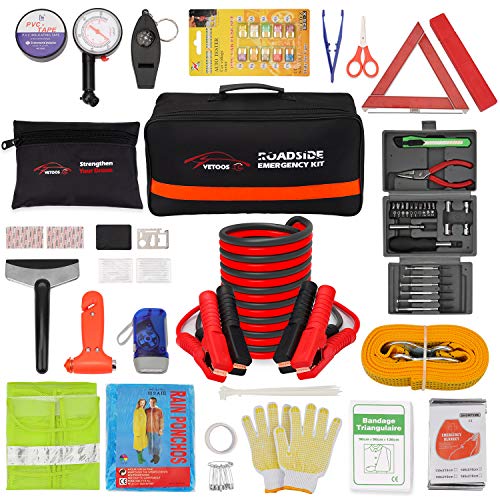
This Vetoos kit highlights portability with a high-end carry bag and a robust 6-gauge jumper cable set. It also includes a compact auto tool set for quick roadside fixes and basic repairs. Best for: drivers who value organization and quick access in emergencies. Better for: urban commuters and frequent travelers who want everything neatly stowed. Caution: the compact toolset may not cover heavy-duty mechanical work.
Vetoos Roadside Emergency Car Kit with Jumper Cables (Winter-Ready)
This Vetoos kit focuses on essential supplies for a breakdown in colder weather. It includes jumper cables, a reflective triangle and vest, a tow rope, and a tire pressure gauge, plus a safety hammer and survival whistle. Best for: drivers who want reliable cold-weather readiness. Choose this if your travels frequently involve winter roads; avoid this if you need more power tools or a built-in inflator.
Leumoi 8 Pack Road Flares Emergency Kit

Leumoi focuses on visibility with LED road flares. The kit features three lighting modes (white, red, SOS red), magnetic bases for quick setup, and a sturdy storage box. Best for: drivers who need high-visibility signaling on busy highways or in low-light weather. Choose this if roadside safety and signaling are top priorities. Limitation: these are signaling devices rather than a full repair toolbox, so pair with other essential tools if needed.
Buying Guide
What should you look for in a severe weather road kit?
- Comprehensiveness: Does the kit include essential tools (jumper cables, flashlight, tire pressure gauge) plus weather-specific gear (reflective gear, high-visibility flares)?
- Portability: Is the bag or case easy to store under a seat or in the trunk without taking up too much space?
- Durability: Are the tools built to withstand cold, moisture, and rough handling?
- Power options: If a tire inflator is included, does it plug into a 12V outlet and work reliably in cold weather?
- Visibility and signaling: Do you have reflective gear and flares to alert other drivers in low-visibility conditions?
Which kit handles common weather scenarios best?
- Cold, snowy conditions: A kit with a folding shovel, robust jumper cables, and a tire pressure gauge is valuable for snow and ice.
- Heavy rain or flood-prone areas: Reflective gear and waterproof bags help keep equipment dry and visible.
- Long-distance travel: Larger kits with a first aid kit and extra tools reduce the need for external help.
How to store and maintain your kit?
- Regularly check battery-powered items, inflate tires to recommended levels, and replace worn gloves or flashlights as needed.
- Keep the kit in a dedicated compartment, and label any items to facilitate quick access during an emergency.
Installation and use tips
- Know where your kit is stored before you need it. Practice using essential items like jumper cables and the tire pressure gauge so you can act confidently.
- Test the emergency signaling devices for visibility, especially before winter road trips.
Frequently asked questions
- What should be in a basic severe weather road kit? A reliable jumper cable set, tire pressure gauge, flashlight, reflective gear, a multi-tool, and a compact first aid kit are commonly useful.
- Is a built-in tire inflator worth it? Yes, if you frequently encounter low tire pressure or run flats on long trips. Ensure the inflator is compatible with your vehicle’s 12V outlet.
- Do all kits include a first aid kit? Not all do; some emphasize tools and signaling. If first aid is important, choose a kit that includes or allows easy addition of a first aid component.
- How do I prevent moisture damage in the kit? Use waterproof or water-resistant bags, and store items in a dry, cool place inside your vehicle.
- What’s the advantage of a foldable shovel? It helps you clear snow or mud, freeing a stuck vehicle without calling for assistance.
- Should I buy multiple kits for different vehicles? If you drive more than one vehicle regularly, a universal kit or dedicated kits for each vehicle can save time in emergencies.