Answering the need for a compact, easy-to-pitch shelter, these single-pole backpacking tents are designed for ultralight backpackers, hikers, and travelers who value simplicity without sacrificing weather protection. The top picks here are best for solo travelers, fast-pace trekkers, and campers who want quick setup and reliable shelter in varied conditions. Each option is evaluated for weight, setup ease, weather resistance, and space, so you can choose the tent that fits your adventure style.
Summary table of chosen products:
| Product | Best For | Weight (approx.) | Main Benefit |
|---|---|---|---|
| Featherstone Backbone 1 Person Ultralight Tent | Ultralight thru-hikers | 2 lb 6 oz | Two doors and vestibules for gear storage |
| Underwood Aggregator 1 Person Trekking Pole Tent (No Poles) | Lightpackers who prefer trekking poles | ≈2.5 lb | Poleless setup with trekking poles or tree line |
| Night Cat Ultralight Tent 1 Person | Minimalist solo hikers | ≈2 lb | Compact bivy-style shelter with quick pitch |
| Croosseoutdoors 1 Person Tent | Motorcycle/hiking multi-use | ≈3.4 lb | Vestibule for gear and extended rainfly protection |
| camppal 1 Person Tent (Windproof/Waterproof) | Wind-prone or stormy conditions | ≈3.75 lb | 4-season-ready, sturdy with RPM-rated fabric |
Featherstone Backbone 1 Person Ultralight Tent

Best for ultralight solo hikers who want spacious living without adding weight. This tent targets a minimal trail weight around 2 lb 6 oz while delivering a roomy interior and two doors with vestibules for gear. The seam-taped construction and TPU waterproof zipper boost weather protection. Choose this if you value extra headroom and a practical shelter that won’t slow you down.
Limitations: As a single-wall design, condensation management can depend on setup and climate. Weight is optimized, but the vestibules require careful packing in heavy storms.
1 Person Trekking Pole Tent (Poleless, Underwood Aggregator)
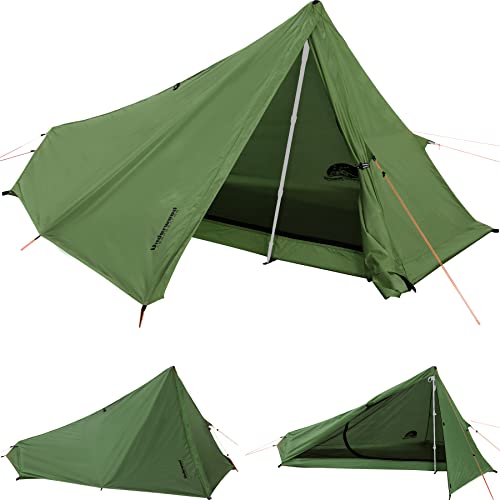
Best for solo trekkers who want a minimal pack without dedicated tent poles. It can be pitched with trekking poles or a tree line, offering a fast two-minute setup for experienced campers. Weighs about 2.5 lbs in typical configurations. Choose this if pole flexibility and ultra-light packing are essential, but note that poles are not provided.
Limitations: Requires suitable trekking poles or sticks; stability can vary in windy conditions without proper guy lines.
Underwood Aggregator 1 Person Trekking Pole Tent (Second Quick-Pitch Option)

Best for hikers who want a similar trekking-pole-friendly setup with slight design variations. It maintains ultralight credentials at roughly 2.5 lbs and emphasizes quick pitching with or without poles. Best for those preferring minimal pole reliance, but verify pole length compatibility before purchase.
Limitation: May require careful setup to achieve optimal tension without trekking poles.
camppal 1 Person Tent for Camping Hiking Mountain

Best for campers facing wind and rain who still need light weight in a 1-person footprint. Features a 4-season-ready design with 3500–4000 mm water resistance, easy ridge-pole setup, and a long inner space for taller sleepers. Choose this when weather resistance is paramount and lighter options fail to meet wind demands.
Limitation: Heavier than ultralight options; taller stakes and poles may be required in exposed sites.
camppal 1 Person Tent (Another 4 Season Version)

Best for backcountry trips requiring robust protection with compact packing. This version shares a similar footprint and a heavy-duty build, making it a reliable option for storm-prone environments. Use this if you consistently camp in mixed-season weather and need durable fabric with steady performance.
Limitation: Similar weight to other mid-range tents; setup and stake placement may be more involved in rocky terrain.
Croosseoutdoors 1 Person Tent
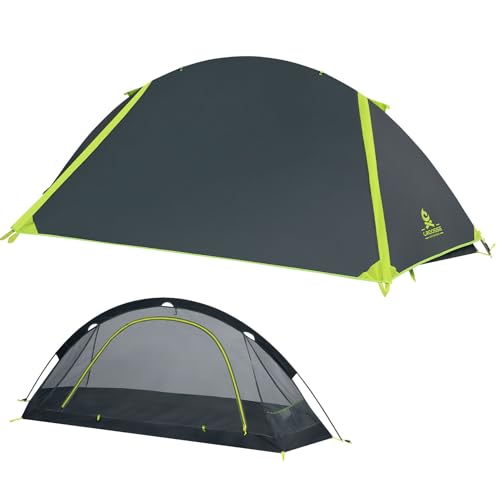
Best for motorcycle or bicycle camping where a compact, winged vestibule helps carry gear. Weight is around 3.4 lbs with a single-pole design and extended rainfly for weather protection. This tent suits riders and hikers who want a balanced blend of protection and portability.
Limitation: Not the lightest option; taller gear may crowd the vestibule in tight campsites.
Buying Guide: Key Considerations for Single Pole Tents
What shape and space matter most?
Look for a tapered floor and vestibule design that maximizes usable space without adding weight. A taller peak increases headroom, but a compact footprint improves stability in wind.
How important is weather protection?
Seek tents with seam-taped floors, PU coatings, and weather-rated fabrics (e.g., 3500–5000 mm water resistance). Double-wall or trusted single-wall builds reduce condensation in varied conditions.
Is weight the top priority?
Ultralight tents under 3.0 lbs excel for long-distance treks. If you encounter exposed nights, a slightly heavier option with robust fabric and storm-ready features might be better.
Pole strategy: poles vs. trekking poles
Trekking-pole tents let you cut weight and customize support. Ensure you have compatible trekking poles or acceptable substitutes. Poleless designs can simplify packing but may require setup with trees or external lines.
How robust should the tent be?
Consider fabric rip-stop, seam strength, and zipper quality for rough terrain. If you camp in windy coasts or high elevations, prioritize reinforced corners and stiffer poles or lines.
What about setup speed?
Single-pole tents often pitch quickly, especially with a simple ridge line or trekking-pole support. Practice setup before a trip to ensure reliable performance in bad weather.
Temperature and ventilation
Two- or more- door configurations improve cross-ventilation, reducing condensation. A proper vestibule helps keep dirt and gear outside the sleeping area.
Durability and care
Rinse and dry tents after trips, store loosely to maintain fabric longevity. Inspect stakes and guy lines for wear and replace as needed to maintain stability.
FAQ
- What is a single-pole tent? It uses a central ridge or single pole design, often with trekking-pole support, to create a stable shelter with minimal hardware.
- Are trekking-pole tents stronger in wind? They can be lighter and flexible, but stability depends on staking, guy lines, and fabric quality.
- Do single-pole tents keep rain out? Yes, with sealed seams and proper rainfly, though condensation management varies by design and climate.
- How do I choose the right weight? Match the weight to your pack capacity and terrain. Ultra-light trips favor sub-3 lb tents; longer expeditions may tolerate heavier, more durable builds.
- Is a vestibule necessary? A vestibule is convenient for gear storage and keeping the sleeping area clean and dry, especially in wet weather.
- Can I use a tree for support? Some poleless designs rely on trees or external lines. Ensure you have suitable anchor points at your site.