The best sleeping bags with built-in air mattresses combine insulation, warmth, and convenient setup into one compact system. This guide highlights five top options, each chosen for different camping styles and sleep preferences. Whether you’re a backpacker needing ultralight gear or a car camper who prioritizes warmth and ease, these picks clarify who benefits most and why they stand out. The products below are evaluated for comfort, size, inflation speed, and overall packability to help you decide quickly.
| Product | Best For | Why It Stands Out |
|---|---|---|
| AirPack Sleeper (Blue/Gray 210x80cm) | All-around comfort for tall users | Built-in pump, 3-inch elevation, warm with 32–80°F rating |
| FUN PAC Camping Sleeping Pad (Green) | Lightweight backpackers | 3D egg-shaped cells, quick inflates in ~30–60s, in-built pillow |
| AirPack Sleeper (Blue/Gray 80×30 in) | Same concept, large-person comfort | Large 80″ length, integrated head pillow and pump |
| OGERY Self-Inflating Pad | Side sleepers needing foam support | 3″ memory foam hybrid, self-inflating with foot pump |
| Pretyw Ultralight Pad (with Pillow) | Travelers seeking compact carry | 4″ thick, 1.8 lb, quick inflate/deflate |
Sleeping Bag with Built-in Pad (AirPack Sleeper) – 80″ x 30″

The AirPack Sleeper is an all-in-one sleeping bag with a built-in inflatable pad, designed for campers who want a complete sleep system without packing separate components. The pad elevates about 3 inches off the ground, and the integrated head pillow adds neck support. A foot pump and dual valves allow rapid inflation and quick deflation for fast packing. The generous 80″ length and 30″ width accommodate tall users up to 6’3″ with a consistent loft for warmth.
Best for tall campers and car campers who prioritize on-site convenience. The bag is rated for 32–80°F, offering warmth with a 330 GSM cotton fill that traps heat effectively in cool nights. The adjustable drawstring hood seals in warmth and reduces drafts, making it suitable for late-season outings.
Caution: The integrated pump adds weight and bulk compared to traditional pads; consider whether a fully integrated system aligns with your packing priorities. Best used with a supported sleeping surface to maintain loft over time.
FUN PAC Camping Sleeping Pad with Pillow (Green)
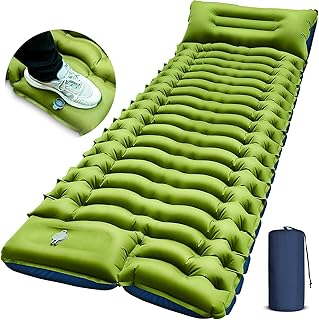
The FUN PAC pad emphasizes ultralight weight with compact dimensions and an integrated pillow. It inflates quickly via a built-in pump in 30–60 seconds and deflates in a second. The pad is up to 78″ long and 27″ wide, with 8″ of thickness when inflated, designed to lift your body off uneven ground and provide neck and back support with egg-shaped air cells that help maintain warmth.
Best for solo hikers and minimalist campers who want a compact, efficient sleep system. The self-inflating feature simplifies setup, and the wide, thick surface reduces pressure points. It’s especially advantageous for travelers who move camp daily and need rapid setup without extra gear.
Caution: While lightweight and compact, the 78″ length may not fit very tall users comfortably. Consider longer options if you’re above about 6’2″.
AirPack Sleeper (Blue/Gray – 210x80cm)

The 210×80 cm AirPack Sleeper mirrors the larger AirPack concept, providing a built-in inflatable comfort pad with a head pillow and foot pump. It inflates in about two minutes and uses dual valves for easy packing. It shares the generous 80″ length and 30″ width, with warmth rated 32–80°F and a cozy 330 GSM fill to trap heat effectively.
Best for campers who want a broader option without sacrificing the integrated air mattress approach. It’s particularly suitable for quieter, relaxed sleep in variable climates, thanks to the wide fit and hood design that helps seal warmth.
Caution: As with the other AirPack models, the integrated system adds some weight; plan your carry strategy if you’re balancing multiple items in a light backpack.
OGERY Self-Inflating Sleeping Pad

The OGERY model blends memory foam with an air layer for enhanced comfort across all sleep positions. A 3″ high-density foam core reduces pressure on shoulders and hips, while a built-in foot pump enables on-the-go firmness tweaks without external gear. The fabric is abrasion-resistant with a non-slip base to minimize movement inside tents or car interiors.
Best for side sleepers and campers who value foam support over purely air-based comfort. The foam layer helps maintain a stable sleeping surface even if the ground is uneven. A limitation is that foam pads tend to be heavier than pure air pads, influencing packing decisions on long hikes.
Pretyw Ultralight Pad with Pillow

The ultralight Pretyw pad weighs about as much as a water bottle, yet it inflates to 4 inches thick for generous cushioning. The built-in pillow adds convenience, and the 79″ length with 27.5″ width creates a stable sleeping surface for most lone campers. Inflation is quick (30–60 seconds), and deflation is nearly instantaneous.
Best for travelers who prioritize minimal weight and easy portability. This pad suits short trips, city-to-camping transitions, and lighter backpacks. The compact carry size makes it an excellent option for travelers who require a reliable sleep surface without bulk.
Buying Guide: How to Choose the Right Sleep System
What matters most when selecting a sleeping bag with an integrated air mattress? Consider warmth, size, weight, and setup time. If you camp in cool conditions, prioritize models rated for lower temperatures and choose a bag with enhanced insulation. For tall users, ensure the length accommodates your height with a comfortable footbox. For backpackers, weight and packed size should drive your decision; ultralight pads work best for multi-day trips where every ounce counts. If you’ll be using a car or tent setup most nights, a larger, warmer system with a built-in pillow can improve sleep quality and reduce gear clutter.
Durability is another key factor. Look for abrasion-resistant fabrics, robust seams, and secure inflation valves. For foam-plus-air designs, ensure the foam density supports your sleeping position and doesn’t excessively compress under heat. For the self-inflating varieties, the efficiency of the built-in pump matters; check if the pump is foot-operated or electric, and whether it remains easy to use in cold weather.
Fit and comfort are subjective, so prioritize products with generous length and width if you’re tall or broader. If you sleep on your side, seek gels or foams that minimize pressure points. Finally, assess the return policy and warranty, especially for integrated systems that must perform reliably in variable outdoor environments.
Frequently Asked Questions
- What is the advantage of an integrated sleeping bag with a built-in pad?
It reduces gear clutter and speeds up setup, making it ideal for quick camp tasks and environments where carrying multiple items is inconvenient. - Are these systems suitable for ultralight backpacking?
Some models are designed to be ultralight, but integrated systems can be heavier. Choose models that align with your weight budget and trip length. - How warm are these sleeping systems?
Warmth depends on bag insulation and fabric rating. Look for temperature ratings such as 32–80°F and consider extra layers for colder nights. - Can I replace the built-in pad if it wears out?
Replacement options vary by model. Check with the manufacturer for compatible pads or accessory options and replacement parts. - What should I avoid when using these pads?
Avoid placing heavy objects on the pad to prevent punctures, and ensure proper inflation to maintain loft and warmth.