When prepping for small-boat outings, assemble a reliable emergency kit that covers signaling, first aid, and essential tools. This guide highlights five USCG-approved or clearly compliant options and explains who each is best for. Whether you’re a weekend angler, a coastal cruiser, or a paddleboarder, the right kit improves safety and response time on the water.
Summary Table of Chosen Products
| Product | Best For | Notes |
|---|---|---|
| SIRIUS SIGNAL SB-3L Boating Safety Dry Bag Kit | All-in-one dry bag with SOS signaling | Floating waterproof flashlight, infrared signal, USCG-style SOS |
| SIRIUS SIGNAL MK-1001 Boating Safety Hard Case Kit | Comprehensive signaling with first aid | USCG approved, includes audible signals |
| Fox 40 Boat Essentials Kit | Compact, grab-and-go safety essentials | Waterproof container, minimizes separate purchases |
| Waterproof First Aid Kit Roll Top Boat Emergency Kit | Wet-environment first aid supplies | Roll-top waterproof design, durable bag |
| Mini First Aid Kit – 150 Piece | Portable, organized first aid | Compact EVA case with many essentials |
SIRIUS SIGNAL SB-3L Boating Safety Dry Bag Kit

The SB-3L kit is designed for all-in-one water emergencies. It integrates a dry bag with a visual distress signal (C-1004) that meets US Coast Guard specs and includes an infrared signal option. A rugged IP68 flashlight that floats ensures visibility and quick light in low-visibility conditions. This kit is best for boaters who want a compact, easy-to-carry solution that covers signaling, visibility, and emergency lighting in one pack. A potential limitation is the need to replace batteries after long-term storage or after use.
- Best for: small-boat crews needing immediate, all-in-one signaling and lighting.
- Why chosen: USCG-spec SOS, infrared signaling, and a floating flashlight reduce response time during distress.
- Caution: The electronic signals require battery maintenance to remain reliable.
SIRIUS SIGNAL MK-1001 Boating Safety Hard Case Kit

The MK-1001 consolidates visual and audible distress signals with first aid, lighting, and essential tools. It is USCG-approved and includes the C-1003 SOS electronic flare plus an orange daytime distress flag, exceeding standard signaling requirements. The kit also features a high-decibel horn and whistle to meet audible distress standards. This option suits boaters who want a robust, all-in-one safety solution with a hard case for protection and organization. It may be heavier and bulkier than compact alternatives.
- Best for: boats needing a complete signaling and basic emergency toolset in a single unit.
- Why chosen: USCG approval and multiple signaling modalities improve detection and response.
- Caution: Less portable than minimal kits; consider storage space on small craft.
Fox 40 Boat Essentials Kit
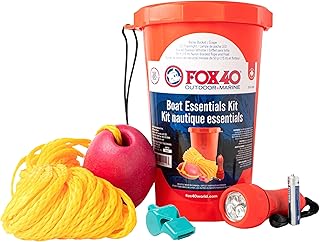
This kit emphasizes a compact, grab-and-go design housed in a waterproof screwtop container. It includes a bailer, a flashlight, ropes, a whistle, and other essential safety items tailored for personal watercraft and small boats. It is ideal for boaters seeking a ready-to-use, minimal setup that meets basic safety requirements without separate purchases. A potential limitation is that it focuses on core essentials, which may require adding more specialized items for longer trips or rougher conditions.
- Best for: riders and small-boat users who want a compact, all-in-one grab-and-go kit.
- Why chosen: Quick access and waterproof storage enhance reliability during emergencies.
- Caution: May require supplemental items for longer or more demanding trips.
Waterproof First Aid Kit Roll Top Boat Emergency Kit

This kit centers on waterproof first aid with a roll-top closure to guard contents from moisture. A transparent waterproof bag offers extra protection for inner items, and contents include water-resistant bandages and prep pads. It is best for boaters who operate in wet environments where keeping medical supplies dry is crucial. The kit’s emphasis on organization helps responders locate items quickly in emergencies. A limitation is that it focuses on first aid; signaling or tools may require separate purchases.
- Best for: anyone who prioritizes dry, accessible medical supplies on the water.
- Why chosen: Roll-top waterproof design preserves supplies in wet conditions.
- Caution: Not a full signaling or tool kit; plan accordingly for multi-scenario safety.
Mini First Aid Kit – 150 Piece

The 150-piece kit delivers a compact, organized first aid solution in an EVA hard shell case. Contents include bandages, gloves, prep pads, tweezers, a tourniquet, and more. It is well suited for boaters who want a portable, well-organized backup for minor injuries or common emergencies. The main trade-off is that it is primarily medical and does not include dedicated signaling or heavy-duty tools, so users should complement it with signaling gear if needed.
- Best for: travelers who want a highly portable, all-in-one medical kit for quick access.
- Why chosen: 150+ supplies in a compact hard case support rapid response to minor injuries.
- Caution: Lacks dedicated signaling or rescue tools; pair with a signaling kit for full coverage.
Buying Guide: How To Choose A Small Boat Emergency Kit
Identify your boat type and typical conditions first. Small craft like kayaks, dinghies, and inflatables require lightweight, compact gear, while open-water day boats may benefit from robust signaling and medical supplies. Consider the following questions to tailor your selection:
- What signaling capabilities are essential? USCG-approved devices and multiple signal types improve distress visibility.
- Do you need waterproof storage? Roll-top bags and waterproof cases protect medical supplies and tools in wet environments.
- Is a hard case or dry bag preferable? Hard cases offer protection, while dry bags provide floatation and buoyancy advantages for signaling gear.
- How comprehensive should the kit be? If you often travel with others or in remote areas, combine signaling, first aid, and lighting in one package.
- What is the weight and portability requirement? Smaller craft benefit from lighter, grab-and-go kits with quick access.
Key considerations by scenario:
- Coastal or lake boating: prioritize signaling variety (visual and audible) and a durable light source.
- Fishing or recreational boating: emphasize a compact first aid kit with organized compartments for rapid response.
- Paddle sports and small inflatables: favor lightweight, waterproof storage with essential safety items easy to grab.
FAQ
What should be included in a basic small boat emergency kit?
A signaling device, a waterproof first aid kit, a flashlight or beacon, a whistle, and basic tools. Include a spare battery plan and a dry storage solution.
Are USCG-approved kits required for small boats?
No legal requirement in all states, but USCG-approved devices simplify compliance and improve safety through standardized signaling.
How often should I inspect and replace kit contents?
Inspect annually and after any use. Replace expired or damaged items, batteries, and worn components to ensure readiness.
Should I carry multiple signaling methods?
Yes. Combining visual signals with audible signals increases detection in diverse conditions and reduces response time.
Is a heavy-duty kit better for rough waters?
Often yes. Heavier kits typically offer more comprehensive signaling, first aid, and tools, but weigh considerations for storage and portability.
Can I customize a kit for family use?
Yes. Add items relevant to family needs, such as child-friendly first aid supplies and easy-access storage configurations.