Direct answer: A camper-van solar kit combines panels, a charge controller, and storage to power appliances reliably while off-grid. This guide highlights five top kits for RV and camper use, showing who each kit is best for and why. It covers options from compact 100–200W systems for lightweight setups to larger 800W bundles for serious off-grid power and extended trips.
The following table summarizes five compatible solar kits ideal for camper vans. Use it to compare core components, battery type, and expected daily output under typical sun conditions.
| Product | System Type | Best For | Key Benefit | Notes |
|---|---|---|---|---|
| ECO-WORTHY 200W Panel Kit | Panel + PWM Controller | Compact RV and van conversions | High efficiency panels; sturdy frame | Good balance of size and output |
| Renogy 200W Adventurer Kit | Panel + LCD PWM Controller | RV, boat, and trailer users | 22% cell efficiency; durable framing | Flush-mount capable controller |
| ECO-WORTHY 200W Starter Kit (Battery + Inverter) | Complete kit | Beginner builds with storage | All-in-one; easy four-step setup | Includes lithium battery and inverter |
| ECO-WORTHY 200W 12V Starter Kit (Battery + Inverter) | Complete kit | Mid-size RVs and longer trips | 12V LiFePO4 battery; includes inverter | XT60-compatible connections |
| ECO-WORTHY 7.168KWH 800W Kit | Full off-grid system | Extended camping or remote power | High capacity; dual-energy sources (UPS) | Four 200W panels; larger footprint |
ECO-WORTHY 200 Watts Panel Kit With 30A PWM Controller
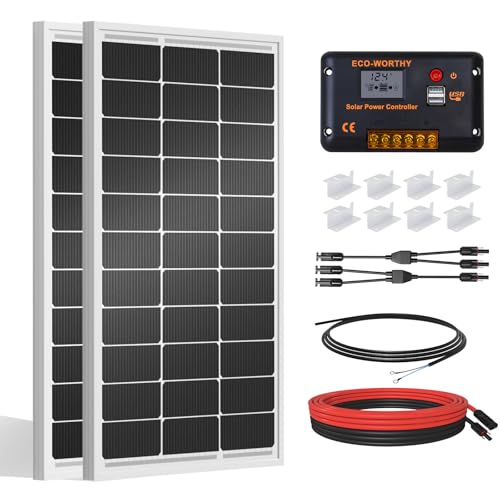
This kit centers on a high-efficiency monocrystalline panel and a 30A PWM controller. It is best for van owners who want a straightforward, reliable charging solution with moderate daily output. The corrosion-resistant frame and IP65-rated junction box help it endure outdoor use. Ideal for RVs or campers with limited mounting space seeking a compact, robust solar option.
Best for: Vanists needing a compact, durable 200W solution that balances performance with simplicity.
Why selected: Combines robust hardware with a straightforward, beginner-friendly setup that still delivers solid daily output under good sun.
Caution/limitation: PWM controllers are efficient but less flexible than MPPT in variable light; performance depends on panel orientation and sunlight quality.
Renogy 200 Watts 12V Monocrystalline RV Solar Panel Kit
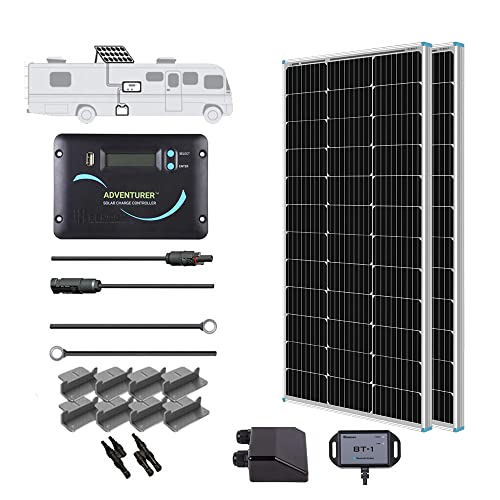
This Renogy kit provides a 200W footprint and a 30A Adventurer LCD PWM charge controller, designed for flush mounting on RV or camper walls. It is well-suited for users who want a strong balance of durability and ease of installation. The panel’s 22% efficiency and corrosion-resistant frame support long-term outdoor use, including high winds and snow loads.
Best for: RV or boat owners who want a compact yet powerful system with a clean mounting profile.
Why selected: Strong protection features (UL/CSA/IEC tested), and a controller designed for tidy, integrated installs.
Caution/limitation: Controller is PWM—less efficient in fluctuating conditions than MPPT options, which can matter in cloudy or dawn/dusk periods.
ECO-WORTHY 200W Complete Solar Panel Starter Kit For RV
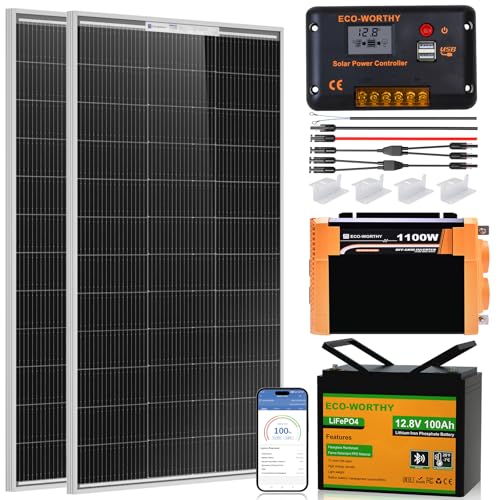
This one-stop kit includes two 100W panels, a 100Ah lithium battery, a 1100W inverter, and a 30A PWM controller. It’s designed for novices who want an all-in-one solution with simple installation steps. It outputs about 800Wh daily under four hours of sun, making it practical for basic RV needs like charging devices and running small appliances.
Best for: Beginner RVers seeking a complete, plug-and-play solar package with storage and inverter included.
Why selected: The bundled components reduce shopping friction and enable faster setup for off-grid trips.
Caution/limitation: Battery type is lithium with XT60 connectors; ensure compatibility with your vehicle’s ports and space constraints.
ECO-WORTHY 200W 12V Complete Solar Panel Starter Kit

This kit combines 200W of solar panels with a 30A PWM controller, alongside a 50Ah LiFePO4 battery and a 600W inverter. It is geared toward campers who want a robust, mid-sized system with a reliable energy storage solution. The LiFePO4 battery offers long cycle life and safer chemistry for off-grid use. It’s suitable for powering essentials and small appliances in a van conversion.
Best for: Van owners seeking a solid mid-range kit with a reliable LiFePO4 battery and inverter for weekend trips.
Why selected: Notable battery technology and a balanced power package, enabling easier expansion and longer-term use.
Caution/limitation: XT60 connections require correct matching with devices and appropriate fusing for safety.
ECO-WORTHY 7.168KWH 800W Solar Panel Kit For RV Off Grid

This is a high-capacity kit designed for extended off-grid use. It includes four 200W bifacial panels, a 3000W UPS inverter charger, two 12.8V 280Ah lithium batteries, and a 60A MPPT controller with Bluetooth. The setup supports powering most RV appliances, including air conditioning and large loads, with a generous energy reservoir and dual-energy capability through UPS.
Best for: Van lifers or travelers needing substantial, continuous power and UPS capability for backup or hybrid charging.
Why selected: Its size and feature set make it suitable for long trips or full-time off-grid use, providing robust energy storage and fast conversion capabilities.
Caution/limitation: Higher installation footprint and complexity; requires space and planning for mounting and wiring safety.
Buying Guide: Key Considerations For Camper Van Solar Kits
- Power needs: Assess daily energy consumption in watt-hours (Wh) and plan for surplus to cover cloudy days. Larger rigs may require 400–800W or more and substantial battery storage.
- System type: PWM controllers are simple and affordable; MPPT controllers maximize energy harvest, especially with varying sun angles or higher system voltages.
- Battery choice: Lithium (LiFePO4) offers longer life, lighter weight, and deeper discharge; lead-acid is heavier and maintenance-heavy but cheaper upfront.
- Panel configuration: Consider space constraints on camper rooftops. Multiple smaller panels can be easier to mount and expand later, while a single larger panel may deliver straightforward power in a limited area.
- Inverter sizing: Match inverter wattage to anticipated AC loads (e.g., fridge, microwave, A/C). Oversizing provides headroom but adds cost and weight.
- Durability: Look for corrosion-resistant frames, weatherproof enclosures, and certified components to withstand road travel and outdoor exposure.
- Installation complexity: Beginners benefit from all-in-one kits with clear steps; advanced users may prefer modular components for customization.
- Expandability: Choose systems that can add more panels or larger batteries as needs evolve during travels.
Frequently Asked Questions
- What size solar kit is best for a small camper van? A 200W–400W system with LiFePO4 battery storage is a common starting point for basic lighting and charging needs.
- Is an MPPT controller worth the extra cost? Yes, MPPT controllers typically harvest more energy, especially in less-than-ideal sun conditions, and are better for larger or expandable systems.
- Do I need a deep-cycle battery? For RV use, lithium deep-cycle batteries (LiFePO4) offer longer life, lighter weight, and safer operation than many lead-acid options.
- Can I expand a kit later? Many kits support adding more panels or upgrading to a larger battery bank, making future expansion practical.
- What is a bifacial panel? Bifacial panels can generate energy from light that reflects off surrounding surfaces, increasing potential output in the right setup.
- What maintenance is required? Keep connections tight, protect panels from damage, and inspect cables and fuses periodically for safety and longevity.