The top picks below center on solar-powered kits that keep you connected, lit, and prepared during outdoor adventures or emergencies. Each product suits different buyer needs—from compact satellite communicators to rugged lanterns and multi-tool first aid kits. Use the table to compare at a glance, then read the detailed sections to understand who benefits most from each option.
Summary Table
| Product | Best For | Key Benefit |
|---|---|---|
| Bivy ACR Stick & Solar Panel Ultimate Survival Kit | Remote explorers, campers needing satellite comms | Integrated satellite communicator with 24/7 SOS and high-efficiency solar charging |
| Emergency Weather Radio – Roxicosly | Off-grid homeowners, campers concerned with radio alerts | Large solar panel and real 12000mAh battery for power and information |
| Lichamp Collapsible Solar Lantern | Lightweight backpackers, power outages | Dual-purpose lantern and flash light with USB output for devices |
| XTAUTO Collapsible Lantern (2-Pack) | Hiking groups, multi-light needs | 360° lighting, collapsible design for easy packing |
| WVL Emergency Weather Radio | Portable emergency power and information | 2000mAh USB charging with multi-source power |
Bivy ACR Solar Panel Ultimate Survival Kit

The Bivy kit centers on a 2-way satellite communicator backed by 24/7 SOS support through Global Rescue, which is ideal for remote explorers, climbers, or anyone who might lose cell service. It pairs this communication capability with a 15W solar panel for portable charging and a high-visibility rescue light. This combination is best for buyers who prioritize staying connected and signaling for help in wilderness or disaster zones. The included solar panel has enough output to maintain essential devices, while the C-Strobe H2O light adds safety during water-based activities or night-time expeditions. A potential limitation is subscription-dependent SOS services, which require ongoing renewal for peak reliability.
Best for: remote trekkers, search-and-rescue trained individuals, and families who want robust satellite communication during outdoor trips.
Why selected: It combines emergency communication with renewable power and signaling, covering both connectivity and visibility in one kit, reducing the need to juggle multiple devices.
Caution: Ensure you maintain the satellite service subscription for uninterrupted SOS coverage; otherwise, the primary safety feature relies on the subscription.]
Typical use scenarios include backcountry camping, weathered expeditions, or multi-day river trips where service is limited and aid may be several hours away.
Collapsible Portable LED Lantern XTAUTO
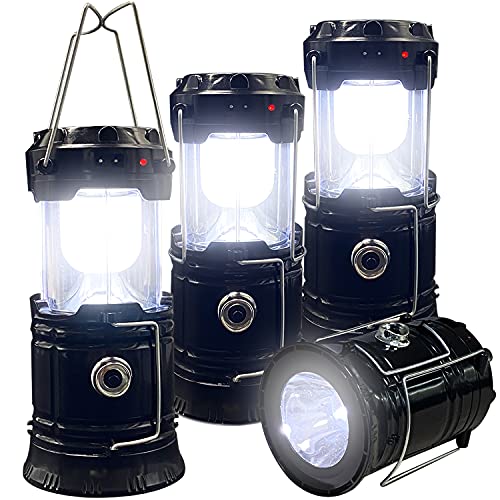
This XTAUTO lantern is designed for versatility and portability. With 360° lighting from multiple LED chips and a collapsible form factor, it doubles as a lantern and a flashlight. The design is lightweight and includes a folding handle for hanging in tents or trees. Durability is addressed with ABS construction suitable for outdoor use, and runtime exceeds 25 hours on a full charge. This option is best for buyers who need flexible illumination that can be easily packed for hikes, campsites, or emergency outages. A minor caveat is that brightness and runtime depend on battery health and usage patterns, which can vary with environmental conditions.
Best for: solo travelers, families on weekend trips, or anyone needing a reliable, compact light source that can switch forms easily.
Why selected: The lantern’s dual-function design simplifies gear lists and makes it an obvious “two-in-one” choice for small packs or emergency kits.
Caution: In extremely cold conditions, battery performance may reduce runtime; plan for shorter sessions if temperatures drop sharply.
Lichamp Collapsible Solar Camping Lantern
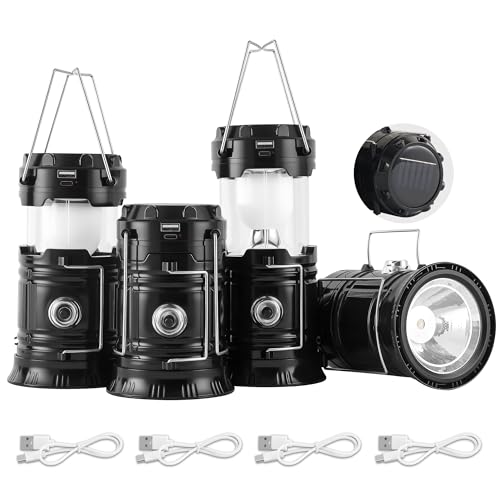
The Lichamp lantern emphasizes a dual-power approach, combining a rechargeable battery with both solar and USB charging options. It offers a 360° glow with a 300-lumen output for portable illumination. The collapsible design makes it easy to stash in a pack, tent, or emergency bag, and the built-in USB output can charge a phone or small device in a pinch. This option is better for buyers who want a compact lantern that still provides enough light for larger spaces or nighttime tasks. A potential limitation is that higher brightness reduces runtime, which means planning for power management is important during extended use.
Best for: campers, hikers, and households needing a versatile, compact lighting solution with a charging option for devices.
Why selected: Its foldable form and USB output deliver practical, ready-to-use power and light in a single device, reducing gear clutter.
Caution: Monitor the battery level if using the USB output heavily, as it can drain the lantern faster than lighting use alone.
Roxicosly Emergency Weather Radio

This radio pairs a large solar panel with a real 12000mAh battery, making it a strong backup power source during blackouts or outdoor emergencies. It includes AM/FM/NOAA bands for weather alerts and information, an LED flashlight, a reading lamp, and a phone charger function. The design suits buyers who want a dependable, all-in-one device that provides important information and power when traditional electricity is unavailable. A limitation to note is that performance depends on sunlight conditions and wind-down times during non-emergency use, which can affect solar recharge efficiency.
Best for: home prep kits, campers who prioritize weather alerts, and people who want an all-in-one daytime/nighttime power and information source.
Why selected: It emphasizes reliable information delivery and power resilience, which is crucial during storms, outages, or remote camping trips.
WVL 7400mWh Emergency Weather Radio
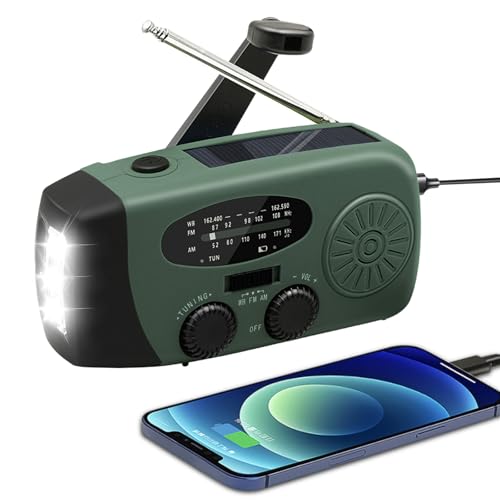
The WVL model emphasizes multi-source charging and SOS signaling. It includes a 2000mAh USB power bank, a compact form factor, and three power sources: hand crank, solar, and built-in rechargeable battery. The device is designed for quick power restoration during emergencies, which makes it a solid choice for travelers or families who want a compact, dependable power hub in a single unit. The trade-off is that the 2000mAh capacity may limit long usage for higher-draw devices during extended outages.
Best for: travelers, hikers, and households seeking a compact, multi-source-powered radio with emergency charging capabilities.
Buying Guide: Key Considerations For Solar Panel Survival Kits
- Power needs: Evaluate the energy draw of devices you plan to charge. If you rely on phones or small lights, compact panels and 2000–12000mAh batteries may suffice. For radios, satellite communicators, or multiple devices, prioritize higher-capacity backups and faster solar charging.
- Power sources: Look for multi-source options (solar, hand crank, USB). Redundancy increases reliability during extended outages or in areas with variable sunlight.
- Durability: Choose rugged, weather-resistant builds (IP ratings, impact resistance) for outdoor use. Collapsible designs save space without sacrificing strength.
- Communication capabilities: If staying connected is essential, favor products with satellite messaging or NOAA weather alerts and ensure required subscriptions are understood and manageable.
- Portability and storage: For hikers and campers, lighter, compact devices with multi-use functionality (lamp/flashlight, charging, signaling) offer the best value per ounce.
- Safety features: Look for high-visibility signaling lights, SOS alarms, and robust emergency power or alert systems to improve situational awareness during crises.
Frequently Asked Questions
- Do solar survival kits require internet access to work? No. Most rely on solar charging, built-in batteries, and manual options like hand cranks. Some include satellite communication or weather alerts that require service subscriptions.
- How much power should I expect from a solar panel on a kit? Output depends on panel size and sunlight. A 15W panel can recharge small devices reasonably in daylight, while larger panels and higher-capacity batteries support longer operation in outages.
- Is a multi-tool first aid kit necessary with solar gear? It can be beneficial. A comprehensive kit adds medical readiness alongside power and lighting functions for emergencies.
- What is the advantage of a collapsible lantern? It saves space and provides flexible lighting positions, from tents to rooms, reducing the need for multiple separate lights.
- Should I buy a satellite communicator for backcountry trips? If you hike in remote regions, a satellite communicator adds a critical safety layer for emergency contact when cell service is unavailable.
- Are these devices weatherproof? Most are designed for outdoor use, but check IP ratings and storage practices to ensure long-term reliability in harsh conditions.