Answering the need for portable warmth, these space heaters are designed to keep campers cozy in tents, cabins, or RVs. The best options balance compact design, safety features, and adaptable heating modes. This guide highlights 5 models ideal for camping scenarios—ranging from small tents to car-camper setups—so you can pick the right fit for your outdoor adventures. Each pick includes best-use scenarios, safety notes, and practical limitations to help you compare at a glance.
| Product | Brand | Best For | Notes |
|---|---|---|---|
| Amazon Basics Ceramic Space Heater (Silver) | Amazon Basics | Compact tents or small campers needing simple heat | Non-oscillating; 1500W max; tip-over and overheat protection |
| Aikoper 1500W Ceramic Heater | Aikoper | Bedroom or small living area in a camper | Multiple heat settings; thermostat; energy-conscious option |
| JIBUFI 1500W Ceramic Heater | JIBUFI | Portable use by desk or bedside in a camper office | 70° rotating feature; remote control; timer |
| GiveBest Portable Electric Space Heater | GiveBest | General cabin or tent use with flexible modes | Two heating modes; safety features; carry handle |
| VOCRS 1500W Ceramic Heater | VOCRS | Small living areas needing remote control | Three heating modes; remote; timer; compact |
Amazon Basics Ceramic Space Heater (Silver)

This compact heater offers three heating options: High (1500W), Low (900W), and a Fan Only mode. Best for campers who want a lightweight, simple device that can sit on a table near the sleeping area or inside a small shelter. It weighs about 3 pounds and measures 7.5 by 6.3 by 9.5 inches, making it easy to pack with camping gear. The built-in tip-over and overheat protections increase safety in uneven tents or RV bunks. A potential limitation is the non-oscillating design, which concentrates heat in a single direction.
Best for: solo campers or couples in compact spaces who need quick warmth and straightforward operation.
Why selected: Lightweight, simple controls, and essential safety features align with typical camping setups where space and weight matter.
Note: Not ideal for large tents or open-air use where wind could quickly dissipate heat.
Aikoper Space Heater, 1500W
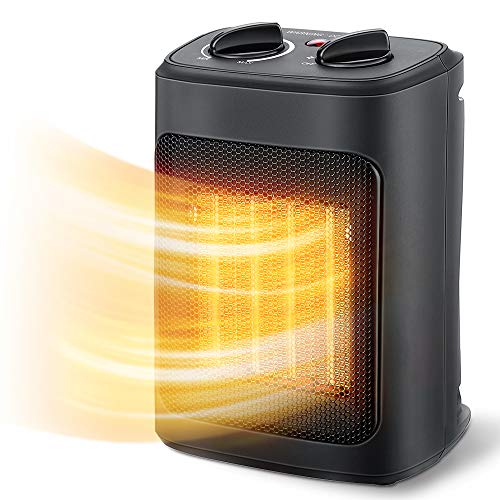
This ceramic heater uses advanced PTC ceramic heating tech with a high-efficiency fan to distribute warmth quickly. With low, medium, and high heat settings plus a fan-only mode, it’s a flexible option for campers who want to tailor warmth to changing conditions. An adjustable thermostat helps maintain a comfortable temperature, which is useful in fluctuating outdoor nights. A potential caveat is that higher wattage units may require more electrical power, so plan energy use if camping with limited power sources.
Best for: campers who want versatile heat levels and precise temperature control in small to mid-sized spaces inside a trailer or tent annex.
Why selected: Balanced heating options and a thermostat help you maintain comfort without overheating the space.
JIBUFI 1500W Portable Space Heater

This heater emphasizes portability with a 1500W ceramic element and a practical 70° rotating feature. The wide oscillation helps distribute heat across a larger area, which is helpful in tents with multiple occupants or a small living area in an RV. An included remote control and timer add convenience for campsite setups where reaching the unit is inconvenient. Caution: ensure the unit is placed on a stable, heat-safe surface away from tent fabrics or flammable materials.
Best for: campers needing broader heat distribution and remote operation in tight or shared spaces.
Why selected: Rotation and remote control improve usability in confined camping spaces.
GiveBest Portable Electric Space Heater

GiveBest provides a dual-mode heater with 1500W or 750W options plus a fan-only setting. Its automatic thermostat cycles heat to maintain the desired temperature, which is useful in variable camping conditions. A safety emphasis includes a flame-retardant shell and automatic shut-off on overheating, plus tip-over protection. The unit is designed for portability, with a carrying handle for easy movement between camping spots. Limitations include power consumption at higher settings if you are off-grid or using limited inverter capacity.
Best for: campers who want a flexible, quiet heater with reliable safety features for small tents or campers’ personal spaces.
Why selected: The two heating levels and smart safety features make it a practical all-around choice for varying camping environments.
VOCRS 1500W Ceramic Heater

VOCRS offers three heating modes (700W, 1000W, 1500W) with a remote control and a timer function. The digital display helps campers monitor temperature and mode quickly, which is useful when space is limited. The timer feature supports energy saving and safer operation during nighttime camping. A practical note is to ensure the remote control is kept dry and within line of sight for reliable operation in camp setups.
Best for: campers who want precise control from a distance and flexible heat levels in small living spaces.
Why selected: The remote and clear display simplify use in tents or small campers where manual adjustments can be cumbersome.
Buying Guide: Key Considerations For Camping Heat
- Heat requirements: Choose a unit with adjustable wattage to balance warmth with available power sources. If camping with limited power, a model with 700–1000W settings plus a fan mode can help conserve energy.
- Portability: Prioritize compact, lightweight designs with a carrying handle or a small footprint for tents and small cabins.
- Safety features: Look for tip-over protection, overheat protection, a cool-touch exterior, and a built-in thermostat to prevent overheating in enclosed spaces.
- Ventilation and space: Determine heat distribution needs. Oscillating models cover larger areas, while non-oscillating units are fine for direct heat near a sleeping area.
- Remote control and timers: Useful for campsite comfort where you want to adjust heat without leaving your seat or bed.
- Fuel type and environment: For off-grid camping or RV use, consider electric heaters with safe operation in dry, enclosed areas. Propane heaters require proper ventilation and specialized safety considerations.
FAQ
- Can I use an electric space heater inside a tent?
- What wattage is best for camping?
- Are remote controls necessary?
- Is oscillation important for tents?
- What safety features should I look for?
Yes, but ensure proper ventilation and place the heater on a stable, non-flammable surface away from fabrics. Prefer models with tip-over and overheat protections.
For small tents, 700–1000W often suffices when used with a thermostat. For larger spaces or RVs, 1500W with a thermostat offers more consistent warmth.
Remotes improve convenience in camping setups where reaching the heater is impractical. They are optional but beneficial for night-time adjustments.
Oscillation provides broader heat distribution, which can be helpful in shared spaces. If heat is needed for a single occupant, a non-oscillating unit is acceptable.
Key features include tip-over protection, overheat protection, a cool-touch exterior, and a built-in thermostat to regulate temperature.