Whether you’re building a home emergency kit or planning camping trips, stackable 5-gallon water containers maximize storage while keeping water accessible. This guide highlights five reliable options, explains who each is best for, and points out practical considerations such as portability, spigot design, and material safety. The featured products are suitable for long-term storage, temporary travel needs, and multifamily prep scenarios. The quick-buy table below helps compare capacity, features, and intended use at a glance.
| Product | Best For | Capacity | Key Benefit |
|---|---|---|---|
| Saratoga Farms 5-Gallon Stackable Water Storage Containers | Home surge readiness | 20 gallons (4 x 5 gal) | Flat-stacking design with breathing ports |
| FastRack 5 Gallon Hedpak (2-Pack) | Brewing and general storage | 10 gallons (2 x 5 gal) | Leak-proof cap and BPA-free |
| Aguaprep 5-Gallon Stackable Containers (4 Tanks) | Emergency supply kits | 20 gallons | Spigot access, extra lids |
| Legacy Food Storage 5-Gallon Tanks (6 Pack) | Long-term prep | 30 gallons | Includes water treatment drops |
| Aguaprep 5-Gallon Stackable Storage (6 Tanks) | Travel and camping kits | 30 gallons | Spigots, lids, and stacking design |
Saratoga Farms 5-Gallon Stackable Water Containers

Best for: households prioritizing stacked storage with easy-to-pour design.
Why chosen: Flat bottoms and tops allow nestable stacking, maximizing space in garages or pantries. Built-in twist breathing ports help prevent air lock during pouring. The kit includes four 5-gallon containers with lids, each weighing about 40 pounds when full, which is a consideration for handling and mobility.
Limitations: While designed for portability, the total kit weight can be substantial for single movers. BPA-free HDPE ensures food-grade safety for water and other liquids.
FastRack 5 Gallon Hedpak (2-Pack)

Best for: hobbyists and small-scale storage who want a durable, leak-proof solution.
Why chosen: BPA-free, food-grade material with a sealed threaded cap provides a secure pour and transport option. The 2-pack offers cost-efficient redundancy for brewing, fermentation, or general storage.
Caution: The set is compact but still holds up to 10 gallons total; consider additional cans for larger families or longer outages.
Aguaprep 5-Gallon Stackable Containers (4 Tanks)

Best for: campers and RV travelers needing easy-fill spigots and multiple lids.
Why chosen: Each tank is BPA-free HDPE with a spigot for simple dispensing. The kit includes extra lids to simplify transport and storage. Stacking design aids space-saving in vehicles or sheds.
Limitation: Spigots may require periodic maintenance to ensure smooth operation; verify compatibility with your preferred hoses or filters.
Legacy Food Storage Emergency Water Storage Containers

Best for: long-term preparedness with a focus on water safety over years.
Why chosen: Heavy-duty BPA-free containers designed for stackable storage, totaling 30 gallons with six tanks for extended resilience. Includes water treatment drops to help keep water usable for up to five years.
Note: The five-gallon tanks are designed for stable stacking, but ensure ventilation in humid environments to prevent potential condensation issues.
Aguaprep 5-Gallon Stackable Set (10 Tanks)
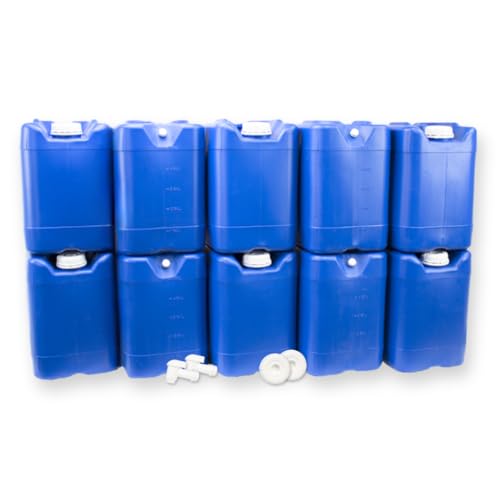
Best for: large families or events requiring substantial water storage with travel-friendly design.
Why chosen: Pack includes two 5-gallon containers with lids and spigots, plus a robust stacking system. Made from BPA-free HDPE; designed to weather emergencies and outdoor use.
Limitation: Larger sets require more storage space and careful planning for transport in vehicles or shelters.
Buying Guide
What matters most when choosing stackable water containers?
Material safety: Look for BPA-free HDPE or other food-grade plastics to ensure water remains uncontaminated.
Stackability: Choose containers with flat lids and ribbed tops that lock into place to prevent shifting during storage or transport.
Portability: If you need to move containers frequently, consider built-in handles and the overall weight when full (about 40 pounds per 5-gallon unit).
What size and capacity should you target?
For a small household, 20 gallons (four 5-gallon containers) can cover basic drinking, cooking, and sanitation needs for several days. For longer outages or larger families, 30–60 gallons provides more resilience, especially when combined with water treatment drops for long-term storage.
When is a spigot advantageous, and what to watch for?
A spigot simplifies dispensing, especially for campers or households with limited pouring strength. Ensure the thread compatibility matches your water receptacle and check for leak-proof seals during use.
Durability and storage environment considerations
Durable containers withstand stacking and shelving in garages or basements. Keep containers away from direct sunlight when possible to minimize plastic degradation and maintain water quality.
Special features to consider
- Breathing ports or vented pours to prevent air lock.
- Extra lids for transport or pour-through access.
- Included water treatment drops for long-term storage safety.
Choosing the right kit for your use case
Emergency kits typically benefit from multi-tank setups with spigots and treatment drops. Camping or travel kits favor lighter, easier-to-move sets with strong handles and compact footprints.
FAQ
Are these containers safe for long-term water storage?
Yes, when made from BPA-free HDPE and stored properly in a cool, dark place. Long-term safety improves with water treatment drops if included by the manufacturer.
Can I use these containers for other liquids?
Yes, they are designed for liquids, including beverages or non-potable liquids, but cleaning between uses is recommended to avoid flavor transfer or contamination.
Do stackable designs lock securely?
Most units feature flat tops and ribs that interlock or nest, enhancing stability when stacked. Always ensure lids are securely fastened before transport.
What is the typical weight when full?
A full 5-gallon container weighs about 40 pounds, which is important to consider for handling and storage planning.
How many containers should I start with for a family of four?
A 20–30 gallon setup (four to six containers) is a common starting point for basic needs, with more added for extended outages or higher water needs.