If you’re searching for a durable, metal water bottle that can handle camping, bushcraft, and outdoor adventures, a stainless steel option is often the safest bet. This guide highlights five strong choices designed for hikers, campers, and survival-minded buyers. Each bottle is evaluated for build quality, boil-safety, portability, and practical limits so you can pick the best fit for your kit. The top picks are best for different use cases: long backpacking trips, bushcraft and campfire use, and compact, everyday carry.
The following table provides a quick comparison of the five recommended bottles, including capacity, key strengths, and who they’re best for.
| Product | Capacity | Best For | Notable Pros |
|---|---|---|---|
| Tactiko Survival 51 oz / 1500 ml | 51 oz | Survival kits, camp cooks who boil water | Boil-safe, all-metal lid, leakproof, durable single-wall |
| Bambaw 32 oz | 32 oz | Everyday outdoor use, eco-conscious hikers | Minimalist, plastic-free, reusable, camp-boiling proof |
| Gearland Canteen 40 oz | 40 oz | Bushcraft kits, ultralight setups | Multi-purpose canteen with nested cup, versatile |
| Pubgeer 42 oz | 42 oz | Longer outings, wild camping | 2-in-1 bottle and cup/boiler, compact carry |
| Dumatc Survivor 42 oz | 42 oz | Survival scenarios, direct campfire use | 3-in-1 with nesting cup, carry bag included |
Tactiko Survival 51 oz Stainless Steel Bottle

Best for: campers who demand boil-capability and a rugged build. This bottle uses 18/8 304 stainless steel and is designed to boil water over campfires, grills, or stoves, making it suitable for purification, coffee, or tea in survival situations. Its single-wall construction keeps weight low, and the leakproof all-metal lid eliminates plastic parts for those seeking a plastic-free setup. The thicker steel resists drops, dents, and corrosion in extreme environments.
Why chosen: It combines boil-safety with a durable, simple design and a leakproof seal, which is ideal for hikers who boil water or purify on-site without worrying about plastic components.
Limitation: Not vacuum-insulated, so it won’t keep beverages hot or cold for extended periods—best used for boiling when you need potable water rather than temperature retention.
Bambaw Stainless Steel Water Bottle 32 oz

Best for: eco-conscious travelers who want a minimalist, durable bottle without coatings. This 32 oz bottle is uninsulated and uncoated, avoiding paints or plastic; designed for long-term use with an emphasis on scratch resistance and durability. It is camp-boiling proof, making it suitable for boiling water in outdoor settings.
Why chosen: Its plastic-free, environmentally friendly design makes it a solid pick for those prioritizing sustainability and flavor neutrality when water sits in metal for extended periods.
Limitation: Uninsulated design means no temperature retention; taste difference between stainless steel and plastic may take time to acclimate to for some users.
Gearland Canteen Stainless Steel Bottle
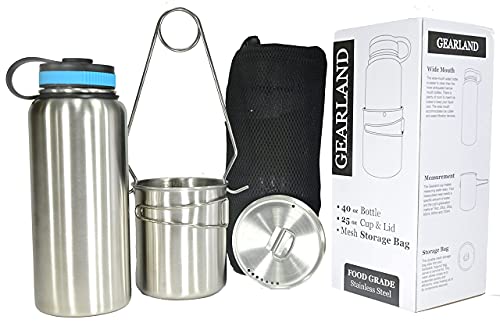
Best for: ultralight backpackers and bushcraft enthusiasts who want an all-in-one cooking set. This 40 oz bottle comes with a nested camping cup and a lid that doubles as cookware, enabling a compact camp kitchen setup. The bottle and cup are food-grade and not coated, reducing flavor transfer concerns.
Why chosen: Its multi-use design helps reduce gear weight and bulk, turning the bottle into a versatile cooking and heating solution when needed.
Caution: The lid and strap may need to be removed before heating to avoid damage or instability when boiling directly over a fire.
Pubgeer Canteen 42 oz with Nesting Cup

Best for: adventurers who want a 2-in-1 bottle and cup system with portability. This bottle features a 24 oz nesting cup that doubles as a cooking pot and fits inside the bottle for space-saving packing. The included Oxford bag adds protective transport.
Why chosen: The combination of a wide-mouth bottle with a nesting cup creates a neat, compact setup, making it an excellent choice for minimalist kits and spontaneous hikes.
Limitation: The multitasking design requires mindful packing to avoid losing the nesting cup or misplacing parts in rugged environments.
Dumatc Survivor 42 oz 3-in-1 Canteen

Best for: survival-minded buyers who value 3-in-1 versatility. This canteen includes a 42 oz bottle, a 24 oz nesting cup, and a carrying bag designed for outdoor emergencies. It supports direct campfire use and boiling water when needed, with a robust all-SS304 build.
Why chosen: The integrated setup reduces gear counts and offers direct utility for cooking and drinking water on the trail or in survival scenarios.
Limitation: When heating, remove the plastic components to avoid damage and ensure safe use over a campfire.
Buying Guide: Stainless Steel Camping Bottles
What to consider when choosing
- Capacity and weight: Larger bottles hold more water but weigh more. Choose based on your trip length and water access.
- Construction: 18/8 (304) stainless steel is common for durability and safety. Single-wall bottles are lighter but don’t retain temperature; insulated designs keep temps longer but are heavier.
- Boil capability: If you need on-demand disinfection, boil-safe designs with direct campfire use can be critical for survival kits.
- Lid design: All-metal, leakproof lids without plastic parts reduce potential plastic contact and failure risks in rugged use.
- Portability: Look for nesting cups, carry bags, or handles that fit your backpack setup and cup holder compatibility.
- Flavor and maintenance: Uncoated and plastic-free designs avoid flavor transfer and plastic interaction but may require more careful cleaning to prevent odors.
How to use and care for stainless steel bottles
- Hand-wash when possible to maintain integrity; if you must, ensure components are dishwasher-safe if specified by the manufacturer.
- Avoid direct heat on plastic lids or coatings; follow boiling guidelines precisely to prevent warping or damage.
- Dry thoroughly to prevent rust or corrosion on any exposed seams.
FAQs
- Is a boil-safe bottle better for camping? Yes, boil-safe bottles allow you to disinfect water directly over a campfire, which is valuable in survival or backcountry scenarios.
- Should I choose insulated or uninsulated? Insulated bottles retain temperature longer but are heavier and more expensive. Uninsulated bottles are lighter and simpler, ideal for boil-and-drink use on the move.
- Are plastic-free bottles better for flavor? Plastic-free designs minimize flavor transfer from container materials, which some hikers prefer.
- What’s the benefit of a nested cup? A nesting cup reduces the amount of gear you carry by combining a mug and pot with the bottle, useful for minimalist setups.
- Can these bottles be used for hot beverages? If boiled water is involved, ensure the bottle is compatible with hot liquids and that the cap and seals remain intact under heat.
- Do all these bottles fit standard cup holders? Most 32–42 oz bottles are designed to fit common cup holders, but always verify dimensions for your specific vehicle or pack.