Answer: For hikers seeking light, versatile protection, these top picks balance weight with grip, waterproofing, and all-day comfort. The best fits are: speed hikers who need quick-dry comfort; weekend explorers who tackle mixed terrain; and beginners seeking reliable, low-fatigue footwear. Below, five boots are evaluated for weight, protection, and traction to help you choose.
Product Snapshot
| Product | Why It Stands Out | Best For |
|---|---|---|
| NORTIV 8 Men’s Waterproof Hiking Boots | Waterproof membrane, reinforced toe, MDT traction | Wet, muddy trails and mixed terrain |
| Columbia Mens Transverse Waterproof Hiking Boot | OMNI-TECH waterproofing, TECHLITE cushioning, Omni-Grip traction | Four-season hiking with varying weather |
| NORTIV 8 Men’s Ankle High Waterproof Hiking Boots | Removable insoles, EVA midsole comfort, reliable traction | Longer hikes on uneven ground |
| SHULOOK Men’s Waterproof Hiking Boots | SL-TEX membrane, ultra-lightweight, breathable lining | Fast-paced hikes and day trips |
| Columbia Mens Newton Ridge Plus II Waterproof Hiking Boot | Lightweight midsole, full-grain leather with mesh, adjustable fit | All-day comfort on varied terrain |
NORTIV 8 Men’s Waterproof Hiking Boots
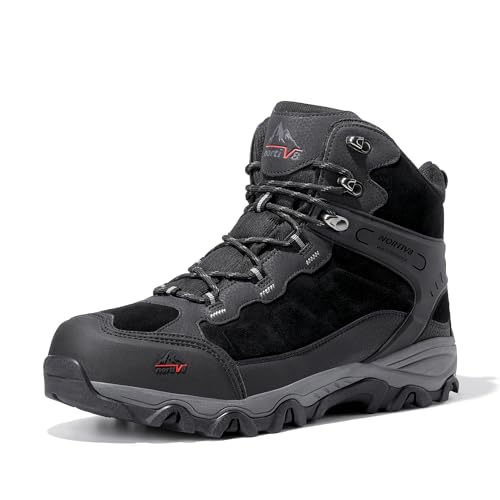
Best for: Hikers who encounter wet trails and uneven ground. These boots use a waterproof membrane to keep feet dry and a rubber toe cap for toe protection, plus a reinforced heel for stability. The multi-directional traction outsole helps on mud, slick rocks, and loose gravel, making them a solid everyday-wet-weather option.
Caution: Waterproofing depends on membrane integrity; avoid excessive scuffing that could compromise seals.
Columbia Transverse Waterproof Hiking Boot

Best for: Hikers who want breathable waterproofing with reliable all-terrain traction. OMNI-TECH provides waterproof, breathable protection while TECHLITE cushions for steps, and OMNI-GRIP offers grip on wet and dry surfaces. This boot suits varied weather and mixed terrains.
Limitation: Ground feel may be softer due to cushioning; choose this if you prefer comfort over maximum proprioception on rocky trails.
NORTIV 8 Men’s Ankle High Waterproof Hiking Boots

Best for: Hikers seeking all-day comfort with removable insoles and lightweight EVA midsoles, delivering stamina for long routes. The boot emphasizes cushioning and ankle support, making it suitable for day-long trips on uneven surfaces.
Caution: Ankle-height protection can add weight; ideal for stability but may feel more protective than needed on smooth trails.
SHULOOK Men’s Waterproof Hiking Boots

Best for: Lightweight, breathable hiking on day trips or short treks. The SL-TEX waterproof membrane helps keep water out while a D01 lining promotes ventilation. The boot’s low weight supports quick, agile movement on varied terrain.
Limitation: Ultra-lightweight design may trade off some rugged durability on very abrasive trails; best for well-maintained paths.
Columbia Mens Newton Ridge Plus II Waterproof Hiking Boot

Best for: Hikers wanting a lightweight, durable midsole with long-lasting comfort and reliable traction. The waterproof full-grain leather and mesh bootie construction balance durability with breathability, while the lace-up closure allows a secure, adjustable fit.
Limitation: Some users may prefer a stiffer feel for rockier trails; this boot emphasizes comfort and versatility.
Buying Guide: How to Choose Lightweight Hiking Boots
- Waterproofing vs. Breathability: If you hike in wet environments, prioritize waterproof membranes (e.g., SL-TEX, Omni-Tech). For dry climates, breathable uppers can reduce heat buildup.
- Weight vs. Support: Lighter boots reduce fatigue but may offer less ankle support. Consider ankle height if you hike on rocky, uneven terrain.
- Traction and Sole Design: Multi-directional lugs, rubber compounds, and tread patterns affect grip on mud, rock, and wet surfaces. Choose based on terrain mix you expect.
- Insole Comfort: Removable insoles and EVA midsoles impact comfort and longevity. If you’re on long hikes, underfoot cushioning matters.
- Fit and Sizing: Proper width and length prevent blisters. Look for lacing systems and toe box room that match your foot shape.
- Durability and Materials: Leather uppers offer durability and water resistance, while suede and mesh blends reduce weight and improve ventilation.
Frequently Asked Questions
- What makes a boot “super lightweight”? It combines minimal weight with adequate protection, cushioning, and traction for comfort over long hikes without excessive bulk.
- Should I choose waterproof boots for all-season hiking? If you expect wet or muddy conditions, waterproof boots are advantageous. For dry, dusty trails, breathable non-waterproof options can be cooler and lighter.
- Are ankle-high boots better for rocky terrain? Ankle-high designs offer more lateral support on uneven surfaces and steep sections, but lighter mid-cut options can work well on well-maintained trails.
- How important is cushioning on long hikes? Cushioning reduces fatigue and foot soreness on extended trips. Look for removable insoles and EVA midsoles for comfort and customization.
- How do I break in hiking boots quickly? Wear them around the house, start with short hikes, and use moisture to soften stiff areas gradually. Use proper socks to reduce friction.
- Can I use these boots for backpacking? Some models offer enough support and durability for light backpacking, but check weight, sole stiffness, and support needs for heavier packs.