Answer: If you’re camping, road-tripping, or living in a camper, a portable TV with durable power options and versatile inputs is the best way to enjoy news, movies, and shows without heavy installation. This guide highlights five portable TVs ideal for camping cars, with clear reasons to choose each and practical caveats. It also includes a buying guide to help you pick the right one for your setup and a quick FAQ for common buyer questions.
| Product | Best For | Key Benefit |
|---|---|---|
| NORTHING 10.7″ IPS Flat Screen TV | Budget-friendly campers | Wide viewing angles and simple setup |
| Erasiny 14″ Portable TV | Small RVs with some space | 180° rotating stand for flexible viewing |
| Rywob 15.6″ Small Smart TV | Mid-sized RVs and vans | Built-in OS with long-life battery option |
| NORTHING 17.2″ Portable TV | Spacious camp kitchens or living areas | Full HD display with robust connectivity |
| othoig 12.5″ Portable TV | Compact spaces and tight setups | Good balance of size and inputs |
NORTHING 10.7″ IPS Portable TV for Camping
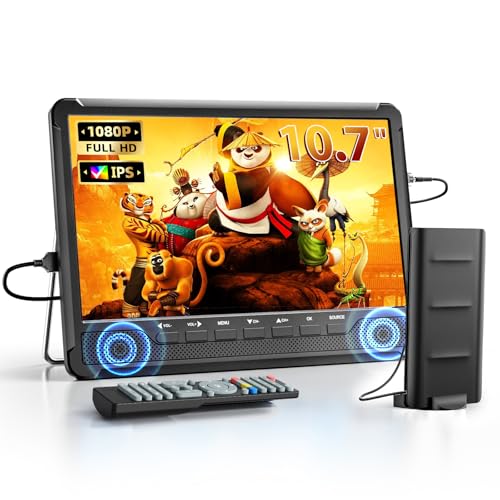
The NORTHING 10.7″ IPS flat screen is designed for easy, on-the-go viewing. Its IPS panel provides wider viewing angles and accurate color from multiple seating positions, which helps when watching from a bed, sofa, or outdoor chair. It accepts HDMI, AV, and USB inputs for diverse content sources, making it a flexible choice for campers who want simple plug-and-play setup.
- Best for: Budget-conscious campers who want reliable basic features without a complicated setup.
- Why selected: Compact, lightweight, and versatile for tent camping, RV trips, or tailgating.
- Caution: Image quality and brightness may not match larger, full-featured TVs in very bright outdoor conditions.
Erasiny 14″ Portable TV with Upgraded Antenna

The Erasiny 14″ portable TV combines a larger screen with a 180° rotating stand for flexible placement. It supports HDMI, USB, and AV inputs, and includes an upgraded antenna for clearer local channels. The compact, lightweight design makes it suitable for RVs, campers, or kitchens where space is at a premium.
- Best for: Campers who want a bigger screen without sacrificing portability.
- Why selected: Strong balance of screen size and travel-friendly form factor; good tuner options for off-grid use.
- Caution: The device’s 14″ size may still require a dedicated storage spot in smaller vehicles.
NORTHING 17.2″ Portable TV with Antenna
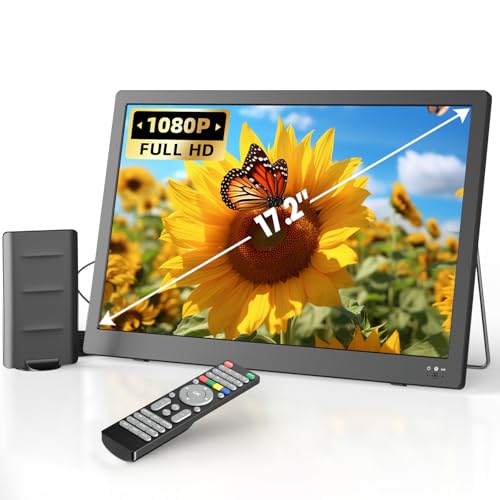
The 17.2″ NORTHING model offers a larger Full HD display with multiple inputs, including antenna, HDMI, AV, and USB. Its upgraded antenna helps pick up more local channels, making it a solid choice for campers who want home-theater-like viewing on the road. It’s best for longer trips where a bigger screen enhances enjoyment in a shared living space.
- Best for: Campers needing a bigger display and reliable channel reception.
- Why selected: Large screen with flexible connectivity for diverse devices and media.
- Caution: Heavier and bulkier; requires more storage and power management in tight spaces.
othoig 12.5″ Portable TV for Small Spaces

The 12.5″ othoig model is well-suited for compact areas like small kitchens or tight bunks in campers. It supports HDMI and AV inputs, delivering a straightforward connection for external devices. The dual-tuner capability and built-in speakers make it a practical choice for limited spaces where a larger TV isn’t possible.
- Best for: Small campers or RVs needing a compact, easy-to-mount screen.
- Why selected: Good balance of size, inputs, and portability for tight setups.
- Caution: Not all models support every streaming source; external devices may be needed for apps.
Buying Guide: Key Considerations for Camping TV Purchases
- What screen size fits your space? Measure your vehicle’s interior and docking area to avoid bulky units that don’t fit when parked or driving.
- Which inputs do you need? Prioritize HDMI for modern devices, USB/SD for offline media, and AV for legacy gear. Consider built-in tuners if you rely on over-the-air signals.
- Power options and endurance? Look for models with battery options, low power consumption, and car/AC adapters to handle power outages or off-grid use.
- Mounting and portability? Decide if you need a stand, wall-mount compatibility, or a compact form that stows easily when traveling.
- Sound and viewing angles? IPS panels provide stable color and wide viewing angles; check built-in speakers if you won’t always use external audio.
- Durability and weather considerations? For outdoor or unsealed spaces, choose models with protective casing and stable signal reception in varying conditions.
FAQ
- Q: Do portable TVs require constant internet to work? A: No. Many include ATSC/NTSC tuners for over-the-air channels and can play offline media from USB or SD cards.
- Q: Can I use these in a 12V RV power system? A: Most models include car adapters or 12V compatibility; verify the power requirements before use.
- Q: Is a bigger screen always better for camping? A: Bigger screens improve viewing in shared spaces but may reduce portability and require more storage.
- Q: Are built-in antennas reliable in remote areas? A: Upgraded antennas generally provide better channel reception, but reception still depends on location and signal availability.
- Q: Can I mount these TVs in a vehicle? A: Some include stands or mounting options; check weight, mounting holes, and vehicle compatibility before installation.
- Q: Do these units support streaming apps? A: Some models offer built-in smart features or OS options; many rely on external streaming devices via HDMI or USB.