If you’re shopping for a survival bug out kit, the goal is clear: pick a complete, portable package that covers water, food, shelter, first aid, signaling, lighting, and tools for at least 72 hours. This guide highlights five well-rounded kits ideal for families, outdoor enthusiasts, and prep-minded individuals. You’ll see who each kit is best for, why it stands out, and practical cautions to consider before buying.
Summary of chosen products
| Product | Best For | Why It Stands Out |
|---|---|---|
| Pixato Survival Kit | Families and outdoor weekenders | 258 pieces in a rugged 25L backpack with smart storage and MOLLE webbing |
| TacPreps 72 Hour Kit | Go-bag and car-ready preparedness | Large 45L backpack with included emergency food and cooking system |
| Sirius Survival Bug Out Bag | All-weather go bag seekers | Premium 50L backpack and comprehensive 72-hour items |
| Taiker 151 Pcs First Aid Survival Kit | Hikers and travelers needing trauma-level first aid | High-visibility IFAK with multi-use tools |
| EchoVenrek 360 Pcs Kit | Family preparedness with expanded tools | All-in-one system including tent, shovel, fire starter, and lighting |
Pixato Survival Kit, 258 PCS With 25L Backpack
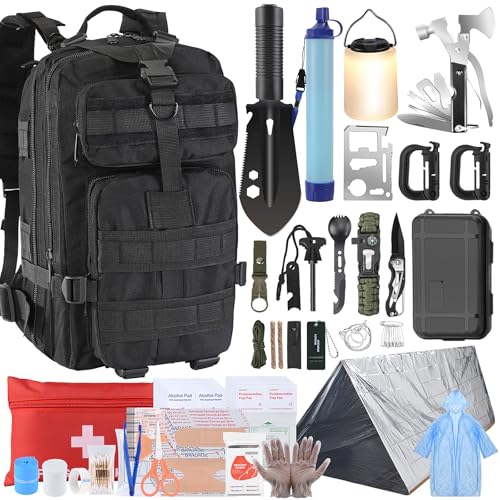
This kit combines a 258-piece collection with a sturdy 25-liter tactical backpack. It focuses on quick access via multiple compartments and MOLLE webbing for extra gear. Best for families venturing into camping, hiking, or emergency preparedness, it provides shelter, fire starting tools, water filtration, and signaling gear. The included emergency tent and LED lantern support nighttime usability. A potential limitation is the backpack’s 25L capacity if you add personal items or larger gear during longer trips.
Best for: Families or outdoor enthusiasts who want a comprehensive, transportable kit with clearly organized storage. Why selected: All-around coverage for fire, water, shelter, and signaling in one package.
Caution: The size of included items may require careful packing to maximize space in the 25L bag.
TacPreps 72 Hour Survival Kit, 45L Go Bag

This kit is designed as a dedicated 72-hour supply for 1–2 people, making it ideal as a go-bag for home, car, or office. The 45L backpack provides ample room for the included emergency food and a portable stove. It emphasizes practicality for short-term survival with a broad food and cooking system. A caveat is that higher-capacity food items may reduce pack balance for very fast retrieval in tight spaces.
Best for: Go-bag or car-ready preparedness where you want built-in food and cooking capability. Why selected: Strong emphasis on nourishment and shelter alongside sturdy, organized storage.
Caution: Food items may require rotation to maintain shelf life; verify any included calories and storage guidance.
Sirius Survival Bug Out Bag — Premium 72 Hour Kit

The Sirius Survival kit targets reliability through a heavy-duty 50L backpack and a broad set of essentials designed for two people across 72 hours. It emphasizes well-thought-out items that cover food, water, warmth, signaling, and medical needs. Best for those who want a robust, well-rounded bag with room to customize. A potential limitation is that the kit’s breadth may be more than needed for solo travelers or minimalist bug-out plans.
Best for: Two-person readiness with a focus on comprehensive coverage and EVA-style durability. Why selected: Superior backpack quality combined with high-value survival components.
Caution: The volume may be more than some users require for solo outings; plan space for essential personal items.
Taiker 151 Pcs First Aid Survival Kit with IFAK

This Taiker kit emphasizes the first aid component within a bright red pouch, featuring a tourniquet, triangular bandages, tweezers, scissors, and assorted bandages. It acts as a solid core for medical readiness within a larger bug-out setup. It’s best for hikers or travelers who want a dedicated medical module within a broader survival system. One limitation is that medical gear may require replenishment or expansion for extended crises beyond 72 hours.
Best for: Hikers and travelers seeking a clearly organized medical kit within a tactical setup. Why selected: High-visibility pouch and substantial first aid contents for rapid response.
Caution: This is primarily a first-aid module; ensure the rest of your kit covers shelter and water needs.
EchoVenrek 360 Pcs Bug Out Kit

The EchoVenrek kit positions itself as an all-in-one 360-piece system designed for the critical first 72 hours post-disaster. It threads survival basics with first aid and signaling, plus tools like a camping axe, shovel, and fire starter. It’s well-suited for families needing a broad toolset under one bag. A drawback might be the sheer number of components, making organization essential to avoid overpacking.
Best for: Families seeking an expansive, all-in-one system with shelter, tools, and medical provisions. Why selected: Comprehensive coverage across survival pillars in a single kit.
Caution: The large component count requires disciplined packing to maintain quick access during an emergency.
Buying Guide: Key Considerations For Choosing A Survival Bug Out Kit
What size bag fits your needs?
Backpacks range from 25L to 50L+. Choose based on your planned use. A smaller bag is lighter and easier to carry on day trips; a larger bag accommodates more food, water, and gear for longer events or family use.
What should be included for your climate and activities?
Consider shelter, warmth, water filtration, and signaling needs. If you hike in cold climates, ensure adequate insulation and fire-starting options. For car or home go-bags, prioritize storage and quick access compartments.
Medical readiness in your kit
First aid items, tourniquets, and trauma supplies are essential. Ensure kits have a dedicated medical pouch with clear labeling. Plan for replenishment and periodic checks of expiration dates.
Storage quality and durability
Look for rugged materials and waterproof or water-resistant construction. MOLLE compatibility adds modular expansion. A sturdy backpack helps with long-term usability in rain, mud, or snow.
Maintenance and re-supply planning
Keep your kit up to date with fresh batteries, fuel, water filters, and food rations. Create a simple rotation schedule to replace expired items and avoid redundancy.
Who should consider these kits?
These kits suit families, hikers, travelers, and preparedness enthusiasts. Those who want a rapid-response bundle for multiple scenarios will benefit from the combination of shelter, water, food, and medical provisions.
Frequently Asked Questions
- What is a bug out kit? A bag or kit designed to provide essential survival items for at least 72 hours during emergencies or disasters.
- Should I buy a larger kit for a family? Yes, if you often travel with others. Larger kits provide room for group medical supplies, food, and gear, reducing the need for additional packs.
- What items are most important in a 72-hour kit? Water or water filtration, food, shelter, warmth, a flashlight, basic first aid, signaling tools, and a fire starter.
- How often should I rotate kit supplies? Review and refresh every 6–12 months to replace expired food, batteries, and medical items.
- Is a separate medical kit necessary? A dedicated first aid or trauma kit is highly recommended to ensure quick access and proper care in emergencies.
- Can I customize any of these kits? Yes. Many kits offer modular components or room inside the bag to add personal items or favorite gear.