Answering the need for reliableField water filtration on the move, these survival water filter pumps convert questionable sources into safe drinking water. They suit hikers, campers, emergency preppers, and anyone venturing into remote water sources. The following five pumps balance portability, filtration level, and speed to help you pick the right system for your trips.
Overview of top picks
The table below highlights five strong options and key strengths to compare at a glance. Use this as a quick reference when narrowing choices before deep-dives into each product’s details.
| Product | Best For | Top Benefit | Limitations |
|---|---|---|---|
| Purewell Water Hand Purifier Pump | Group travel, emergency kits | 0.01 micron UF membrane, high flow | Lifespan depends on water quality |
| Survivor Filter PRO | Backcountry hikers | Virus and bacteria removal, compact | Requires regular maintenance parts |
| Katadyn Hiker Pro | Light backpackers | User-friendly cleaning in the field | Higher price, parts availability varies |
| Waterdrop Gravity Filter Straw | Solo travelers, long trips | 5-stage filtration with large bag | Gravity bag adds bulk |
| Trailgo Pro | Small groups on longer outings | 3-stage pump, 1.5 L/min | Limited brand ecosystem |
Purewell Water Hand Purifier Pump

The Purewell pump uses a 0.01 micron hollow fiber ultrafiltration membrane to remove up to 99.9999% of contaminants, including fluoride, arsenic, chlorine, lead, heavy metals, odors, and chemicals. It features a medical-grade hollow fiber UF membrane, activated carbon fiber, coconut shell carbon, and medical-grade PP cotton for multi-layer purification. This unit is designed for field use and aims to deliver safe water quickly, making it well suited for small groups or families in outdoor emergencies.
Best for: Outdoor groups or families needing rapid, high-level filtration from uncertain water sources. The device’s high flow rate—up to 1400 ml per minute—supports shared water needs during a trek or an emergency kit refresh.
Why chosen: It emphasizes a strong filtration stage set and portable design, with lab-tested components to meet FDA standards for field drinking water. The model’s longevity depends on water quality and the replacement carbon usage, so plan for replacements in longer trips.
Limitation: Lifespan of the replaceable cartridge is water-quality dependent. In particularly murky sources, cartridge life may shorten, requiring more frequent replacements.
Survivor Filter PRO

The Survivor Filter PRO is compact, weighing about 12.8 ounces, designed for easy backpacking. It removes 99.999% of tested viruses, staph, bacteria, and protozoa, and reduces heavy metals per NSF/ANSI standards. It supports a fast flow rate around 500 ml per minute, enabling on-the-go filtration directly from fresh water sources.
Best for: Solo hikers or light backpackers who want a compact, reliable purifier with robust pathogen removal. It’s a solid option for day hikes or weekend trips where rapid, field-ready filtration is valued.
Why chosen: Its balance of portability and high filtration standards makes it approachable for those who want strong protection without a heavy pack. The isolation of replacement parts is straightforward, which helps with field maintenance.
Limitation: The system may require periodic filter replacements, increasing ongoing upkeep in remote regions where replacements aren’t readily available.
Katadyn Hiker Pro Hand Pump

The Katadyn Hiker Pro uses a 0.2-micron glass fiber filter to remove 99.9999% of bacteria and 99.9% of protozoa, with an active carbon core to improve taste and odor. It can be cleaned in the field by disassembling the filter and rinsing, helping keep a steady output during long trips. The ergonomic handle and included connectors support compatibility with common bottles and hydration systems.
Best for: Backpackers who value easy field maintenance and a reliable flow when purifying streams or lakes. The Hiker Pro is known for straightforward cleaning in the backcountry and compatibility with common containers.
Why chosen: It’s a long-standing option with proven field usability, making it a dependable choice for those who want a filter that’s simple to service without specialized tools.
Limitation: Weight and price can be higher than some ultra-compact pumps, and some users may prefer a lower pore-size filter for extra safety in highly turbid water sources.
Waterdrop Gravity Filter Straw
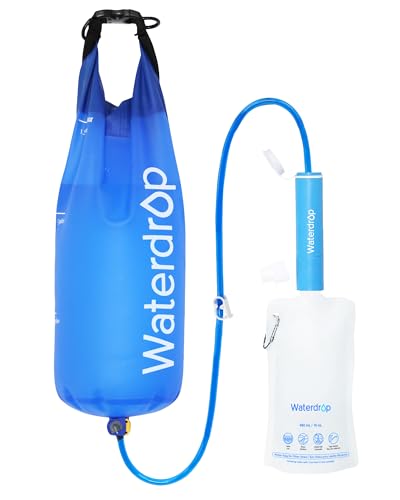
The Waterdrop Gravity Filter Straw employs a 5-stage filtration system with a 0.1-micron ultrafiltration membrane, designed to reduce chlorine, particulates, sediment, and odors. The gravity-fed 1.5-gallon bag supports all-day use for groups or extended trips, delivering a practical flow without pumping. The system is designed for easy setup and uses a long-term filter life that can reach about 1,400 gallons before significant replacement is needed.
Best for: Solo travelers or small groups who want a gravity-based option that minimizes pumping effort and pairs with a large-capacity bag for camp setups.
Why chosen: This option provides a low-effort solution with substantial storage capacity, making it suitable for longer stays where water access is irregular or time is limited.
Limitation: The gravity setup can be bulkier to pack, and it relies on a reservoir that needs to be transported and deployed properly to avoid leaks or spills.
Trailgo Pro Water Filter

The Trailgo Pro is a portable pump system designed for camping and hiking with a 1.5 L/min output. It targets groups of four to six hikers by providing rapid water purification from various sources. The three-stage filtration removes 99.9% of bacteria, parasites, sediment, and chlorine to create drinkable water on the go. Its compact build is geared toward ease of use in dynamic outdoor settings.
Best for: Small families or hiking groups needing dependable, quick water purification on multi-day trips where multiple water points are used.
Why chosen: It emphasizes a high daily output for a pack-friendly footprint, making it suitable for group camping where water needs are shared across many people.
Limitation: As a pump-driven system, maintenance and cleaning on challenging trails are necessary to sustain performance, which can require time and attention during a busy day on the trail.
BKLES 3-in-1 Solar Electric Water Filter

The BKLES system offers electric, hand pump, and solar charging modes with dual 0.01-micron ultrafiltration membranes and a six-stage purification sequence, including PP cotton, KDF, activated carbon, and coconut carbon fibers. It aims to deliver cleaner water with tastier results. The unit is lightweight at about 450 grams and ships with a storage case for backpacking use. It’s designed for emergency water needs, camping, and survival scenarios.
Best for: Preppers and travelers who want flexibility in powering the filter—electric, manual, or solar—especially when electricity is unreliable or unavailable.
Why chosen: It provides multi-mode operation to adapt to different environments, increasing reliability in diverse field conditions.
Limitation: The complexity of a 3-in-1 system can require more maintenance and understanding of operation modes in high-stress situations.
Survivor Filter PRO Extender Series

The Extender Series adds an extra replacement filter set and accessories for extended field use. It maintains the same virus, bacteria, and protozoa removal capabilities with a fast 500 ml per minute flow rate. This kit is designed for serious backpackers who expect to rely on a single purifier over multiple trips and want additional filtration backups in their pack.
Best for: Experienced outdoor enthusiasts who want redundancy and longer operational life between replacements.
Why chosen: The extra filters and accessories optimize field reliability and ease of maintenance for extended expeditions.
Limitation: The kit adds cost and bulk, which may be less ideal for ultralight travelers or minimalist setups.
Buying Guide: Key Considerations For Choosing A Survival Water Filter Pump
What source water do you expect to filter? If you anticipate murky or contaminated sources, choose a pump with sub-micron filtration and multi-stage contaminants removal. For clear streams, mid-range filters may suffice.
How many people will share the water? Pumps with higher flow rates and larger storage options suit groups, while compact units target solo travelers.
How important is field maintenance? Some models are easier to clean and service in the field, while others rely on replaceable cartridges that require replacements on longer trips.
What powering method do you prefer? Electric, manual pump, solar-assisted, or gravity-fed options each have trade-offs for reliability, weight, and complexity in remote areas.
What is your pack weight budget? Lighter setups save energy and space, but may sacrifice maximal filtration or speed. Balance weight against filtration level and ease of use.
FAQ
- What does 0.01 micron filtration mean? It indicates a very fine membrane capable of removing bacteria and many contaminants from water, contributing to safer drinking water in the field.
- Are all filters suitable for camping and emergencies? Most are designed for camping and survival scenarios, but always verify the intended use and maintenance needs for long trips.
- Can I use these pumps with conventional water bottles? Many units include adapters for common bottles and hydration bladders; check each model for compatibility.
- How often should I replace filters? Replacement frequency depends on water quality and usage. Some products note lifespans in gallons or liters of treated water.
- Is gravity filtration easier than pumping? Gravity systems reduce manual effort but can be bulkier. Pumps offer portability and faster output in some setups.
- Do these systems remove chemical contaminants? Several models advertise removal of various chemicals and odors, but results depend on the specific membrane and carbon stages used.