Discover the best survival wood burning stoves to keep cooking simple off the grid. This guide focuses on ultralight, durable, and fuel-flexible stoves ideal for hikers, campers, and emergency preparedness. Each option is evaluated for portability, burn efficiency, and suitability to different outdoor scenarios. The top picks are best for ultra-light trekkers, casual campers, tent users, and survival preppers seeking reliable wood-fueled cooking without gas canisters.
Summary of selected products
| Product | Best For | Key Benefit |
|---|---|---|
| Kuvik Titanium Wood Stove | Ultra-light backpackers | Ultralight titanium with compact fold |
| Wood Burning Camp Stove (Lineslife) | Backpacking with larger cookware | Cast iron body with adjustable top supports |
| REDCAMP Wood Burning Folding Camp Stove | Compact survival use | Stainless steel grid and collapsible design |
| Upgraded Wood Stove for Tents | Tent camping | High airtightness and large firebox |
| Ohuhu Camp Stove | Budget-friendly portability | Very light, quick setup, multiple fuels |
Kuvik Titanium Wood Stove — Ultralight and Compact

The Kuvik Titanium Wood Stove is designed for ultralight backpackers who need a stove that disappears when packed. Its 6.25” x 5” x 5” frame collapses to about 0.2″ thick and weighs 6.8 oz, making it highly portable. It uses organic campsite fuel like twigs, grass, and bark, eliminating canister dependence. It ships with a carrying case to prevent soot transfer and keep gear clean. Best for minimalist hikers who prioritize weight and quick setup.
Best for: Ultra-light trekkers who carry minimal gear and prefer wood over fuel canisters. Choose this if you need a compact stove with rapid pack-down and natural-fuel capability. Caution: Performance depends on available dry biomass; damp wood may reduce burn efficiency.
Wood Burning Camp Stove (Lineslife) — Cast Iron
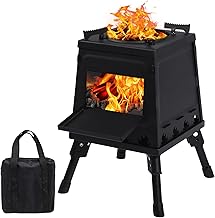
This stove uses a durable cast iron construction, offering rust resistance and long-term durability. It features 16 air vents for improved ventilation and a large combustion chamber, enabling 40–60 minutes burn time per fuel load. Its adjustable top supports and rotatable, foldable legs provide flexible cookware compatibility. Best for backpackers who want a robust, reliable wood stove with flexible setup for varying cookware. Caution: Cast iron adds weight; plan for heavier carry if you’re prioritizing portability.
REDCAMP Wood Burning Folding Camp Stove

The REDCAMP stove features a stainless steel grid and a foldable design, providing a compact and stable cooking surface for diverse cooking utensils. It supports various fuels, including leaves and twigs found in nature. The cuboid design enhances stability on uneven ground. Best for hikers and campers needing a lightweight, weather-resistant option that works with natural fuels. Caution: Ensure adequate fuel material to maintain steady heat for longer cooking tasks.
Upgraded Wood Stove for Tent Camping

This tent stove focuses on high airtightness to minimize smoke leakage and ensure efficient combustion. Constructed from thick steel (1.6mm), it resists warping under heat and offers a large firebox for longer burn times. Best for tent campers who need a reliable, smoke-controlled wood stove with durable build. Caution: Heavier than ultra-light models; consider packing approach and space inside the tent.
Ohuhu Camp Stove — Lightweight and Versatile

The Ohuhu stove weighs about 0.98 lbs and assembles in seconds with no tools required. Made from stainless steel, it supports various fuels and includes a detachable stainless steel plate. Best for budget-conscious outdoor enthusiasts who need quick setup and reliable performance. Caution: May be less durable under heavy, repeated use compared with heavier cast iron or titanium models.
Buying Guide: Key Considerations For Choosing A Survival Wood Stove
- Weight and packability: Is the stove ultralight and easy to collapse for your carried load?
- Fuel type and availability: Do you want to rely on natural fuels (twigs, bark) or accept some fuel flexibility?
- Materials: Titanium for ultra-light durability vs. cast iron for rugged long-term use vs. stainless steel for corrosion resistance and budget concerns.
- Firebox size and burn time: Do you need longer burn times or larger cookware compatibility?
- Stability and wind performance: Does the stove have a stable base and good airflow management to maximize heat?
- Portability extras: Carrying cases, foldable legs, and compatibility with your existing gear.
How to choose: Quick decision tips
- For ultra-light hikers: prioritize titanium, compact design, and extremely low weight.
- For family or group camping: prioritize larger firebox and robust cookware support (cast iron or stainless).
- For tent camping: consider tents-only stoves with high airtightness to reduce smoke exposure.
- For emergencies: a versatile stove that accepts widely available natural fuels and has simple setup is ideal.
Maintenance and safety considerations
- Clean ashes after each use to prevent corrosion and maintain airflow.
- Inspect for warping or cracks after heating, especially on thinner metal stoves.
- Follow local fire regulations and practice safe ash disposal when camping.
Frequently Asked Questions
- What is the lightest wood stove for backpacking? The Kuvik Titanium stove is among the lightest options, designed to collapse to a very thin profile.
- Can a wood stove be used inside a tent? Yes, but only if the stove is designed for tent camping with proper venting and high airtightness to minimize smoke. Always follow manufacturer guidance.
- What fuels work best for wood stoves in the woods? Dry twigs, bark, grasses, and roots are common natural fuels. Avoid treated woods or plastics that emit toxic fumes.
- Are cast iron stoves better than titanium? Cast iron offers durability and heat retention but is heavier. Titanium provides lighter weight and corrosion resistance at the cost of higher price.
- How do I maintain a wood-burning stove on long trips? Regularly inspect for rust, clean ash, and ensure the burn chamber remains clear of obstructions for efficient airflow.
- Is a portable wood stove suitable for emergencies? Yes, wood stoves can provide reliable cooking heat using readily available natural fuels if you are in a survival scenario with access to wood and tinder.