Looking to extend your time in the wild or stay safe in an emergency? The best emergency bivvy options below are compact, heat-reflective shelters designed to trap body heat, protect against wind and rain, and slip into any bug-out bag or hiking kit. Each pick is suitable for outdoor enthusiasts, hikers, preppers, and anyone building a reliable emergency kit. The top five selections are evaluated for heat retention, durability, portability, and practical use in varied conditions.
Summary table of selected products
| Product | Best For | Why It Stands Out |
|---|---|---|
| Survive Outdoors Longer 90% Emergency Bivvy | Compact emergency kits; day hikers | Ultra-light, weatherproof, traps 90% heat |
| SOL Emergency Bivvy XL with Rescue Whistle | Backcountry trips; extreme cold | XL size for extra warmth, multiple uses |
| S.O.L. 90% Reflective Lightweight Emergency Bivvy | Bug-out bags; quick shelter | Very light; packs smaller than a soda can |
| SOL Escape Lite Bivvy | Summer or mild-weather outings | 70% heat reflectivity; ultra-light |
| SOL Thermal Bivvy w/ Rescue Whistle | All-season preparedness | High heat reflectivity up to 80%; versatile |
Survive Outdoors Longer 90% Emergency Bivvy

Best for compact readiness: This heat-reflective bivvy traps 90% of body warmth, making it ideal for quick warmth in an emergency kit. The ultralight design (under 4 oz) fits easily in a standard first-aid or survival pouch. Its 36 x 84 inch footprint provides a protective shield against rain, wind, and snow. Suitable for hikers, campers, and anyone building a lightweight kit.
Who it’s best for: solo hikers needing minimal load with reliable warmth. Why chosen: its balance of heat retention and portability fits most everyday outdoor scenarios. Caution: limited space for larger individuals or extended multi-night use.
SOL Emergency Bivvy XL w/Rescue Whistle

Best for added warmth and versatility: The XL bivvy weighs about 5.8 ounces and reflects up to 90% of body heat. It includes a rescue whistle and can function as a compact sleeping bag, reflective blanket, or improvised shelter tarp. This makes it a strong choice for backcountry trips or emergency kits requiring multiple roles.
Who it’s best for: outdoor adventurers who want a larger bivvy that can serve multiple roles. Why chosen: greater surface area for heat retention and an included whistle boost signaling capability. Caution: larger footprint than ultra-mini bivvies; still highly portable but not the smallest option.
S.O.L. 90% Reflective Lightweight Emergency Bivvy

Best for ultra-lightweight kits: This bivvy converts from sleeping bag to emergency blanket and reflects up to 90% of body heat. Weighing about 3.5 oz, it’s one of the lightest options and easily fits into a pocket-sized kit. It’s suitable for minimalist travelers and quick emergency shelter needs.
Who it’s best for: ultra-lightweight travelers and bug-out bag builders. Why chosen: extreme portability with solid heat reflection. Caution: less space for extended shelter use; ideal for one person and short-term warmth.
SOL Escape Bivvy with Hood
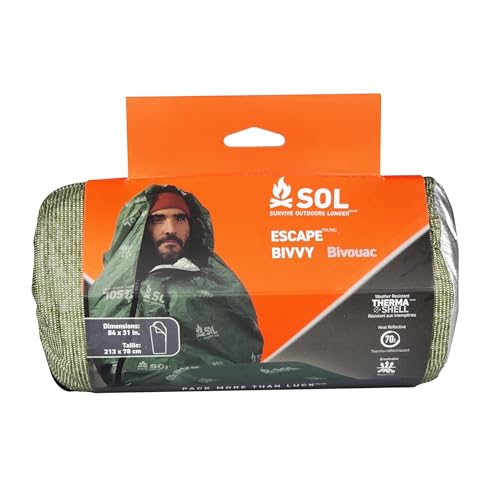
Best for all-season warmth with hood: The Escape Bivvy with Hood uses ThermaShell fabric to block rain, snow, and wind while minimizing condensation. It reflects up to 70% of body heat and adds a hood for extra warmth. Suitable for moderate cold, wind-prone areas, and overnight emergency shelter.
Who it’s best for: hikers and campers needing a reliable hooded bivvy. Why chosen: budget-friendly, weather-resistant, and breathable warmth. Caution: lower heat reflectivity than higher-end models; not ideal for extreme cold nights.
SOL Escape Bivvy XL with Hood

Best for larger backcountry needs: The XL version with a hood is designed for more room while maintaining portability. It’s durable and weather-resistant, with ThermaShell blocking wind and moisture. This bivvy’s larger size makes it a better choice for bigger individuals or those who want more interior space for temporary shelter setups.
Who it’s best for: bigger individuals or setups requiring extra space. Why chosen: combines warmth, weather protection, and generous interior area. Caution: bulkier than standard bivvies, requiring more pack space.
SOL Escape Lite Bivvy

Best for ultralight summer outings: The Escape Lite Bivvy weighs about 5.5 ounces and reflects up to 70% of body heat. With multipurpose use as a sleeping bag, blanket, or improvised shelter, it suits warm-weather expeditions and emergency preparedness kits where minimal weight matters.
Who it’s best for: travelers prioritizing minimal weight and versatility. Why chosen: good balance of warmth and portability for light, short trips. Caution: less ideal for very cold conditions or extended emergencies.
SOL Thermal Bivvy w/ Rescue Whistle

Best for high warmth and signaling: The Thermal Bivvy reflects up to 80% of body heat and includes a rescue whistle. It’s ultra-light and versatile as a sleeping bag, reflective blanket, or shelter tarp. Suitable for all-season kits where maximum warmth in a compact form is essential.
Who it’s best for: emergency preppers and all-season outdoor users. Why chosen: strongest heat reflectivity among mid-weight options with signaling aid. Caution: not the smallest bivvy; consider space in compact kits.
Buying Guide
How to choose the right emergency bivvy
- Heat reflectivity: Higher percentages (80–90%) provide more warmth, essential in freezing conditions.
- Weight and pack size: Ultra-light options suit day trips and bug-out bags; XL or hooded versions add space and warmth but take more room.
- Weather resistance: Look for water-repellent or waterproof fabrics and wind protection to guard against rain and wind chill.
- Durability: Tear resistance matters for rough terrain and repeated use in survival scenarios.
- Multi-function use: Some bivvies double as blankets, sleeping bags, or tarps, increasing versatility.
- Inclusion of signaling tools: Whistles improve safety by enabling easier distress signaling in wilderness environments.
- Size versus user comfort: Consider body size and preferred space inside the bivvy for movement and comfort.
Frequently Asked Questions
- How does a bivvy keep you warm?
- What should I consider when buying a bivvy for hiking?
- Are bivvies waterproof?
- Can bivvies replace tents?
- Which bivvy is best for all-season use?
- Is a hood necessary?
It reflects your body heat back to you, reducing radiant heat loss and helping maintain core warmth in cold conditions.
Choose based on weight, space, warmth (heat reflectivity), durability, and whether you want extra features like a hood or whistle.
Many are water-resistant or waterproof to varying degrees; read fabric specifications to confirm suitability for wet weather.
For short stays or emergency use, bivvies provide essential warmth and shelter, but they typically do not replace a full tent for extended trips.
Options with higher heat reflectivity and weather protection—such as the 80–90% reflectivity models—are better suited for all-season scenarios.
A hood adds warmth and wind protection, particularly in cold or windy conditions, but may increase packing size slightly.