If you’re shopping for synthetic fill sleeping bags, you want warmth, packability, and durability without relying on down. This guide highlights five top options, suited for different campers from backpackers to families. Each product uses synthetic loft to stay warm when damp and washes easily, making them ideal for outdoor adventures. Below, you’ll find a quick buyer table and sections that explain who each bag is best for and why.
| Product | Best For | Key Benefit |
|---|---|---|
| Bessport Mummy Sleeping Bag | Cold-weather hikers | Extreme 15°F potential with synthetic loft |
| Atarashi 3-4 Season | Budget-conscious campers | Lightweight, roomy, 32–77°F comfort |
| Kelty Cosmic 20° (Long) | Backpacking enthusiasts | Cirroloft synthetic insulation, minimalist pack size |
| Kelty Cosmic 20° (Regular) | Heavy-pack campers | Same tech, different fit and weight |
| MalloMe Sleeping Bags | Family-friendly, all-ages | Year-round use, bright colors, kid-friendly |
Note: Each option provides a distinct balance of warmth, size, and weight. Read on to compare features, fit, and suitability for various trips, from alpine treks to casual car camping.
Bessport Mummy Sleeping Bag

The Bessport bag uses full synthetic loft microfiber with a temperature range designed for comfort from 32°F to 50°F, with extreme use down to 15°F. It is described as compact for travel: a roomy mummy cut with a packed size around 40×30 cm and a weight near 4.4 lbs. The lining is 240T rip-stop polyester taffeta, offering water resistance and breathability. Best for: cold-weather hikers and travelers who need reliable warmth even when damp. Caution: ensure you coordinate the compression sack to avoid over-compression that could reduce loft over time.
Why selected: The extreme-use capability and synthetic loft help maintain warmth without relying on down. Its water-repellent lining adds resilience in damp campsites, making it a strong pick for harsh environments.
Atarashi 3-4 Season Sleeping Bag

The Atarashi bag is designed for 3-4 season use with a temperature range of 32-77°F. It weighs about 4.2 lbs and uses a 290T nylon shell with a DWR finish for moisture resistance. Features include a half-circle hood with adjustable drawstring and a full-length draft tube for temperature regulation, plus a semi-rectangular shape that offers extra elbow and knee room. Best for: campers who want a roomy, warm bag that remains functional in variable conditions. Caution: bulkier than ultralight options, which may affect pack weight on long treks.
Why selected: The broad temperature range and draft-protection features make this bag versatile for fluctuating conditions, while the semi-rectangular cut benefits side sleepers or movers during sleep.
Kelty Cosmic Synthetic Fill 20 Degree (Long)

This long version of the Kelty Cosmic 20° uses Cirroloft synthetic insulation, with a weight around 2 lbs 13 oz and a packable size designed for minimal backpacking bulk. It features a temperature range suitable for cool to cold nights and is designed to stay lofted under damp conditions. Best for: hikers who want a lean, packable option without sacrificing warmth. Caution: actual warmth can vary with shell conditions and user metabolism in very cold nights.
Why selected: The combination of lightweight construction and reliable synthetic insulation makes it a practical choice for serious backpackers seeking a compact bag that still handles cool nights well.
Kelty Cosmic Synthetic Fill 20 Degree (Regular)
The regular version shares the same insulation and performance as the long but fits up to 6 feet tall with a similar 2 lbs 13 oz weight class. It maintains a compact pack size and an integrated compression stuff sack. Best for: campers who want a standard-length bag that still remains highly packable. Caution: shorter users or those needing extra legroom should consider the long version for comfort.
Why selected: The regular fit provides a balanced choice for many adults, combining warmth with backpack-friendly dimensions and simple setup for diverse outdoor trips.
MalloMe Sleeping Bags for Adults
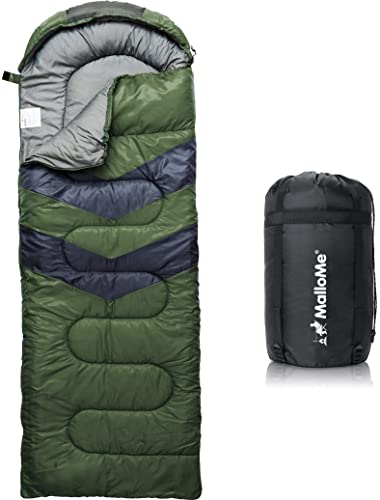
The MalloMe bag is pitched as a year-round option with a suggested temperature range of 50°F to 77°F. It weighs around 3 lbs and offers a waterproof, hex-tech outer shell with a double-layered synthetic fill designed for robust warmth. It’s marketed as suitable for kids as well, providing a family-friendly fit and color variety. Best for: casual campers, families, and lighter backpacking ventures in mild conditions. Caution: performance may vary in extreme cold compared to dedicated 20–40°F bags.
Why selected: Aimed at broader audiences and children, MalloMe supports versatility and ease of use, making it a practical all-season option for family outdoor trips.
Sleeping Bags for Adults (Navy Blue) by JEAOUIA

This JEAOUIA model emphasizes roomy design with dimensions around 31.5 by 86.6 inches. It targets three-season use within a comfort range of about 50°F to 68°F, with a recommended limit of 41°F-77°F. The bag uses a waterproof outer shell and a breathable lining, with a foot zipper to modulate warmth. Best for: casual campers and youth-friendly trips where budget and practicality matter. Caution: not ideal for extreme cold or high-altitude expeditions.
Why selected: It offers a balanced combination of water resistance, comfort, and an affordable price point, suitable for general camping duties and varied weather.
Buying Guide: Key Considerations For Synthetic Sleeping Bags
What warmth rating do you need? For mixed conditions, aim for a bag that covers 30°F to 50°F comfort. If you anticipate extremes, choose a bag with a documented extreme rating near 15°F or lower, and consider layering options for extra insulation.
How heavy should the bag be? Backpackers typically prefer 2–3.5 lbs for 3-4 season use. Heavier bags add warmth but affect carry comfort. Look for synthetic loft and a compact packed size to maximize space in your pack.
Is the shell durable and water resistant? A tough outer shell and a DWR finish help repel moisture and wind. Rip-stop fabrics improve durability, while a breathable inner lining keeps you comfortable during warmer nights.
What fit works best? Semi-rectangular or rectangular shapes offer room to move, ideal for side sleepers. Mummy shapes provide the most heat retention but restrict movement. Choose based on your sleeping style and space in your sleeping bag compartment.
How important is packability? Integrated compression sacks and smaller packed dimensions improve backpacking viability. Consider bags that maintain loft after repeated compressions for long-term use.
What about age and family use? Some bags are marketed toward kids or families; these can offer color options and easier entry. For children, ensure appropriate size and supervision for safe sleep outdoors.
FAQ
- Are synthetic-filled bags as warm as down? Synthetic loft retains warmth even when damp, but down typically offers better warmth-to-weight. For wet conditions, synthetic often performs better.
- How do I choose the right temperature rating? Pick a bag with a comfort rating near the lower end of expected temperatures. If you sleep cold, target the comfort temperature rather than the limit.
- Do I need a compression sack? Yes for packing efficiency and portability. Ensure it doesn’t crush the loft too tightly over time.
- Can synthetic bags be machine washed? Many are machine washable, but always follow care instructions to preserve loft and fabric integrity.
- Is a longer bag necessary for tall sleepers? Yes, select a long or extra-long bag to avoid restricted foot space and maintain comfort throughout the night.
- Which bag is best for families? Models marketed for all ages or with larger cuts provide space for kids and adults together, enhancing shared camping experiences.