If you’re outfitting an RV trailer or camper with a reliable 12V DC power system, a 55 Amp RV power converter is a top choice. This guide compares five leading options to help you pick the right converter for lithium or lead-acid batteries, balancing charging speed, compatibility, and noise. Each selection targets distinct buyer types—from lithium-focused travelers to budget-conscious trailer owners—so you can choose confidently.
Summary table of selected products
| Product | Output | Battery Focus | Best For |
|---|---|---|---|
| 2026 Upgrade WF-9855 55 Amp Power Converter | 55A, 13.6VDC | Universal, with lithium compatibility emphasis | RV owners replacing WF-9855 series |
| WAVLINK WF-8955-MBA 55A | 55A, 12V DC | Lead-acid and lithium-ready with modes | Versatile RV setups needing multi-mode charging |
| GEARCESS WF-8955-AD-MBA | 55A | Lead-acid primary, Lithium compatibility | RV/trailer systems needing auto-detect charging |
| PM4 55Amp RV Power Converter | 55A, 12–16.5V | Three-stage with smart charging | Budget-friendly, quiet operation and safety |
| 2026 Upgrade WF-9855 (Lithium-friendly) | 55A, 14.6VDC | Designed for lithium batteries | Lithium-focused RVs needing modern replacement |
2026 Upgrade WF-9855 55 Amp Power Converter
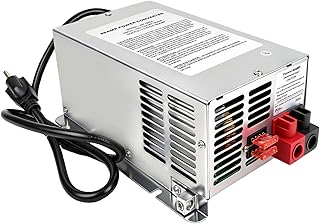
Output: 55 Amps at 13.6VDC; Input: 105-130 VAC; Power: 950 Watts. This converter is marketed as a replacement for the WF-9855 series and supports RV use. Best for buyers upgrading an existing WF-9855 setup or replacing a similar 9800-series unit. A five-year warranty adds long-term security. Caution: verify compatibility with your specific WF-9855 family variant before purchase.
WAVLINK WF-8955-MBA 55A RV Converter

Features include 55A output, compatibility with various RV battery types, and multiple charging modes (lead-acid and Lithium). It’s designed to optimize charging without interfering with TV/radio signals, and includes a selectable voltage range (13.0V–16.5V). Best for RV owners needing a flexible charger for different battery chemistries. Caution: batteries and system wiring must match supported modes to avoid mischarging.
GEARCESS WF-8955-AD-MBA RV Power Converter

Best for: RVs needing auto-detection of battery type with accurate charging, and quiet operation due to upgraded cooling fans. The three-stage charging supports lead-acid and lithium-ion batteries, protecting battery life. Limitation: some installations may require compatible WF-8900-AD series components for full compatibility.
PM4 55Amp RV Power Converter

Best for: RV owners seeking a built-in four-stage smart battery charger and a 55A output. It supports 110–120V AC input and 12–16.5V output with a three-stage charging sequence. Caution: ensure the shutting down feature and overload protections operate correctly in your electrical system and that ventilation is adequate to prevent overheating.
2026 Upgrade WF-9855 (Lithium-Focused)

Best for: Lithium battery-ready installations and WF-9800 series replacements. This unit offers a 14.6VDC output and 55A capability with three-stage charging. A five-year warranty is highlighted. Limitation: verify that your battery management system is compatible with the 14.6V charging profile to avoid overcharge risk.
Buying Guide: Key Considerations For RV Power Converters
- Check that the converter matches your battery type (lead-acid vs lithium) and your RV’s power center. Some models advertise auto-detect charging, which can simplify setup but may require compatible battery management hardware.
- Look for three- or four-stage charging. These stages help protect battery life by adjusting voltage and current during charging, reducing heat and extending battery longevity.
- Ensure the unit’s output voltage suits your battery chemistry. Lithium systems often require a higher or more precise voltage (around 14.4–14.6V) for full charging.
- Quiet operation is important for RV comfort. Upgraded cooling fans that only run when needed can minimize fan noise without sacrificing safety.
- Overcurrent, overtemperature, overvoltage, and reverse polarity protections are essential for protecting both the converter and RV wiring.
- A multi-year warranty and accessible after-sales support help with long-term reliability, especially for frequent travelers or those who rely on their RV power system in remote areas.
- Ensure proper ventilation and space for mounting. Avoid zero-ventilation compartments to prevent overheating. Confirm physical dimensions fit your RV’s electrical cabinet.
FAQs
- What amperage should I choose for my RV converter? A 55A converter is common for many medium-to-large RVs and supports typical on-board loads. If you have lithium batteries or a larger electrical system, consider models with lithium-friendly profiles and higher voltage flexibility.
- Do these converters support lithium batteries? Several models advertise lithium compatibility or three-stage charging suitable for lithium chemistries. Always verify the exact voltage set points and battery compatibility with your BMS.
- Is auto-detect charging necessary? Auto-detect can simplify setup, but ensure your battery types are supported. It reduces the risk of mischarging but may not replace a properly configured BMS in complex systems.
- What maintenance is required? Routine inspection of connections and cooling airflow helps prevent overheating. Keep ventilation clear and replace any damaged cables promptly.
- Can I mount these in any RV cabinet? Most units require ventilation space and room for the cooling fan. Follow the manufacturer’s mounting guidelines to avoid thermal issues and ensure safe operation.
- Do these come with a warranty? Many listings offer multi-year warranties (often five years) with varying after-sales support terms. Check what’s covered and the process for service.