Looking for a reliable way to expand sleeping space without juggling separate tents? These tents are designed to connect or blend together for easy, family-friendly setups. This guide highlights options that can grow with your group, whether you’re coordinating multiple sleeping areas, a shared living space, or a screened porch adjacent to a main tent. Best for family travelers, car campers, and campers who value modular layouts that adapt to group size and weather.
The following table compares key details of the five selected options, focusing on connectivity potential, space, and suitability for different camping styles.
| Product | Best For | Connectivity Note | Key Advantage |
|---|---|---|---|
| Gouyu 4-6 Person Inflatable Camping Tent | Families seeking quick setup | Inflatable beams and expansive skylight area | Panoramic skylight with privacy cover |
| FireHiking Camping Hot Tent with Stove Jack | Cold-weather getaways needing stove access | Standalone unit; can be paired with other tents via setup planning | Stove jack for warm indoor cooking and heating |
| Trend Tents 3M Canvas Bell Tent | Glamping groups and couples | Large shared space; compatible with add-on shelters | Breathable canvas with stove jack option |
| Dome Tent Ozark Trail 10-Person | Large families or groups | Multi-room flexibility with room dividers | Three rooms and screen porch for separate areas |
| Gouyu 4-6 Person Inflatable Camping Tent (A) | Same as first Gouyu model focus | Air-beam design supports shared spaces | Durable 420D fabric and privacy features |
Gouyu 4-6 Person Inflatable Camping Tent

Best for families who want quick setup and a bright interior. This inflatable design uses reinforced PVC air beams wrapped in durable Oxford fabric, reducing the need for traditional poles and improving stability. The panoramic TPU skylight offers a view of the sky, while an interior privacy curtain adds versatility for changing or quiet time. It’s well-suited for groups that value a single, open living area with a separate private zone when needed. Limitations include the potential need for a reliable pump and careful storage to maintain the air-beam system.
FireHiking Hot Tent With Stove Jack

Best for campers who need warmth and cooking options in cooler months. This tent emphasizes a compact square footprint with a pyramid roof shape, providing stable performance in variable weather. The 210T polyester taffeta material offers a reasonable waterproof rating for its class. Best when used as a standalone unit or paired with adjacent sleeping spaces in a larger arrangement. Limitation includes a smaller internal capacity, so multiple occupants may require additional space or an auxiliary shelter.
Trend Tents 3M Canvas Bell Tent

Best for those seeking a breathable, durable canvas option with classic bell-tent aesthetics. The 200GSM poly-cotton canvas provides natural ventilation and improved condensation control, making it a good center-piece in a connected-tent setup. The stove jack option supports colder nights and extended camping seasons. Caution: canvas is heavier and requires more care and maintenance than synthetic fabrics.
Dome Tent Ozark Trail 10-Person
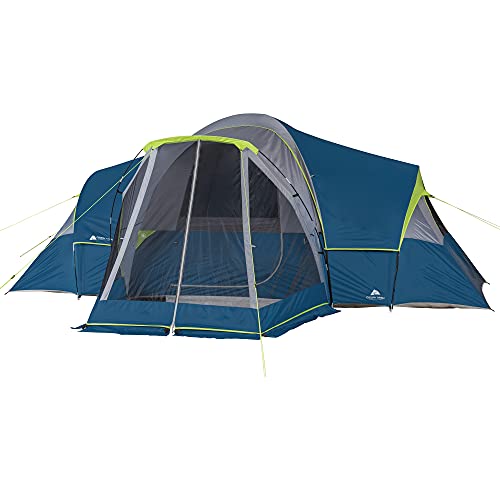
Best for large groups that want multiple private spaces. This dome tent supports up to 10 sleepers with three rooms and a front screen porch, making it easier to separate sleeping areas from shared living space. It offers cross-ventilation through multiple windows and mesh components. Consideration: the footprint is sizable, requiring ample campsite space and careful layout planning when connecting with other tents.
Gouyu 4-6 Person Inflatable Camping Tent (A) — Connectivity Focus
This variant emphasizes modular space for connected layouts. The inflatable air beams and panoramic skylight support a bright, shared living area with a private corner for changing or retreats. Best for families who want a simple, connect-friendly base tent as part of a larger site plan. Limitation: ensure you have a reliable air pump and proper storage to maintain the air-beam structure during travel.
Buying Guide: Key Considerations For Connecting Tents
- How will you connect tents? Look for features like shared walls, vestibules, or door-to-door connectivity options that minimize gaps and drafts.
- Space planning and layout: consider the total campsite footprint needed when arranging multiple tents side-by-side or linked via awnings or extensions.
- Ventilation and climate control: choose tents with mesh panels and vents to balance airflow with weather protection, especially when connecting living and sleeping spaces.
- Materials and durability: canvas and heavy-duty synthetics offer different trade-offs between breathability, weight, and weather resistance.
- Setup and maintenance: inflatable beam tents simplify setup but require pumps and careful storage to avoid leaks; pole-beam hybrids may offer a middle ground.
- Weather readiness: waterproof ratings, UV protection, and wind stability matter for connected layouts where one unit may shield another.
- Portability and weight: if you travel by car, consider combined weight and packing space for multiple connected units.
FAQ
- Can tents connect together without specialized gear?
Yes, many tents can be arranged adjacent to each other to create a larger living area, but dedicated connection features improve weather sealing and ease of use.
- What should I look for in a tent that connects to others?
Look for shared vestibules, compatible door heights, large living areas, and options for removable dividers to tailor private spaces.
- Are canvas tents a better choice for connected setups?
Canvas offers durability and good condensation control, but it is heavier. Synthetic options are lighter and faster to dry, with different ventilation profiles.
- Is inflatable beam design reliable for group camping?
Inflatable beams reduce setup time and angle instability. They require a pump and maintenance to prevent leaks, especially in rugged sites.
- What’s a practical layout for five tents connected on a family trip?
Center living area with two sleeping tents on each side and one shared porch or vestibule between units can create clear zones for cooking, resting, and socializing.
- How do I protect connected tents in wind?
Anchors, guy lines, and a sheltered orientation reduce wind exposure. Avoid gaps that act as sail channels for gusts.