Answering the core buyer question: which travel trailer AC units deliver reliable cooling, energy efficiency, and easy installations for off-grid or on-the-road comfort? This guide highlights five top options suited for different RV sizes and power setups. Best for off-grid freedom: ultra-low power 12V models. Best for larger RVs: high-capacity rooftop units with heat pumps. Best for simple bolt-on installs: lightweight, install-ready options. Read on to compare features, ideal use cases, and clear buying criteria.
- Furrion Chill Cube 18k BTU – Best high-capacity option for midsize or larger RVs seeking strong cooling and modern efficiency.
- TUSOMA 18000 BTU with Heat Pump – Best for year-round comfort with heating and solid cooling for medium to large spaces.
- TOSOT 16000 BTU GO Cool – Best for quiet operation and flexible season use with heat pump features.
- Xenjum 11000 BTU – Best for off-grid and battery-powered setups with very low noise and energy use.
- Tyoyfong 8500 BTU 12V – Best for compact rigs or as a supplementary unit in smaller trailers.
| Product | Best For | Power Type | Approx BTU |
|---|---|---|---|
| Furrion Chill Cube 18k BTU | Large travel trailers or campervans needing strong cooling | AC Rooftop (AC unit only) | 18,000 |
| TUSOMA 18000 BTU with Heat Pump | Year-round comfort in mid-to-large spaces | AC with heat pump | 18,000 |
| TOSOT GO Cool 16,000 BTU | Quiet operation and flexible season use | Rooftop AC with heat pump | 16,000 |
| Xenjum 11,000 BTU 12V | Off-grid or battery-powered setups | 12V DC | 11,000 |
| Tyoyfong 8,500 BTU 12V | Compact rigs or as a supplemental unit | 12V DC | 8,500 |
Furrion Chill Cube 18k BTU RV Rooftop AC Unit

Best for: larger travel trailers needing robust cooling and efficient operation. The Chill Cube 18K uses a variable speed compressor to move cool air faster and more efficiently, delivering over one ton of cooling power and higher capacity than typical RV ACs. It’s designed for a bolt-on rooftop installation and aims to maximize battery runtime off-grid when paired with appropriate components. Consider this option if you commonly camp in warm climates or travel with multiple occupants who generate heat.
Why selected: It emphasizes high capacity, energy efficiency, and a modern variable-speed system that can improve comfort in larger interiors. Best for users who want strong cooling performance with a relatively lightweight unit.
Caution: This is the AC unit only; additional installation components may be required for a full system. ADB accessories may be sold separately.
12V RV Air Conditioner | 11,000 BTU Ultra-Low Power Draw
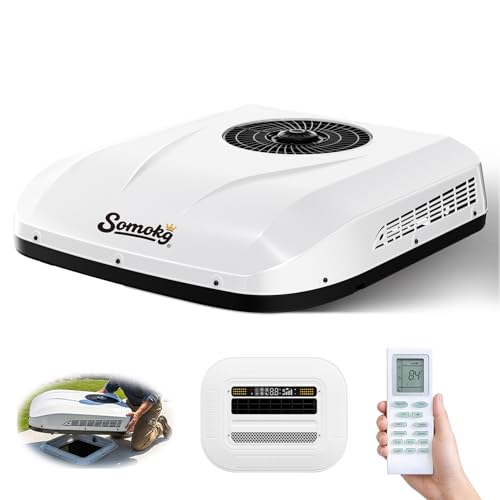
Best for: off-grid setups and small to mid-sized RVs where power supply is limited. This 12V unit delivers 11,000 BTU with a soft-start to reduce startup surges and extend battery life, enabling about 12 hours of cooling on a capable battery system in Eco Mode. It is compatible with solar arrays and can operate quietly with a 360° vent system for uniform airflow.
Why selected: The key advantage is energy efficiency and off-grid friendliness, making it a strong match for boondockers who prioritize low power draw and flexible energy sources.
Caution: It’s a non-dedicated heater-equipped unit; use primarily for cooling in hot weather and rely on a separate heating option if needed.
TUSOMA 18000 BTU RV Air Conditioner With Heat Pump

Best for: RVs that require powerful cooling plus heating for shoulder seasons or year-round comfort. The unit uses a high-capacity 18,000 BTU cooling system and a heat pump to provide reliable warmth when temperatures dip. It’s suited for medium to large travel trailers and motorhomes that frequently operate in variable climates.
Why selected: The all-weather capability and heat pump make it a versatile solution for users who want temperature control without switching to separate heating systems.
Caution: To operate correctly, it needs both 115V AC and 12V DC power supplies. Ensure your power setup can sustain both when off-grid or during high-demand periods.
TOSOT 16000 BTU GO Cool RV Air Conditioner

Best for: campers seeking strong cooling with quiet operation and seasonal flexibility. The unit provides 16,000 BTU of cooling and 12,500 BTU heating via its heat pump, making it suitable for RVs that need reliable climate control across a wide temperature range. It’s ideal for mid-sized trailers and campers that value a balance of power and quiet performance.
Why selected: It combines solid cooling with relatively low noise output and Wi-Fi/remote-style conveniences commonly found in newer RV AC systems.
Caution: Performance can depend on ambient temperatures and proper installation. Check compatibility with roof height and ducting if revising an older setup.
12V DC RV Air Conditioner 8500 BTU

Best for: compact RVs, vans, or as a supplementary cooling unit where roof space and weight are constraints. This 8500 BTU unit runs on 12V DC, offering efficient cooling in smaller interiors and limited power environments.
Why selected: The low-profile design and energy-efficient inverter compressor contribute to longer battery life and easier installation on smaller roof profiles.
Caution: Heating capability is not provided; use for cooling only, or add a separate heating system if needed in shoulder seasons.
Buying Guide: How To Choose The Right Travel Trailer AC
What RV size and insulation level justify higher BTU?
Larger RVs with high ceiling heights or poor insulation typically require more BTU. If you often experience hot climates or multi-zone occupancy, select a unit in the 16,000–18,000 BTU range with a reliable heat pump for all-season comfort.
What power source will you rely on?
12V DC units are ideal for strict off-grid use with substantial battery banks or solar arrays. 110V AC rooftop units with optional heat pumps suit grid-powered setups or campgrounds with electrical hookups.
Is heating needed?
For year-round use, choose a model with a heat pump or an electric heater. Heat pumps offer efficient warming and can reduce fuel usage in shoulder seasons.
What installation considerations matter?
Bolt-on rooftop installations vary in complexity. Some units require only basic components, while others depend on compatible adapters and electrical configurations. Ensure roof height, space for ducting, and compatibility with existing RV systems.
Noise and airflow
Quiet operation improves comfort during night use and in crowded campsites. Look for models advertising low decibel levels and adjustable 360-degree vents for even air distribution.
Energy efficiency and battery impact
Energy-efficient compressors and soft-start technologies reduce surge draw on startup and extend battery life. Off-grid camping benefits from units designed for low standby power consumption and compatibility with solar systems.
Frequently Asked Questions
- What is the best RV AC for off-grid use?
Answer: A 12V DC model with a soft-start feature and high-efficiency inverter compressor is typically best for off-grid setups, as it minimizes battery draw while maintaining comfort. - Do rooftop units require professional installation?
Answer: Some bolt-on units are DIY-friendly, but others require electrical and venting work. Follow manufacturer installation guides and local codes. - Can I use an RV air conditioner in cold weather?
Answer: Many units include a heat pump or auxiliary heating, but check the minimum operating temperature and ensure adequate power for heating needs. - What BTU should I choose for a 20–30 ft RV?
Answer: For mid-sized RVs, 12,000–18,000 BTU is common, depending on climate and insulation. For hot climates, higher BTU offers quicker cooling and stability.