For travelers and DIY RV enthusiasts, finding reliable circuit breakers for travel trailers is essential to protect 120V systems on the road. This guide highlights five solid options, explaining who they’re best for and why they’re a good fit. Whether you’re upgrading an existing panel or replacing a blown unit, these breakers offer clear protection benefits for common RV layouts.
A quick summary of the chosen products:
| Product | Type / Rating | Best For | Notes |
|---|---|---|---|
| RecPro Q3020 Twin Single-Pole | 30/20 Amp, 120V, Thermal-Magnetic | Small RVs with compact panels | Lightweight, dual-function, high AIC |
| RecPro Q2020 20 Amp | 20 Amp, 120V | Standard 120V circuits in compact setups | Tandem twin single-pole, 10,000 AIC |
| RecPro Q1515 15 Amp | 15 Amp, 120V | Smaller branch circuits in PL/ES center setups | 1″ space, 10,000 AIC |
| RecPro GE 20 Amp Single/2 Pole | 20 Amp, 120V/240V | Versatile 1- or 2-pole protection | Thin design for tight panels |
| Bolipoeq 30 Amp Auto Reset | 30 Amp, DC 12-24V | Vehicle, marine, or solar circuits | IP66 waterproof, auto-reset |
RecPro RV Circuit Breaker Q3020 30/20 Amp Twin Single-Pole

The RecPro Q3020 provides dual functionality with 30/20 amp ratings in a single compact unit. It is a 120V thermal-magnetic breaker with a 10,000 AIC interrupting rating, designed for RV electrical panels where space is at a premium. Best for smaller travel trailers that need a flexible two-circuit protection option in a compact form factor.
Who it’s for: RV owners with limited panel space who want a single device to handle multiple circuits. Why selected: compact dimensions and reliable protection at common RV voltage levels.
Limitation: as a plug-in style, ensure your panel compatibility and mounting spacing match the product’s dimensions before purchase.
RecPro RV Circuit Breaker 20 Amp Q2020

This double 20-amp breaker is a twin single-pole tandem designed for 120V RV circuits. It features a 10,000 AIC interrupting rating for reliable protection against overloads and short circuits. Best for standard 120V branch circuits in mid-sized campers or travel trailers.
Who it’s for: RVers replacing a burned or tripped 20A unit in a typical 120V panel. Why selected: straightforward replacement option with solid interrupting capacity.
Caution: verify panel compatibility with tandem single-pole configurations in your specific distribution panel.
RecPro RV Circuit Breaker 15 Amp Q1515

The Q1515 15-amp tandem type is designed for 120V circuits and fits in a compact 1″ space. It carries a 10,000 AIC interrupting rating and works with PL and ES series load centers. Best for small branch circuits in tight RV panels where space is very limited.
Who it’s for: owners upgrading or repairing a small circuit within a PL/ES center. Why selected: space-saving design pairs with common RV load centers.
Limitation: may not fit panels that require only single-pole units without tandem capability.
RecPro GE Single/2 Pole Circuit Breaker (20 Amp)

This 20-amp unit offers reliability for both single-pole and two-pole configurations, making it a versatile choice for various 120V RV systems. The slim design helps fit into tight RV breaker panels while providing standard HACR compatibility for air conditioning-related circuits where applicable.
Who it’s for: RV owners seeking flexibility across 120V circuits with a slim profile. Why selected: adaptability across different panel configurations.
Limitation: ensure compatibility with your panel’s pole arrangement and HACR requirements if your air conditioning circuit is involved.
BFXM 2PCS Auto Reset Circuit Breaker 30 Amp
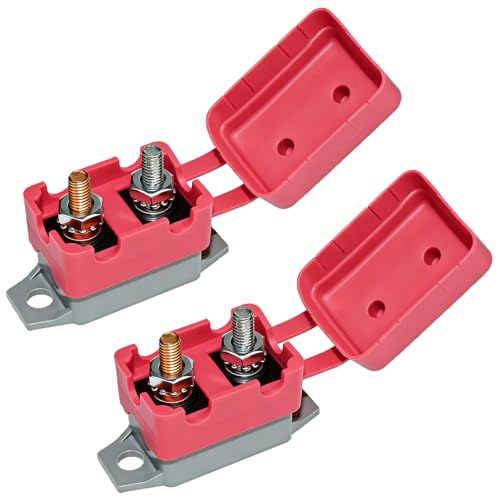
This package includes two automatic reset breakers rated at 30A with IP66 waterproof protection and #10-32 stud terminals. The auto-reset feature makes it suitable for rugged conditions in RVs where remote or exposed connections could occur, and the red waterproof covers help deter moisture ingress.
Who it’s for: RV setups requiring more robust wet-environment protection, such as exterior docking or marine-adjacent installations. Why selected: rugged build and auto-reset capability for continuous protection.
Limitation: 30A DC breakers are most commonly used on DC circuits; confirm your system’s voltage and use-case before installation to avoid mismatches.
RED WOLF 60Amp Circuit Breaker Marine DC

Designed for DC systems ranging from 12V to 48V, this 60A breaker serves as both a protection device and a potential battery disconnect, depending on how it’s wired. It features a manual reset switch and a waterproof build for use in harsh or outdoor RV environments. Best for higher-current DC circuits like trolling motors or solar storage in boats or campers.
Who it’s for: RV owners integrating high-current DC devices or solar setups. Why selected: dual role as protection and disconnect with weatherproof design.
Caution: verify that a 60A DC rating aligns with your DC distribution and that wiring gauge supports the current without overheating.
Bolipoeq 30Amp Auto Reset Circuit Breaker (Pack of 6)
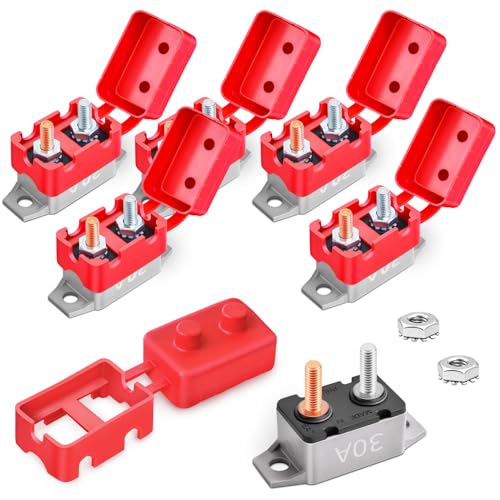
Bolipoeq offers a pack of six 30A DC auto-reset breakers with IP66 waterproof rating and stud bolt terminals. The pack is suitable for automotive, marine, and RV trailers where multiple high-current DC circuits require protection. Best for large projects or frequent replacements in outdoor installations.
Who it’s for: users who need multiple high-current DC protections in a rugged environment. Why selected: value-packed option with waterproof protection and auto-reset feature.
Limitation: this is a DC-rated solution; ensure compatibility with any AC circuits in your system and the correct voltage range.
Buying Guide: How To Choose The Right Travel Trailer Circuit Breaker
- Voltage and type: Most RV applications use 120V AC circuits; ensure the breaker matches your panel’s voltage and pole configuration (single-pole vs. tandem, 1P or 2P).
- Current rating: Match breaker amperage to the expected load. Common RV branch breakers include 15A, 20A, and 30A, with higher DC ratings for solar or trolling equipment where applicable.
- Interruption rating: AIC (Amps Interrupting Capacity) of 10,000 A for many RV breakers provides solid protection against surges. Verify the rating fits your panel requirements.
- Physical size and mounting: Panels vary from very compact to larger enclosures. Check the space, depth, and mounting footprint before selecting a plug-in or screw-terminal model.
- Panel compatibility: Some breakers are designed for specific center assemblies (PL, ES, GE, THQP), so confirm compatibility with your existing load center.
- Environmental considerations: If exposed to moisture or outdoor conditions, prefer IP-rated or waterproof variants and consider auto-reset features to reduce manual cycling.
- Future expansion: If you plan to add circuits (solar, extra outlets, or appliances), consider a few extra slots or a breaker with flexible pole options for future upgrades.
FAQ
- Q: Do I need a tandem breaker for RV panels? A: Tandem breakers allow two circuits in a single slot, handy in tight spaces but ensure your panel supports tandem units.
- Q: What does AIC mean and why does it matter? A: Amps Interrupting Capacity indicates how much fault current a breaker can safely interrupt. Higher is better for protection.
- Q: Can I mix AC and DC breakers in the same panel? A: Generally yes if your panel supports the respective pole types and ratings; verify with the panel manufacturer guidance.
- Q: Are waterproof breakers necessary for all RV installations? A: Not always, but in exposed or outdoor installations they reduce corrosion risk and improve reliability.
- Q: How do I know which amperage to choose for a circuit? A: Base it on the circuit’s expected load, wire size, and device requirements; err on the side of an appropriately rated breaker to prevent nuisance trips.
- Q: Can I install these breakers myself? A: Installation should follow OEM panel guidance and local electrical codes. If unsure, consult a qualified electrician.