Answering your search for the best US extreme cold weather sleeping bags, this guide compares five top options for serious cold-weather campers, outdoor professionals, and military-style gear enthusiasts. Each pick is evaluated for warmth, durability, and practical use in extreme conditions. Best for military-style expeditions, best for rugged backcountry stays, best for oversized or tall sleepers, and best for all-season versatility are highlighted to help you choose confidently.
Summary of selected products:
| Product | Best For | Key Feature | Notes |
|---|---|---|---|
| Tennier Gilette Very Warm Thick Old School Military US Army Subzero ECW Sleeping Bag | Military-grade extreme cold weather | 84″ long, 30″ top width, 14″ bottom, 8 lbs | New old stock; not in compression sack |
| MT Modular Sleep System – 4-Piece | All-season, modular flexibility | Front-zip design, vacuum compression sack | Includes multiple bags and bivy cover |
| HiZYNICE 100% Cotton Flannel XXL Sleeping Bag | Big & tall comfort in mild-cold conditions | 90″ x 39″; 0 ℉ extreme, 20 ℉ comfort | Cotton flannel lining; classic comfort |
| MT Army Military Modular Sleeping Bags System with Bivy Cover | All-season field use | Polarguard HV filling; Bivy cover included | Extremely low temperature capability noted |
| HiZYNICE 0 ℉ Extra Large Sleeping Bag | Zero-degree winter camping for tall sleepers | 90″ x 39″; draft tube; 0 ℉ extreme | Similar design to 20 ℉ variant; big and tall |
| Bessport 15-45 ℉ Extreme 3-4 Season Bag | Lightweight, versatile 3-4 season | Low pack weight; synthetic loft | Lower extreme rating than pure subzero bags |
Tennier Gilette Very Warm Subzero ECW Sleeping Bag

This US government–issued extreme cold weather bag is designed for severe cold environments. Best for military personnel or outdoor specialists who need durable protection in subzero conditions. The bag measures 84 inches in length with a wide top (30 inches) that tapers to 14 inches, and it weighs about 8 pounds. It is described as fully insulated and in Od Green, stored without compression.
Best for: Military-style expeditions and experienced cold-weather campers who require robust insulation and a true subzero rating. Why selected: Proven cold-weather design, long length for tall users, and a straightforward construction that prioritizes warmth over ultra-lightweight portability. Caution: Not in a compression sack, which may affect packing efficiency in minimalist setups.
MT Modular Sleep System – 4-Piece
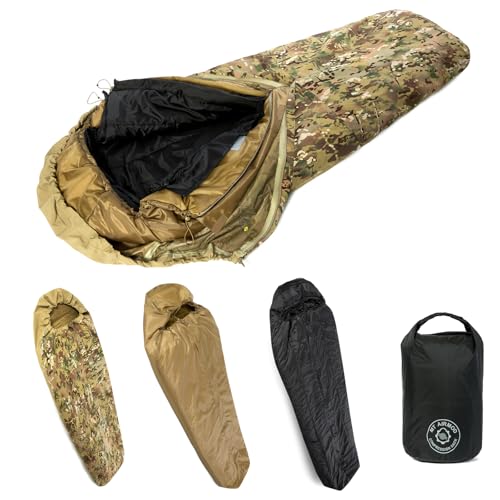
This four-piece system includes a patrol bag, an intermediate cold-weather bag, a waterproof bivy cover, and a vacuum compression sack. It features a front-zip design for faster entry and exit, replacing the original side-zip configuration for improved ventilation and emergency egress. The vacuum-seal sack provides significant space savings while remaining waterproof.
Best for: Field operations and outdoor enthusiasts who want modular versatility and quick access. Why selected: All components designed to work together in varied conditions, with a space-saving vacuum sack. Caution: Front-zip design may change the feel compared to traditional side-zip sleeping bags.
HiZYNICE 100% Cotton Flannel Sleeping Bag – XXL

This oversized sleeping bag emphasizes comfort with a soft cotton flannel lining and a draft tube along the zipper to minimize heat loss. It is suitable for three-season camping and measures 90 inches by 39 inches, designed for campers up to 6 feet 7 inches tall. It is described as having a warm temperature range suitable for milder cold conditions rather than extreme subzero environments.
Best for: Big-and-tall sleepers who prioritize comfort and roominess in cool-to-mild cold. Why selected: Generous dimensions and easy access ventilation; not ideal for extreme zero-degree nights. Caution: Cotton lining may absorb moisture; consider weather protection in damp environments.
Bessport Mummy Sleeping Bag (15-45 ℉)

Designed for 3-4 season use with a temperature range suitable for cool to moderately cold nights. The bag weighs lightly with a compact profile and uses synthetic loft microfiber for warmth. It is described as water-resistant with a durable shell and a roomy interior for comfort.
Best for: Lightweight backpacking in cool to moderate cold. Why selected: Good warmth-to-weight ratio with easy packing. Caution: Not rated for extreme subzero conditions; may require extra layering in colder nights.
Teton 0F Deer Hunter Sleeping Bag

Known for durability, the Deer Hunter bag features a canvas shell and a poly-flannel lining with a mummy hood. It emphasizes warmth in extreme cold and includes side zippers for temperature control and easy access. It is designed for extended cold-weather camping and hunting scenarios where ruggedness matters.
Best for: Cold-weather camping and field hunting in harsh environments. Why selected: Durable canvas exterior and reliable warmth in extreme conditions. Caution: Canvas shells can be heavier and take longer to dry if wet.
Tennier Industries US Military 4-PC System

This four-piece system includes a warm-weather bag, an intermediate cold-weather bag, and a GORE-TEX bivy cover, all designed for modular use in varied climates. The setup is oriented toward field operations and adaptability under different temperature ranges. It emphasizes weather resistance and layering capacity.
Best for: All-season field use and combined warmth with weather protection. Why selected: Flexible system designed for multi-climate operations. Caution: Complex setup may require more time to assemble in the field.
Buying Guide: Key Considerations for Extreme Cold Sleeping Bags
- Temperature rating accuracy: Look for clear extreme and comfort temperature ratings to match your conditions. Subzero-rated bags are essential for true extreme cold.
- Insulation type: Down insulation provides high warmth-to-weight but may require dry conditions; synthetic loft performs better when damp.
- Shell and lining materials: Durable shells and moisture-wicking linings improve longevity and comfort in rugged environments.
- Size and fit: Long or extra-long variants accommodate taller users and maximize warmth by reducing exposed gaps.
- Weight and packability: Consider how much weight you are willing to carry and whether a compression sack or vacuum-sealed system is preferred.
- System compatibility: If you plan to use multiple bags together (as in modular systems), ensure compatibility and seal integrity with bivies and covers.
- Accessibility: Front-zip designs or easy-access features can be critical in emergency scenarios or quick relief during rest.
Frequently Asked Questions
- What is the difference between subzero and zero-degree sleeping bags?
Subzero bags are designed for temperatures below 0 °F, while zero-degree bags target around 0 °F or slightly above. Choose based on your strongest forecasted conditions and layering options. - Should I prefer a front-zip or side-zip design?
Front-zip designs can offer faster entry and exit and improved ventilation in tactical or urgent scenarios; side-zip models are traditional and can feel more secure for some users. - Is a bivy cover worth it for extreme cold?
Yes, bivy covers add weather resistance and help retain heat, especially in windy or damp environments. - What material is best for damp environments?
Synthetic loft fills retain some warmth when wet and are easier to maintain than down in damp conditions. Consider a waterproof shell for additional protection. - How important is bag size for warmth?
A properly fitted bag minimizes loft gaps around the neck and shoulders, improving thermal efficiency. Taller users should opt for long or XXL models when available. - Can modular sleep systems save space?
Yes, modular systems with compression or vacuum bags can dramatically reduce packing volume and provide flexibility across climates.